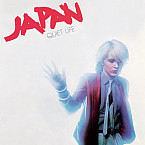
Quiet Life

Album: Quiet Life (1979)
Charted: 19
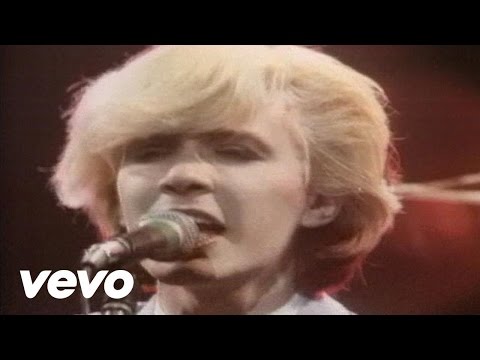
Play Video

Songfacts®:

  • Japan, contrary to their moniker, were a British band fronted by the very stylish David Sylvian. "Quiet Life" is the title track to their third album, which found them at a crossroads that inspired the lyric. They hadn't landed any big hits and knew their record label, Hansa, was likely to drop them. Sylvian, therefore anticipated the "quiet life" without the success they were striving for. All that work just to go back to where they started: "Here comes the quiet life again."
  • In a cosmic twist, this song about watching the band's fortunes slip away ended up bringing them to new heights. The song was released as a single in some territories in 1979 but went nowhere. And as expected, Hansa Records dropped them. They were quickly picked up by Virgin Records, though, and in 1981 Hansa remixed "Quiet Life" and put it out again as a single. This time it climbed to #19 in the UK and earned them lots of press, including an appearance on the influential show Top Of The Pops, where they performed it (they were in the odd position of having a hit song released by their former record label). A string of UK hits on Virgin followed, including "Visions of China" and "Ghosts," before the band called it quits in 1982 over personal and creative differences.
  • Japan's guitarist at the time was Robert Dean, who later joined the American group Vivabeat. He told Songfacts how the song "Quiet Life" came together:

    "This song - as was usually the case - was originally written and presented to the rest of the band by the lead singer/songwriter as a simple chord-driven guitar song. In our small rehearsal studio in Willesden, North London, we then set about creating the arrangement, starting with the sequencer part, and then constructing the bass and drum parts over which I would play the rhythmic guitar parts. Once we were happy with the basic ideas, it was then ready for the more organic creative elements that would evolve during the recording process.

    This took place at AIR studios with John Punter (the producer of our favorite Roxy Music albums, among others) at the helm. Up until this point, we had not worked with someone who was so keyed into our wavelength, and understood what we wished to achieve. Consequently, the entire process was the most satisfactory of my career with the band.

    I had just acquired a new Gibson guitar which incorporated revolutionary and unique Moog technology in its pickup design, and I was able to create clean, rich, ringing tones as well as thick sustain. It was also the first time that I had applied the eBow - an electric string vibrating device in the instrumental break of the song - which soon became something of a signature in my playing style."

Comments

Be the first to comment...

Editor's Picks

Donnie Iris (Ah! Leah!, The Rapper)

Donnie Iris (Ah! Leah!, The Rapper)Songwriter Interviews

Before "Rap" was a form of music, it was something guys did to pick up girls in nightclubs. Donnie talks about "The Rapper" and reveals the identity of Leah.

Timothy B. Schmit

Timothy B. SchmitSongwriter Interviews

The longtime Eagle talks about soaring back to his solo career, and what he learned about songwriting in the group.

Boz Scaggs

Boz ScaggsSongwriter Interviews

The "Lowdown" and "Lido Shuffle" singer makes a habit of playing with the best in the business.

Best Band Logos

Best Band LogosSong Writing

Queen, Phish and The Stones are among our picks for the best band logos. Here are their histories and a design analysis from an expert.

Philip Cody

Philip CodySongwriter Interviews

A talented lyricist, Philip helped revive Neil Sedaka's career with the words to "Laughter In The Rain" and "Bad Blood."

Billy Steinberg - "Like A Virgin"

Billy Steinberg - "Like A Virgin"They're Playing My Song

The first of Billy's five #1 hits was the song that propelled Madonna to stardom. You'd think that would get you a backstage pass, wouldn't you?