Oxygène (Part IV)

Album: Oxygène (1976)
Charted: 4
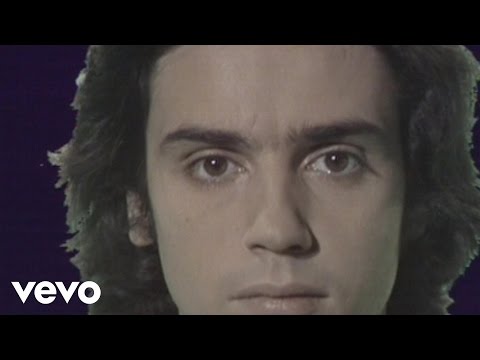
Play Video

Songfacts®:

  • This was Jarre's only Top 10 hit in the UK Singles chart.
  • Jean-Michel Jarre is a French synthesizer player. In 1967 he abandoned his musical studies to experiment with synthesizers. The Oxygène album was the French composer's big breakthrough after initial difficulties in getting the record released due to its entirely instrumental composition. Oxygène and its follow-up Equinoxe were huge commercial successes and helped elevate the synthesizer to new peaks of popularity. In addition to "Oxygène (Part IV)," Jarre enjoyed two other UK Top 20 singles, "Oxygène 8" (#17 in 1997) and "Rendez-Vous 98" (#12 1998). In addition to his recording successes, he is renowned for his extravagant concert performances. The French composer has had four entries in the Guinness Book Of Records for concert attendance, breaking his own total three times - the largest being in 1997 when he performed to 3.5 million people in Moscow. In 1981 Jarre became the first Western artist to perform in China.
  • In an interview with The Mail on January 12, 2008, Jarre compared the recording of the Oxygène album to cooking: "Making my music is like being a chef. It's no coincidence that Oxygène was recorded in my kitchen in Paris. I had to find the right ingredients, bringing everything to the right temperature. I don't like the preconceived idea about electronic music that it is cold, futuristic or robotic. I want my music to sound warm, human and organic. I'm not a scientist working in a laboratory - I'm more like a painter, Jackson Pollock for example, mixing color and light, experimenting with textures."
  • In the same interview, Jarre discussed the difficulties he had finding a record company to take him on: "Oxygène was turned down by all the record companies. It was like a UFO - it was made in the middle of the disco and punk eras and the record companies said, 'What is it? No singer, no proper song titles? And, on top of that, it's French!' Even my mum asked, 'Why are you giving your music the name of a gas?' Yet people talk of Oxygène now as my 'masterpiece.' When it became such a success, it was strange - a very exciting period and kind of innocent. You find you have a lot of new friends around you and it's almost as if they want the success to continue more than you."
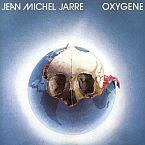
  • Jarre's original inspiration for the album was a painting he bought of the Earth peeling to reveal a skull. It was by ecologically-motivated artist Michel Granger and the pair met, agreeing its use as cover art. The French composer told The Daily Telegraph: "30 years ago there weren't so many people thinking about the planet. But I've always been interested in that, not necessarily in a political way but in a poetic, surrealistic way."
  • Jarre in the same Daily Telegraph interview: "All those ethereal string sounds on 'Oxygène IV' come from the VCS3. It was the first European synthesizer, made in England by a guy called Peter Zinoviev. I got one of the first ones. I had to go to London in 1967 to get it, and it's the one I still have onstage 40 years later."

Comments: 3

  • Pj from Dublin, IrelandThis guy is the "special one" for synth music, he led the way for the likes of Newman, Moby, Fat Boy, Prodigy, Faithless, Chemical Bros, etc., although he has a funny habit of collecting rebook trainers. It's said that he has rooms full of them - dosen't matter too much given the fact his music is adored by millions, myself included!
  • Nacho from Guadalajara, MexicoThis was the first ever album that I bought, back in the vinyl discs era. I also remember that none in my family, or even in my farthest friends really enjoyed this music as much as I did back then. I still like it a lot, and I would give anything to attend one of JMJ's concerts.
  • Mark from London, EnglandJean-Michel Jarre is the son of soundtrack composer Maurice Jarre.
see more comments

Editor's Picks

Janis Ian

Janis IanSongwriter Interviews

One of the first successful female singer-songwriters, Janis had her first hit in 1967 at age 15.

Lace the Music: How LSD Changed Popular Music

Lace the Music: How LSD Changed Popular MusicSong Writing

Starting in Virginia City, Nevada and rippling out to the Haight-Ashbury, LSD reshaped popular music.

Jimmy Jam

Jimmy JamSongwriter Interviews

The powerhouse producer behind Janet Jackson's hits talks about his Boyz II Men ballads and regrouping The Time.

Dar Williams

Dar WilliamsSongwriter Interviews

A popular contemporary folk singer, Williams still remembers the sticky note that changed her life in college.

Commercials

CommercialsFact or Fiction

Was "Ring Of Fire" really used to sell hemorrhoid cream?

Reverend Horton Heat

Reverend Horton HeatSongwriter Interviews

The Reverend rants on psychobilly and the egghead academics he bashes in one of his more popular songs.