Cradle Song

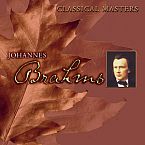
Album: Classical Masters: Brahms (1868)
Play Video

Songfacts®:

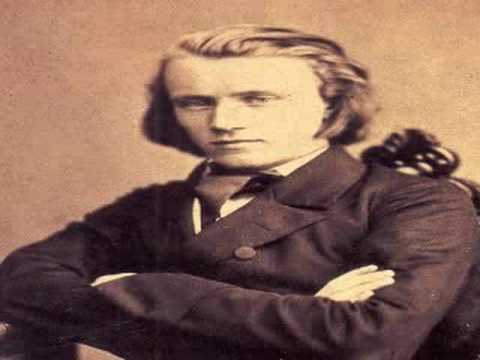
  • Although linked with several women, German composer Johannes Brahms had little fortune regarding matters of the heart and never came close to marriage. Biographers have linked him with Clara Schumann, the wife of his friend composer Robert Schumann, who was 14 years older than he was. Whether they ever became lovers after the death of her husband is unknown, but the destruction of their letters to each other may point to something beyond mere privacy.

    Another of Brahms' relationships was with one Bertha Faber, who sang in his women's choir at Hamburg. The composer renewed his acquaintance with her when he moved to Vienna, by which time she had married. Bertha had the honor of having this lullaby written to celebrate the birth of her second child, Hans.
  • "Cradle Song" or "Brahms's Lullaby" was originally written by Brahms in 1868 under the title of "Wiegenlied: Guten Abend, gute Nacht" ("Good evening, good night"), and included in his op.49 set of five songs. The lullaby's melody is one of the most famous and recognizable in the world, used by countless parents to sing their babies to sleep.
  • Brahms took the first verse from a collection of German folk poems called Des Knaben Wunderhorn; the second stanza was written by Georg Scherer (1824–1909) in 1849. The melody is based on a Viennese song that Bertha used to sing to him.
  • When Brahms sent the song to Bertha's husband Artur Faber he said: "Frau Bertha will realize that I wrote the 'Wiegenlied' for her little one. She will find it quite in order... that while she is singing Hans to sleep, a love song is being sung to her." So Bertha was the first person to sing this famous lullaby.
  • As the song spread around the world in a variety of different arrangements, Brahms, upset at lesser hands mangling his work, grumbled to his publisher: "Why not make a new edition in a minor key for naughty or sick children? That would be still another way to move copies."
  • In 1889, one Theo Wangemann, a representative of American inventor Thomas Edison, visited Brahms in Vienna and invited him to make an experimental recording. The composer played an abbreviated version of his first Hungarian dance on the piano. The recording was later issued on a record of early piano performances. Sadly, the piano playing is largely inaudible due to heavy surface noise, but this remains the earliest recording made by a major composer.

Comments: 1

  • Sara C from Auburn, NyI believe I have two pieces of original sheet music of “Cradle Song” which was part of “The Violinist’s Concert Album for violin & piano. Would this be of any value?
see more comments

Editor's Picks

Bill Withers

Bill WithersSongwriter Interviews

Soul music legend Bill Withers on how life experience and the company you keep leads to classic songs like "Lean On Me."

Curt Kirkwood of Meat Puppets

Curt Kirkwood of Meat PuppetsSongwriter Interviews

The (Meat)puppetmaster takes us through songs like "Lake Of Fire" and "Backwater," and talks about performing with Kurt Cobain on MTV Unplugged.

Song Cities

Song CitiesMusic Quiz

Nirvana, Billy Joel and Bruce Springsteen are among those who wrote songs with cities that show up in this quiz.

John Lee Hooker

John Lee HookerSongwriter Interviews

Into the vaults for Bruce Pollock's 1984 conversation with the esteemed bluesman. Hooker talks about transforming a Tony Bennett classic and why you don't have to be sad and lonely to write the blues.

Tom Waits Lyrics Quiz

Tom Waits Lyrics QuizMusic Quiz

Pool balls, magpies and thorns without roses - how well do you know your Tom Waits lyrics?

Chris Rea

Chris ReaSongwriter Interviews

It took him seven years to recover from his American hit "Fool (If You Think It's Over)," but Chris Rea became one of the top singer-songwriters in his native UK.