Midnight Cowboy

Album: Midnight Cowboy (1969)
Play Video

Songfacts®:

  • Written in 12/8 time, this mournful harmonica melody tripped off the pen of the Yorkshire-born composer John Barry (1933-2011) for the 1969 Oscar winner Midnight Cowboy. Based on the 1965 novel of the same name, this X-rated off-beat buddy-buddy movie depicts the underside of the American dream through the eyes of lowlife, Texan fantasist Joe Buck and the unfortunate small time homeless con-man (Ratso) who first tricks him out of twenty dollars then offers him a place to stay in a deserted apartment after Buck is unable to pay his hotel bill. Country boy Buck has come up to the metropolis hoping to make his fortune providing services to sex-hungry women, depicting himself as a "stud", but it doesn't take too long for the Big Apple to punch holes in his dreams; instead he ends up soliciting men for sex, and even that sordid venture goes awry.

    At the end of the film there is redemption of sorts for Buck, even though he beats a man to death, but not for the seriously ill Ratso, who dies on the bus journey to Florida where the two had planned to make a new life for themselves.

    Some critics have read a homosexual theme into the friendship between Jon Voight's Joe Buck and Dustin Hoffman's Ratso, but the simple fact is that many if not most of the strongest friendships are based on things far more precious than sex, in this case the relationship was largely symbiotic.

    Amazingly, Barry's theme music manages to capture all this, and it is hardly surprising that he picked up no less than five Oscars in a career that lasted half a century.
  • The album version by John Barry & His Orchestra runs to a mere 2 minutes 48 seconds. The instrumental version is known as "Midnight Cowboy Theme" or "Theme From Midnight Cowboy".
  • The vocal version is called simply "Midnight Cowboy"; the sheet music to this retailed for 90c as per the Johnny Mathis recording on Columbia Records. The thematic lyrics were supplied by the American record producer Jack Gold (1921-92), who is not to be confused with the British film director of the same name. >>
    Suggestion credit:
    Alexander Baron - London, England, for above 3
  • Piano duo Ferrante & Teicher recorded the hit version peaking at #10 on the Hot 100 in 1969. Arthur Ferrante and Louis Teicher first met as children whilst attending the Juilliard School and in 1947 they launched a full-time concert career. For three decades they were a major American easy listening act, scoring several hits with their versions of movie songs. Their most successful release was their interpretation of the theme from Exodus, which peaked at #2 in 1960.

Comments: 4

  • AnonymousThis movie had the most memorable music of any... Lyrics, melodies, arrangement scores, voicing by the incomparable Nilsson.
    John Barry, the compose was my cousin.. I am Boston born. Sure would have liked to have met the musical genius Barry.
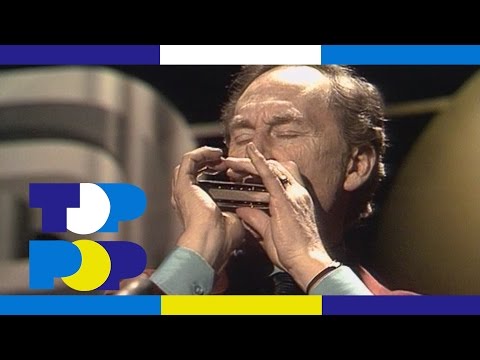
  • Julie MoserWho is the artist playing harmonica on midnight cowboy theme.
    I know its not Toots.
  • Barry from Sauquoit, NyOn December 7th, 1969, Ferrante and Teicher performed "Midnight Cowboy" on the CBS-TV program 'The Ed Sullivan Show'...
    One month earlier on November 1st, 1969 it entered Billboard's Hot Top 100 chart; eventually it peaked at #10 and spent 15 weeks on the Top 100...
    Arthur Ferrante passed away on September 19th, 2009 at age 88 and Louis Teicher died on August 3th, 2008 at age 83...
    May they both R.I.P.
  • Zabadak from London, EnglandThis was the only X-cert film to win the Best Picture Oscar...
see more comments

Editor's Picks

Muhammad Ali: His Musical Legacy and the Songs he Inspired

Muhammad Ali: His Musical Legacy and the Songs he InspiredSong Writing

Before he was the champ, Ali released an album called I Am The Greatest!, but his musical influence is best heard in the songs he inspired.

Michael Sweet of Stryper

Michael Sweet of StryperSongwriter Interviews

Find out how God and glam metal go together from the Stryper frontman.

Devo

DevoSongwriter Interviews

Devo founders Mark Mothersbaugh and Jerry Casale take us into their world of subversive performance art. They may be right about the De-Evoloution thing.

Dennis DeYoung

Dennis DeYoungSongwriter Interviews

Dennis DeYoung explains why "Mr. Roboto" is the defining Styx song, and what the "gathering of angels" represents in "Come Sail Away."

Tom Bailey of Thompson Twins

Tom Bailey of Thompson TwinsSongwriter Interviews

Tom stopped performing Thompson Twins songs in 1987, in part because of their personal nature: "Hold Me Now" came after an argument with his bandmate/girlfriend Alannah Currie.

Evolution Of The Prince Symbol

Evolution Of The Prince SymbolSong Writing

The evolution of the symbol that was Prince's name from 1993-2000.