Keep The Home Fires Burning

Album: The Great War (1914)
Play Video

Songfacts®:

  • Originally called "Till The Boys Come Home", the greatest patriotic song to come out of England during World War One, although written in London, was actually the result of a collaboration between an American woman, Lena Guilbert Ford, and a Welshman, Ivor Novello; its genesis is recounted in W. Macqueen-Pope's biography Ivor. The outbreak of war in 1914 generated an intense outburst of patriotism in Britain, so much so that young men literally flocked to enlist; patriotic songs were all the rage, and Novello's mother, the famous music teacher and choir leader Madam Clara Novello Davies, begged her pride and joy to write one. He was disdainful as they were literally being churned out by the dozen, so she wrote one of her own to show him how it should, or perhaps should not, be done. After she had performed "Keep The Flag A-Flying" to him, he relented, probably thinking he couldn't do any worse, and wrote something in a similar vein before contacting Lena. She was a family friend, a divorcee who lived in London with her young son; she also dabbled in lyric writing. Although a US citizen, she had evidently been in England for sometime, and appears on the 1901 census as Lena Ford, a foreign subject "Living On Own Means."

    After Novello had tinkered with the melody and some of the chorus, Lena finished off the lyrics. In April 1916, a report in the New York Times said Novello had dashed it off in ten minutes in a moment of inspiration, and that his mother had asked him to write it to take the place of "It's A Long, Long Way To Tipperary" which had become tiresome due to its constant repetition.
  • "Keep The Home Fires Burning" was first performed by Sybil Vane - a pupil of Novello's mother - at a National Sunday League concert at the Alhambra; he played piano; the audience joined in, and it was played over and over again.

    Though it was turned down by his regular publisher it was eventually accepted by Ascherberg, Hopwood and Crew Ltd; he assigned them the rights to the song on September 7, 1914; on June 28, 1916, the publisher assigned them in turn to the Performing Rights Society.
  • Novello is reputed to have made £15,000 from the song, a tidy sum in those days, especially when one considers that Lynsey de Paul made only six thousand pounds in royalties from her 1970s 3-million seller "Storm In A Tea Cup." Perhaps more importantly, in an age before instant mass communication it turned him into a star practically overnight, and paved the way for a successful career as a composer, playwright and actor. Sadly, his collaborator did not live to see his success; she was killed in a Zeppelin raid along with her son in March 1918.
  • Although the Oxford Dictionary Of Modern Quotations credits Lena with introducing the phrase "Keep the Home-fires burning", it appears to be Novello who actually coined it. By the following year it was common currency; an article published in the Times on December 13, 1915 reported:

    But the main cause was the inadequacy of the separation allowance to "keep the home fires burning", for wife, children, mothers or sisters, while the breadwinner was with the Colours.

    In its January 4, 1917 issue, the same paper reported that "Keep The Home Fires Burning" had been the most popular wartime pantomime song in 1916, but had now been overtaken by "Take Me Back To Dear Old Blighty."
  • The song has been republished and recorded many times. An arrangement for mandolin, by Herbert Forrest Odell was was published at Boston, c1918. An arrangement for mixed quartets was published by its original publisher in 1939.

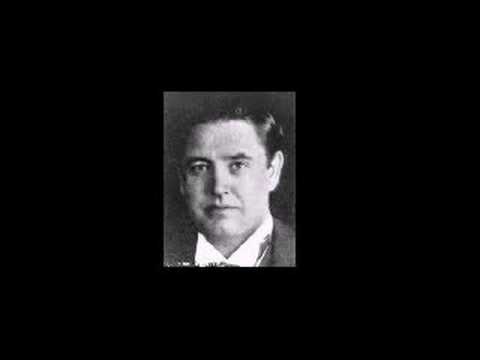
    Two early recordings were by Frederick Wheeler on Victor in 1916; and by John McCormack in 1917. "Keep The Home Fires Burning" has been imitated but never equaled; a song with the same title was written in 1991 by James Donnelly for American troops serving in the Gulf. The title has also been used for a number of books. >>>
    Suggestion credit:
    Alexander Baron - London, England, for all above

Comments

Be the first to comment...

Editor's Picks

The Untold Story Of Fiona Apple's Extraordinary Machine

The Untold Story Of Fiona Apple's Extraordinary MachineSong Writing

Fiona's highly-anticipated third album almost didn't make it. Here's how it finally came together after two years and a leak.

Brian Kehew: The Man Behind The Remasters

Brian Kehew: The Man Behind The RemastersSong Writing

Brian has unearthed outtakes by Fleetwood Mac, Aretha Franklin, Elvis Costello and hundreds of other artists for reissues. Here's how he does it.

Glen Phillips of Toad the Wet Sprocket

Glen Phillips of Toad the Wet SprocketSongwriter Interviews

The "All I Want" singer went through a long depression, playing some shows when he didn't want to be alive.

Marvin Gaye

Marvin GayeFact or Fiction

Did Marvin try out with the Detroit Lions? Did he fake crazy to get out of military service? And what about the cross-dressing?

Steve Morse of Deep Purple

Steve Morse of Deep PurpleSongwriter Interviews

Deep Purple's guitarist since 1994, Steve talks about writing songs with the band and how he puts his own spin on "Smoke On The Water."

Songs in Famous Movie Scenes: '80s Edition

Songs in Famous Movie Scenes: '80s EditionMusic Quiz

You know the scenes - Tom Cruise in his own pants-off dance off, Molly Ringwald celebrating her birthday - but do you remember what song is playing?