
Jupiter's Faerie

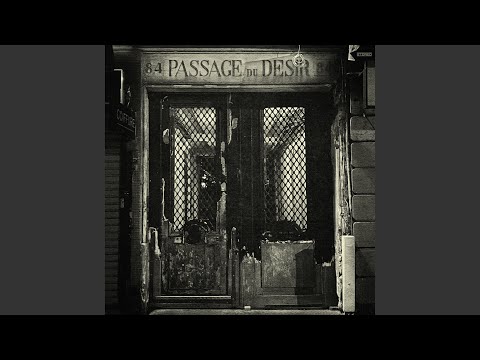
Album: Passage du Désir (2024)
Play Video

Songfacts®:

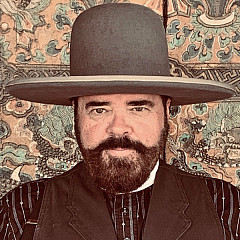
  • "Jupiter's Faerie" is a track from Passage Du Desir, Sturgill Simpson's first album released under his Johnny Blue Skies alter ego. The song is a moving tribute to Simpson's first love, who died from suicide.

    "I was sitting at a cafe down Beaumarchais, trying to look up my first girlfriend, and the first thing that popped up was her obituary," Simpson told Uncut magazine. "I went back that morning and wrote the song. I just wanted to do something real pretty for her, because she had such a beautiful soul."

    What emerged was a seven-and-a-half-minute elegy that feels as vast as the cosmos it invokes.
  • I hear there's faeries out on Jupiter
    And there was a time that I knew one
    But today I'm feeling way down here on Earth
    Crying tears of love in the light of mourning dawn


    The faerie is a metaphor for Simpson's lost love - a delicate, otherworldly being now impossibly far away. When he sings of being "down here on Earth," he's not just lamenting her absence but grappling with his own failure to reconcile with her before it was too late.

    The use of "mourning" instead of "morning" is a subtle but searing choice, a quiet acknowledgment that grief is not a moment but a state of being.
  • Musically, "Jupiter's Faerie" mirrors the emotional journey of its lyrics. It begins with a lonely electric piano, and Simpson keeps the opening verse soft and contemplative. Then comes the chorus - a sudden, soaring burst of orchestral melody and warmth, like sunlight breaking through storm clouds. But just as quickly as it appears, it fades again, leaving only the melancholy behind.
  • The song embodies the thematic tension that runs through Passage Du Désir: the interplay of despair and hope, of heartbreak and transcendence. The album owes its name to a literal Parisian alleyway, the Passage du Désir near Gare de l'Est. But, as with so much of Simpson's work, the album title operates on multiple levels. It's a metaphor for longing, for regret, for the relentless search for meaning in life and art.
  • The album marks a turning point in Simpson's career, a deliberate shedding of skin. The name Johnny Blue Skies was a gift from a bartender in Lexington, Kentucky, who used it to introduce him during open mic nights. Now, it's become a persona that lets Simpson break free from his past - though not, of course, from its influence.
  • Recorded with David Ferguson at Nashville's Clement House and London's Abbey Road Studios, and released on Simpson's own High Top Mountain Records, Passage Du Désir is both a departure and a continuation (he uses the same backing band he had in the 2010s).

Comments

Be the first to comment...

Editor's Picks

John Waite

John WaiteSongwriter Interviews

"Missing You" was a spontaneous outpouring of emotion triggered by a phone call. John tells that story and explains what MTV meant to his career.

Charlie Daniels

Charlie DanielsSongwriter Interviews

Charlie discusses the songs that made him a Southern Rock icon, and settles the Devil vs. Johnny argument once and for all.

Barry Dean ("Pontoon," "Diamond Rings And Old Barstools")

Barry Dean ("Pontoon," "Diamond Rings And Old Barstools")Songwriter Interviews

A top country songwriter, Barry talks about writing hits for Little Big Town, Tim McGraw and Jason Aldean.

Director Nick Morris ("The Final Countdown")

Director Nick Morris ("The Final Countdown")Song Writing

Nick made some of the biggest videos on MTV, including "The Final Countdown," "Heaven" and "Don't Know What You Got (Till It's Gone)."

John Kay of Steppenwolf

John Kay of SteppenwolfSongwriter Interviews

Steppenwolf frontman John Kay talks about "Magic Carpet Ride," "Born To Be Wild," and what he values more than awards and accolades.

Supertramp founder Roger Hodgson

Supertramp founder Roger HodgsonSongwriter Interviews

Roger tells the stories behind some of his biggest hits, including "Give a Little Bit," "Take the Long Way Home" and "The Logical Song."