
Stir It Up

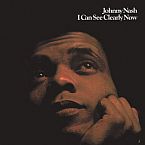
Album: I Can See Clearly Now (1972)
Charted: 13 12
Play Video

Songfacts®:

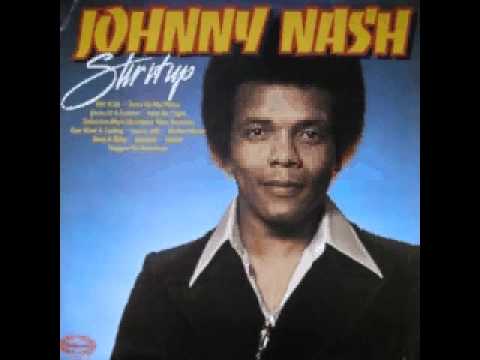
  • Texas-born singer-songwriter Johnny Nash released "Stir It Up," his final US hit, as a follow-up to his signature tune "I Can See Clearly Now." Both singles were infused with the reggae sound he brought back from a 1967 trip to Jamaica, where he met up-and-comer Bob Marley. Not only was Marley an assistant producer on Nash's album, but he also contributed a handful of tunes, including "Stir It Up," a love song about stirring up desire that Marley wrote for his wife, Rita.

    Nash's version would become Marley's first hit outside of Jamaica, but he originally recorded it with his own group, The Wailers. After Nash's success, The Wailers recorded it again for their 1973 album, Catch a Fire. Marley's version came to the forefront when it appeared on his greatest hits collection Legend in 1984, three years after his death.
  • Johnny Nash came into reggae after years recording standards, pop, and R&B in a career that started in the early 1950s when he was a popular teen performer with a regular gig on Arthur Godfrey's variety show. Bob Marley never fully embraced him as a reggae artist, telling Melody Maker in 1973: "He's a hard worker, but he didn't know my music. I don't want to put him down, but reggae isn't really his bag," he said. "We knew of Johnny Nash in Jamaica before he arrived, but we didn't love him that much: We appreciated him singing the kind of music he does - he was the first US artist to do reggae - but he isn't really our idol. That's Otis or James Brown or Pickett, the people who work it more hard."
  • On this track, Nash is backed by the reggae band the Fabulous Five Inc.
  • In the UK, this was released as the first single from the album, followed by the Nash-penned "I Can See Clearly Now."
  • A year before the album was released, Marley and Nash collaborated on the score for the Swedish film Vill sa garna tro, which cast Nash in a starring role - but things didn't go as planned, mainly because no one could find Marley. John "Rabbit" Bundrick, Nash's keyboardist and co-composer on the score, recalled in the liner notes for Marley's Songs of Freedom: "I really don't know what happened to Bob. All I do know is that his air ticket, Johnny's guitar, and Johnny's tape recorder all disappeared, along with Bob. Johnny never forgave him for taking his guitar. Bob disappeared as magically as he had arrived."

    Nash put his anger aside when "Stir It Up" became a hit, and invited Marley on a tour of the UK to promote the album.
  • Diana King covered this for the 1993 comedy Cool Runnings, about a Jamaican bobsled team competing in the Winter Olympics.
  • In the 2007 movie I Am Legend, Will Smith plays a Bob Marley-obsessed virologist who has survived a zombie apocalypse. When he finally meets another non-infected human, he is horrified to learn she's never heard of Marley, so he puts on the Legend CD (note the album and movie titles), tells her it's the best album ever made, and plays "Stir It Up." Marley's music is a theme throughout the film, as Smith's character draws on it for faith. In the film, his daughter is named Marley.

Comments: 2

  • G Conley from DetroitAnybody know who played ocarina on the Johnny Nash mellow version of Bob Marley’s “Stir It Up”?
  • Christopher from West VirginiaActually there were two versions of this song recorded by Nash. The first was the one used only on the single and is rougher and slightly more up-tempo. It recreates much better the Reggae feel. The second more common version is more mellow and sounds rather polished. I was once told that Nash recorded his first version in Jamaica and the second in New York but given the similarity in the instrumental tracks that is very hard to say with certainty.
see more comments

Editor's Picks

Muhammad Ali: His Musical Legacy and the Songs he Inspired

Muhammad Ali: His Musical Legacy and the Songs he InspiredSong Writing

Before he was the champ, Ali released an album called I Am The Greatest!, but his musical influence is best heard in the songs he inspired.

Michael Sweet of Stryper

Michael Sweet of StryperSongwriter Interviews

Find out how God and glam metal go together from the Stryper frontman.

Devo

DevoSongwriter Interviews

Devo founders Mark Mothersbaugh and Jerry Casale take us into their world of subversive performance art. They may be right about the De-Evoloution thing.

Dennis DeYoung

Dennis DeYoungSongwriter Interviews

Dennis DeYoung explains why "Mr. Roboto" is the defining Styx song, and what the "gathering of angels" represents in "Come Sail Away."

Tom Bailey of Thompson Twins

Tom Bailey of Thompson TwinsSongwriter Interviews

Tom stopped performing Thompson Twins songs in 1987, in part because of their personal nature: "Hold Me Now" came after an argument with his bandmate/girlfriend Alannah Currie.

Evolution Of The Prince Symbol

Evolution Of The Prince SymbolSong Writing

The evolution of the symbol that was Prince's name from 1993-2000.