
That Song About The Midway

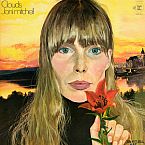
Album: Clouds (1969)
Play Video

Songfacts®:

  • Some people break up over the phone, others by text or email. Joni Mitchell did it with a song, dumping David Crosby with "That Song About The Midway."

    Crosby and Mitchell dated in 1967; he produced her debut album, Song To A Seagull, released the following year. According to Crosby, one night they were at a party at the abode of Peter Tork of The Monkees when Mitchell pulled out her guitar and played "That Song About The Midway" for the first time. When she finished, she was staring right at him. Then she played it again.

    There was no doubt the song was directed at Crosby. She did indeed break up with him and later took up with his friend Graham Nash, with whom Crosby formed Crosby, Stills & Nash.
  • The song is set in a carnival midway, a metaphor for their strange environment in and around Los Angeles. She compares him to a devil wearing wings, asking if he puts them on just to sing. When she accuses him of cheating, she's very clear:

    You were betting on some lover, you were shaking up the dice
    And I thought I saw you cheating once or twice, once or twice


    Mitchell used the carnival metaphor again in her 1970 song "The Circle Game," where she evokes the painted ponies of a carousel.
  • Crosby said it wasn't easy dating Mitchell because she was a much better songwriter, making him feel inadequate. "Imagine if you wrote a really good song, you sang it to her when she came home, and then she sang you three better songs she wrote last night," he told Howard Stern.
  • "That Song About The Midway" is part of Joni Mitchell's second album, Clouds. She produced the track, and most others on the album, herself. At this point the most popular versions of her songs were recorded by more established singers, like Judy Collins with "Both Sides Now" and "Chelsea Morning."
  • Listening to Joni Mitchell singing the song was emotionally tough for Crosby. "I remember we were at Pete Tork's house and the whole gang was there, maybe 20 people," he recalled to Uncut magazine. "Joni comes storming in, plonks herself down and says, 'I've got a new song to sing to you.' We're all like, 'A new Joni song! Yippee!' She sang 'That Song About The Midway,' which was her goodbye song to me."

    "A pretty forceful goodbye!," he added. "She finished, looked up at me - everyone was sitting there aghast - and sang it again! Ha-ha! Just in case I didn't get it the first time. Then she packed up her guitar and left. Falling for her was a little like falling into a cement mixer."

Comments: 1

  • Vic Walton from Santa BarbaraHer line "You stood out like a ruby / in a Black man's ear" is taken from Shakespeare, when Romeo first describes Juliet in Act 1 Scene 5: "It seems she hangs upon the cheek of night / Like a rich jewel in an Ethiop’s ear"
see more comments

Editor's Picks

Chris Tomlin

Chris TomlinSongwriter Interviews

The king of Christian worship music explains talks about writing songs for troubled times.

John Kay of Steppenwolf

John Kay of SteppenwolfSongwriter Interviews

Steppenwolf frontman John Kay talks about "Magic Carpet Ride," "Born To Be Wild," and what he values more than awards and accolades.

Martyn Ware of Heaven 17

Martyn Ware of Heaven 17Songwriter Interviews

Martyn talks about producing Tina Turner, some Heaven 17 hits, and his work with the British Electric Foundation.

Sugarland

SugarlandSongwriter Interviews

Meet the "sassy basket" with the biggest voice in country music.

Song Titles That Inspired Movies

Song Titles That Inspired MoviesSong Writing

Famous songs that lent their titles - and in some cases storylines - to movies.

Director Paul Rachman on "Hunger Strike," "Man in the Box," Kiss

Director Paul Rachman on "Hunger Strike," "Man in the Box," KissSong Writing

After cutting his teeth on hardcore punk videos, Paul defined the grunge look with his work on "Hunger Strike" and "Man in the Box."