
We All Have

Album: Sixty Summers (2021)
Play Video

Songfacts®:

  • Australian folk singer-songwriter Julia Stone is known for being one half of the Angus & Julia Stone sibling duo and also for her solo albums. This tender duet with The National's Matt Berninger is a song from her third solo record, Sixty Summers.
  • Over a spare piano and guitars, Julia Stone celebrates people's ability to recover from difficult circumstances.

    Don't be concerned about your job not working out
    You will figure out
    Every moment will pass in a moment
    And everything that you need will be open


    Stone explained to Apple Music the sweet ballad is about how difficult situations will ultimately transform into something new. So, keep going and hold on because there will be light at the end of the tunnel. "It's really direct, lyrically, about human beings having the capacity to be okay when you're not okay," she said. "I don't believe that you always have to find the silver lining in a terrible experience."
  • Co-producer Thomas Bartlett - aka Doveman - is a frequent National collaborator. Stone told HMV it was Bartlett's suggestion that Berninger join her on the song. "I thought it was such a good idea to have that beautiful deep sounding voice bring gravity to the lyrics 'Love is all we needed to be here for, love is all we need to be here for,'" she said. "And also having our voices together which are polar opposites in terms of tone and texture."
  • Annie Clark, better known as St. Vincent, co-produced this song along with the other Sixty Summers tracks. The collaboration came about when Stone bumped into her and her brother's old percussionist, Matt Johnson, at Helsinki airport. He was touring with Annie Clark as her drummer and introduced Stone to Clark. The pair hit it off, and Clark agreed to polish the demos Stone had recorded with Bartlett into Sixty Summers.
  • Another National band member, Bryce Dessner, contributes guitar. He also appears on another Sixty Summers track, "Break."
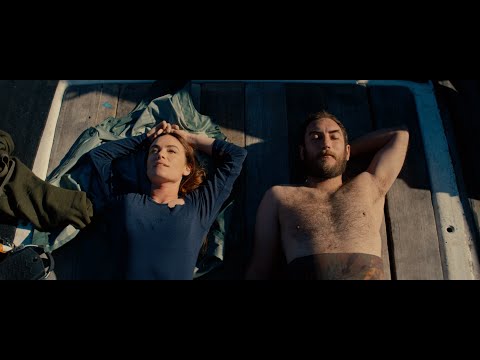
  • Gabriel Gasparinatos (Baker Boy, ONEFOUR) directed the video, filming it off the coast of Southport in Tasmania. The clip features Gabriel's cousin Jesse Gasparinatos, a second-generation Abalone diver, and follows the secluded relationship between a diver and their deck-hand. Gabriel shot the visual over a week in late 2020 on Jesse's fishing boat. "Tazzy is such an extraordinary place," Stone told The Independent. "I think it's where I'll end up living. The director had this idea because his family have always been abalone divers."

    Stone added that the marine mollusks "are very sought-after creatures with amazing pearlescent shells. There's a lot of money in diving for them but you're alone a lot. We spent day after day on the boat. I learnt how to set up the generator and feed the oxygen to the diver. I also learnt to cook abalone - fry it quickly in garlic. It's so tasty."

Comments

Be the first to comment...

Editor's Picks

Graham Nash

Graham NashSongwriter Interviews

Graham Nash tells the stories behind some of his famous songs and photos, and is asked about "yacht rock" for the first time.

Ralph Casale  - Session Pro

Ralph Casale - Session ProSongwriter Interviews

A top New York studio musician, Ralph played guitar on many '60s hits, including "Lightnin' Strikes," "A Lover's Concerto" and "I Am A Rock."

Rob Halford of Judas Priest

Rob Halford of Judas PriestSongwriter Interviews

Rob Halford dives into some of his Judas Priest lyrics, talking about his most personal songs and the message behind "You've Got Another Thing Comin'."

Corey Hart

Corey HartSongwriter Interviews

The Canadian superstar talks about his sudden rise to fame, and tells the stories behind his hits "Sunglasses At Night," "Boy In The Box" and "Never Surrender."

Incongruent Opening Acts

Incongruent Opening ActsSong Writing

Here's what happens when an opening act is really out of place with the headliner, like when Beastie Boys opened for Madonna.

Edwin McCain

Edwin McCainSongwriter Interviews

"I'll Be" was what Edwin called his "Hail Mary" song. He says it proves "intention of the songwriter is 180 degrees from potential interpretation by an audience."