Hark! The Herald Angels Sing

Album: Best Loved Christmas Carols (1855)
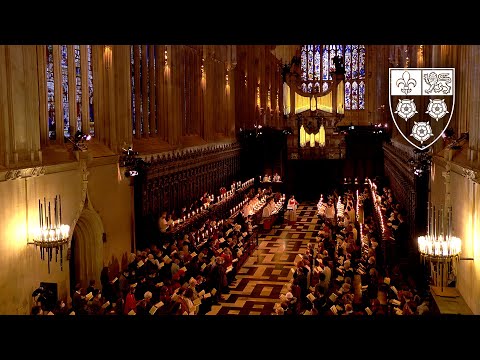
Play Video

Songfacts®:

  • In this Christmas classic, the angels are hearkening the birth of Christ, the newborn king. The song tells an abbreviated but very spirited version of the Gospel story.
  • The words to "Hark! The Herald Angels Sing" were written by Charles Wesley, the brother of the founder of Methodism John Wesley. He was inspired by the sounds of London church bells while walking to church on Christmas Day. The poem first appeared in Hymns and Sacred Poems in 1739 with the opening line of "Hark, how the welkin (heaven) rings." Wesley's evangelist colleague, George Whitefield, altered it to the familiar opening line over the protests of the author in 1753.

    Then in 1760 the Reverend Martin Madan changed lines 7 and 8 from:

    Universal nature say
    Christ the Lord is born today


    To What we know today:

    With the angelic hosts proclaim
    Christ is born in Bethlehem!


    The song went through various other adaptations over the years.
  • The tune was originally composed by Felix Mendelssohn in 1840 for the second chorus "Gott ist Licht" ("God is Light"), of the cantata Festgesang ("Festival Song"). Festgesang was written by the German composer to commemorate Johann Gutenberg and the invention of printing. Mendelssohn died in 1847 and in 1855 Dr. William Cummings, who was an enthusiast of the German composer, put the words and music together in spite of the fact that Mendelssohn had made it clear that his music was not be used for sacred purposes. Additionally, Wesley had envisaged his words being sung to the same tune as his Easter hymn, "Christ the Lord is Risen Today." However it is Mendelssohn's tune that is generally used today.
  • "Hark!" was a popular term in the time this song was written. It was used before speaking to let the listener know that an important message is forthcoming - a modern equivalent would be "Listen Up!" In this case, the angels have important news to share, so they are prefacing it with "hark!"
  • Charles Wesley was a prolific hymn writer, penning over 6000 hymns, more than any other male writer. (Fanny Crosby wrote 8000). Wesley had the ability of expressing sublime truth in simple ways, his motivation in writing his hymns being to teach the poor and illiterate good doctrine. His brother, John Wesley, said that Charles' hymnal was the best theological book in existence. It is said Methodism was born in song and Charles was the chief songwriter. Among the hymns Charles Wesley wrote were, "O For A Thousand Tongues," "Love Divine All Loves Excelling" and "Jesus, Lover of my Soul."
  • There are two additional verses in the original version of this song that George Whitefield removed:

    Come desire of nations come
    Fix in us thy humble home
    Rise the woman's conquering seed
    Bruise in us the serpent's head
    Now display thy saving power
    Ruin'd nature now restore
    Now in mystic union join
    Thine to ours and ours to thine

    Adam's likeness Lord efface
    Stamp thy image in its place
    Second Adam from above
    Reinstate us in thy love
    Let us thee though lost regain
    Thee the life the inner man
    O to all thyself impart
    Form'd in each believing heart

Comments: 2

  • AnonymousWhat does "late in time behold he comes" from Hark the Herold angel sing MEAN ?
  • Terry from Willmar, MnAccording to the 16 bibles I looked through, the angels DID NOT "sing". Look it up in Mark 2:13. "...a multitude of angels SAYING..." What about "choirs of angels"? That's not in the bible either. Look up the definition of "choirs" in your dictionary. The definition, in relation to angels, is "a group of" as in a group of witches (coven) or a group of geese (gaggle), etc.
see more comments

Editor's Picks

Andrew Farriss of INXS

Andrew Farriss of INXSSongwriter Interviews

Andrew Farriss on writing with Michael Hutchence, the stories behind "Mystify" and other INXS hits, and his country-flavored debut solo album.
Jethro Tull

Jethro TullFact or Fiction

Stage urinals, flute devices, and the real Aqualung in this Fact or Fiction.
Songs in Famous Movie Scenes: Tarantino Edition

Songs in Famous Movie Scenes: Tarantino EditionMusic Quiz

Whether he's splitting ears or burning Nazis, Quentin Tarantino uses memorable music in his films. See if you can match the song to the scene.
Mike Rutherford (Genesis, Mike + The Mechanics)

Mike Rutherford (Genesis, Mike + The Mechanics)Songwriter Interviews

Mike Rutherford talks about the "Silent Running" storyline and "Land Of Confusion" in the age of Trump.
Donald Fagen

Donald FagenSongwriter Interviews

Fagen talks about how the Steely Dan songwriting strategy has changed over the years, and explains why you don't hear many covers of their songs.

Soul Train Stories with Stephen McMillian

Soul Train Stories with Stephen McMillianSong Writing

A Soul Train dancer takes us through a day on the show, and explains what you had to do to get camera time.