"Autobahn" is a pioneering song in the "electro pop" genre; it was the first song in that style to chart in both the UK and US. Using vocoders, synths and other electronic instruments, Kraftwerk gave rise to the British new romantic movement, hip-hop and techno.
The album version is 22-minutes long and was intended to reproduce a journey on the motorway. Band member Ralf Hutter recorded the passing cars in the background by dangling a microphone out of his old grey Volkswagen window as it traveled down an autobahn. However, these recordings were not suitable for the song, so they recreated the car sounds using synthesizers.
Autobahn is the German word for a major high-speed road usually linking one or more cities and towns, similar to motorway or freeway in English-speaking countries. In the 1920s the Weimar Republic built the first autobahns on a limited scale. Shortly after the 1933 Nazi takeover, Hitler enthusiastically embraced an ambitious autobahn construction project and soon over 100,000 laborers were working at construction sites all over Germany. These autobahns formed the first high-speed road network in the world.
Florian Schneider and Ralf Hutter first met as classical music students at the Dusseldorf Conservatory. They formed the group Kraftwerk (German for "power station"), in 1970 and began to immerse their music in the fledgling world of minimalist electronics. Their debut album, Kraftwerk 1, was released in 1971. The duo were joined in 1973 by Wolfgang Flur and Karl Bartos as electronic percussionists and the following year they made their international breakthrough with their album Autobahn. The album is often credited for bringing electronic music to the public for the first time.
In America the edited version of this song was Kraftwerk's only hit, but they had many more in the UK. In February 1982 their double-A-side "
The Model" and "
Computer Love" topped the British charts, making Kraftwerk the first German act to reach #1 in the UK.
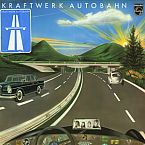
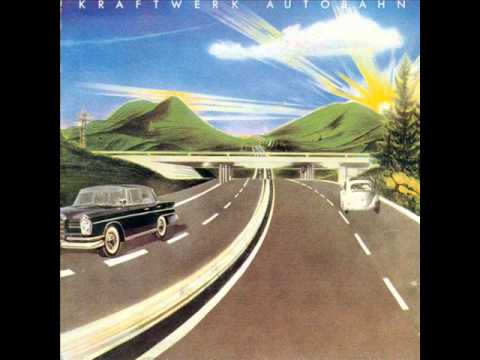
The album cover, which features a colorful drawing of a motorway on a summer day, was painted by Emil Schult, who also co-wrote the lyrics to the song.
The
Autobahn album contains five tracks. This song takes up all of Side A and the other four are on Side B.
>>>
Suggestion credit:
David - Dublin, Ireland
Mojo magazine November 2009 asked Hutter whether with his classical training he wrote scores when composing for Kraftwerk. He replied: "We made little notes. When I composed 'Autobahn' with my partner Florian, we don't need many words, we just (mimes making notes or sketching), 'Yes, cars, tyres, asphalt, landscapes…' By using keywords, we could fantasize the whole symphony. That's how I make notes."
Hutter's vocal would become his trademark delivery. "It's called Sprechsingen," he told Mojo magazine, October 2012. "It means 'talk-sing.' It's like a form of rap. This started with 'Autobahn.'"
The rhythm of the words is virtually identical to the cadence of The Beach Boys' 1965 single "
Barbara Ann." A big fan of the American group, Hutter commented to
Mojo that the Beach Boys "managed to concentrate a maximum of fundamental ideas. In a hundred years from now when people want to know what California was like in the '60s, they only have to listen to a single by The Beach Boys."
It was engineer Conny Plank who introduced Kraftwerk to synthesizers. The first use to which they put their new Moog keyboard was the "car" sounds on this song.
German painter, poet and audio-visual artist Emil Schult collaborated with Ralf Hütter and Florian Schneider on the lyrics. "Autobahn was done like a composition, and certain things like the sound of the Volkswagen had to be recorded externally," he recalled to Uncut magazine. "Ralph and Florian suggested a song that describes our tours on the autobahn, and I made this suggestion of 'fahr'n, fahr'n, fahr'n auf der autobahn' and two or three stanzas. The idea was to create a musical film in your mind."
The track reflects prosaic nights of low-budget touring. "It's not about cars, it's about the autobahn," Hütter told Uncut. "It's a road where we were traveling all the time: hundreds of thousands of kilometers from universities to art galleries, from club to home. Then the car sounds, the radio - it's like a loop, a continuum, part of the endless music of Kraftwerk. It's also a road movie with a humorous twist."