White Feather Hawk Tail Deer Hunter

Album: Stove (2026)
Charted: 58 106
Play Video

Songfacts®:

  • On September 26, 2024, Lana Del Rey did something that would have sounded unthinkable back in the Born To Die era: she married an alligator tour boat captain.

    His name is Jeremy Dufrene, and he operates swamp tours out of Des Allemands, Louisiana; a place that sounds less like a honeymoon destination and more like somewhere you'd lose your shoes in the mud. The pair first met in 2019 when Lana posted photos from one of his swamp tours to Facebook. Five years later they tied the knot in a harbor in Des Allemands.

    If you've followed Lana from "Video Games" to "Ride" to the desert mysticism of "Ultraviolence," this pivot to lawful matrimony with a man who probably owns multiple camouflage items feels less like a plot twist and more like the third act of a very American epic.

    Enter: "White Feather Hawk Tail Deer Hunter," the most Lana Del Rey title since, well, any Lana Del Rey title.
  • Recorded for her 10th album, Stove, the song is a domestic-surreal love letter that reframes mowing lawns and cooking dinner as mystical rites of emotional survival. While "Norman F---ing Rockwell" served as her open letter to romantic chaos, "White Feather-Hawk Tail Deer Hunter" is her handwritten recipe card for peace.
  • Del Rey casts her husband as a gentle Southern outdoorsman who "keeps me cool in the hot breeze summer." This is a notable upgrade from past lovers such as the "gangster" from "Blue Jeans" who "keeps it cool like crushed ice cubes."
  • Del Rey blends animal imagery into a distinctive recurring phrase. Liking her alligator tour guide husband's hair to a hawk's tail and referencing his love of deer hunting, she reinforces the layered symbolism of wildlife.

    The titular "White Feathers" invites interpretation. In Del Rey's symbolic universe, white feathers could represent purity, peace, or the spiritual hush after the "trouble" she alludes to in her past; a soft counterpoint to the darker moods of earlier songs like "Dark Paradise" or "Summertime Sadness."

    Or, they might simply nod to the natural graying of her husband's hair. Lana has always balanced grand myth with grocery-store reality.
  • The kitchen and stove imagery that runs through Stove finds its thesis statement here.

    I wanted to know if I could use your stove
    To cook somethin' up for you


    Del Rey turns housewife iconography into a metaphor for healing. When she sings, "Yoo-hoo, dinner's almost done" it lands like a mission statement.

    That said, this is still Lana. The cocaine references and nicotine patch lines linger like ghosts at the edge of the porch light. Addiction and self-sabotage haven't vanished; they've simply been relocated to the periphery of a life now anchored by a man she calls "positively voodoo," a line that fuses his Louisiana roots with the sense that love, even healthy love, remains faintly supernatural.
  • Dufrene is credited as a co-writer alongside Lana's sister Chuck Grant (real name: Caroline) and her brother-in-law Jason Pickens, a family affair that feels entirely on brand for an album about home. "There's just so many bits and phrases thrown in by other people," Del Rey said.
  • Also credited are composer David Raskin and songwriter Johnny Mercer, thanks to a sample of Ella Fitzgerald's 1964 recording of "Laura," the theme from the 1944 film noir classic Laura. That song's legacy stretches into Twin Peaks, where it inspired the name Laura Palmer, and since David Lynch's dream logic runs like a hidden river through Lana's catalogue, the reference feels less accidental and more preordained.
  • Del Rey handled production alongside Jack Antonoff and Drew Erickson. Antonoff plays what appears to be everything short of the cutlery drawer (drums, bass, electric and acoustic guitars, keyboards), while Erickson layers piano, harp, celesta and percussion into a ghostly, minimalist arrangement that blends Gothic country with orchestral pop. Other musicians contribute violins, cello, trumpet, trombone, clarinet, flute and oboe.
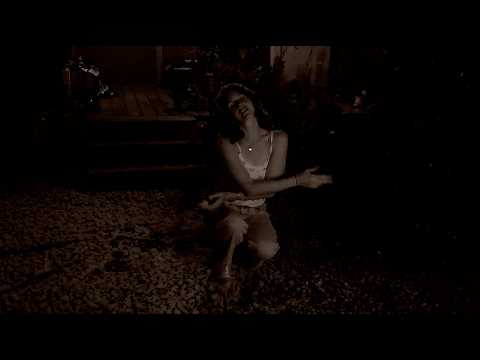
  • The video is homemade and unvarnished. Del Rey lip-syncs, eats macaroni and cheese, dances under fake snow in a backyard, then escalates into oven and stovetop imagery; at one point literally putting her head into the oven. It's both domestic tableau and Sylvia Plath wink, visually echoing the lyric "take my hand off the stove, hun."

    Around the bridge, the edit spirals into vintage cartoons and old film clips, spliced with home-movie footage of Lana, Jeremy and family dancing. It's wholesome Americana colliding with slightly macabre ephemera. In other words, Stove in miniature.

Comments

Be the first to comment...

Editor's Picks

Tim Butler of The Psychedelic Furs

Tim Butler of The Psychedelic FursSongwriter Interviews

Tim and his brother Richard are the Furs' foundation; Tim explains how they write and tells the story of "Pretty In Pink."

Don Dokken

Don DokkenSongwriter Interviews

Dokken frontman Don Dokken explains what broke up the band at the height of their success in the late '80s, and talks about the botched surgery that paralyzed his right arm.

Terry Jacks ("Seasons in the Sun")

Terry Jacks ("Seasons in the Sun")Songwriter Interviews

Inspired by his dear friend, "Seasons in the Sun" paid for Terry's boat, which led him away from music and into a battle with Canadian paper mills.

N.W.A vs. the World

N.W.A vs. the WorldSong Writing

How the American gangsta rappers made history by getting banned in the UK.

Keith Reid of Procol Harum

Keith Reid of Procol HarumSongwriter Interviews

As Procol Harum's lyricist, Keith wrote the words to "A Whiter Shade Of Pale." We delve into that song and find out how you can form a band when you don't sing or play an instrument.

Producer Ron Nevison

Producer Ron NevisonSong Writing

Ron Nevison explains in very clear terms the Quadrophenia concept and how Heart staged their resurgence after being dropped by their record company.