Give Me Central 209

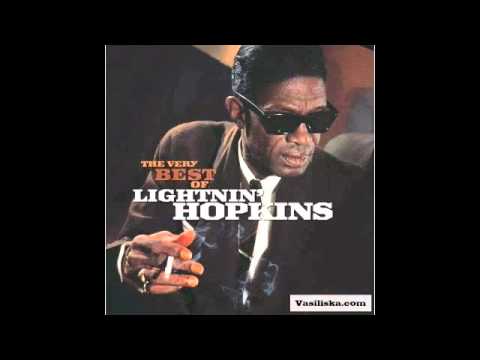
Album: The Very Best Of Lightnin' Hopkins (1952)
Play Video

Songfacts®:

  • This slow-crawling blues song has Lightnin' Hopkins asking a telephone operator to patch him through to his lover. He has no luck getting her number or finding a way to get to her and ends the song singing about walking home in failure. At least, that's how it appears on the surface. Look closer, though, and there's something else going on here.

    The lyrics are subtly strange if you scrutinize them. Hopkins explains to the operator that the bus lines have stopped and the train conductors won't let him ride anymore. He ends the song with the words:

    I went walking straight back home
    I was praying in my heart asking Jesus:
    "Oh, Lord, now what wrong have I done?"


    That final lament can be heard as Hopkins simply wondering what he's done to have caused the Fates to separate him from his lover, but Azizi Powell, historian of African American culture, suggests a different interpretation at Pancocojams.

    Powell writes that the song actually combines blues and gospel. She ties it to a tradition of songs that use phone lines and operators as metaphors for Jesus and Christianity. It seems strange at first blush, but "Give Me Central 209" actually makes more sense if it's viewed this way.
  • In the 1950s, "central" was common parlance for the central office of a telephone company. If people needed help finding a number or placing a call, they'd ask for "central" and be directed to a telephone operator who could help them out.

    Many songs pre-2000 (particularly pre-1980s) mention operators, central, and various other indicators for telephone-company employees. Before cell phones (which preceded smart phones, kiddos), people had a much harder time getting in touch. It wasn't very convenient, but it set the stage for a great deal of music-worthy emotional intrigue.
  • 209 is the area code for California. Samuel "Lightnin'" Hopkins was born in Centerville, Texas, and spent most of his early music career in the Houston scene, but in 1946 Lola Anne Cullum of Aladdin Records brought him to Los Angeles, where Hopkins cut his first recordings. We can't know for certain if that's why he chose the 209 area code for this song, but it would make sense.


    The song has been included on multiple Hopkins collections and covers by other artists. It has sometimes appeared with the title "Hello Central (Give Me 209)" or "Give Me Central 209 (Hello Central)," but the original single presents the title as "Give Me Central 209." The single's B-Side is "New York Boogie."
  • Rockland Music Corporation published the original single, with brothers Bob and Morty Shad recording it on their Sittin' In With label. Each of the brothers ran various labels through the '50s and '60s. In 1967, Bob's Mainstream label released the self-titled debut album of Big Brother & The Holding Company, which was Janis Joplin's first professional act.

Comments: 1

  • Borak J. Czakinowskiwicz Iii from Villa Park, Il"209" is NOT the area code, it's the local "exchange". When few people had phones, their "phone #'s were shorter = had fewer digits. As more folks got phones, more #'s were needed & so more digits & letters were added ... remember "BR 549"? Jr. Samples' # car dealership's # on "HEE HAW!"
see more comments

Editor's Picks

Brandi Carlile

Brandi CarlileSongwriter Interviews

As a 5-year-old, Brandi was writing lyrics to instrumental versions lullabies. She still puts her heart into her songs, including the one Elton John sings on.

Victoria Williams

Victoria WilliamsSongwriter Interviews

Despite appearances on Carson, Leno and a Pennebaker film, Williams remains a hidden treasure.

Director Mark Pellington ("Jeremy," "Best Of You")

Director Mark Pellington ("Jeremy," "Best Of You")Song Writing

Director Mark Pellington on Pearl Jam's "Jeremy," and music videos he made for U2, Jon Bon Jovi and Imagine Dragons.

Timothy B. Schmit of the Eagles

Timothy B. Schmit of the EaglesSongwriter Interviews

Did this Eagle come up with the term "Parrothead"? And what is it like playing "Hotel California" for the gazillionth time?

Dave Edmunds

Dave EdmundsSongwriter Interviews

A renowned guitarist and rock revivalist, Dave took "I Hear You Knocking" to the top of the UK charts and was the first to record Elvis Costello's "Girls Talk."

Women Who Rock

Women Who RockSong Writing

Evelyn McDonnell, editor of the book Women Who Rock, on why the Supremes are just as important as Bob Dylan.