Otter Creek is a tributary of the Susquehanna River in York, Pennsylvania, the small semi-industrial town where the band is from. The song finds lead singer Ed Kowalczyk dealing with the aftermath of a tragedy that occurs near the surrounding campground.
Chad Taylor's guitar riff was a recreation of a sound he heard in a dream where he was lying in a vast field with power cables humming overhead. "The electromagnetic field created by the lines was so strong that it made all of the hair on my body stand up," he recalled in a Facebook post. "I wanted to go join the guys but I couldn't move. I tried hard to hear what they were saying but the power cables were making this loud hum. As the hum got louder it masked their voices. I stopped listening for the guys and focused in on the electric power cables. It was like they were talking to me. The hum was a near grinding sound that oscillated ever so slightly. I woke up from the dream and wrote a note to myself, 'high tension power lines.'"
Taylor tried to recreate the sound of the electromagnetic hum in the studio by cranking up to max volume on his old Fender amp, clicking on the reverb and vibrato, and slowly grinding the strings on his guitar until he found a series of notes that "pushed and pulled like the oscillating noise."
Kowalczyk was immediately struck by the sound when he arrived in the studio and urged Taylor to keep playing it. He plugged his microphone into a small guitar amp that squealed with feedback. "But rather than try and stop the noise, Ed squealed right along with it," Taylor remembered. "The first words I heard him sing were 'be here, now.' At this point, I thought we were channeling some higher connection and we both felt it. Don't stop, I thought."
He continued: "And with that Ed sang what I thought was 'when all that is left to do, is reflect on what's been done... this is where sadness breaths... the sadness of everyone.' I'm mean, like exactly that way. A magical shaman, a lyrical statement to define this feeling. Now I'm really getting excited and I just start naturally speeding up the small push and pull of the chords. As I get faster, the more Ed sings along, almost emulating the feedback. We've been holding on this one chord for maybe ten minutes and like water about to crest over the dam, it's going to break apart, and it finally does! It's a big open E chord followed by a G and then right back to the tension... I mean lets GO!
Harder, faster, feedback, yelling, the vibrato on the amp is going as fast as it can and finally, it crashes like a massive wave on the shores of some beach. It's blissful and perfect and Ed and I swear that we won't let Dahlheimer and Gracey hear it until we get to the studio. For some reason we knew it would be better if we saved it until the perfect moment."
Taylor was amazed at how quickly bassist Patrick Dahlheimer and drummer Chad Gracey fell in with the track with minimal direction. He said, "I told the guys, 'We're going to play the one that goes faster and faster.' What's amazing is that the boys in a matter of minutes crafted those incredible parts. Their only guidelines being a few basic chords and the orders to get faster throughout the entire song."
Maybe
this track should have been called "
Lightning Crashes," instead. The band recorded "The Dam At Otter Creek" at Pachyderm Studio in Cannon Falls, Minnesota, during a lightning storm. To heighten the experience, they turned off all the lights in the studio and played while flashes of lightning illuminated the space. Said Taylor: "Thankfully, the studio had huge windows that allowed the band to see this incredible display. I held my fingers on the seventh fret of my guitar, kicked on my amplifiers and an old Leslie speaker and started to make my guitar sound like the power lines in my dream. The rest is purely documented on the album. I swear that we were watching lightning bolts slash across the sky when Gracey played the first snare/kick drum fill! One take, one moment of bliss that really set the stage for Throwing Copper and the musical highs and lows that would follow. I'm pretty sure we wanted to play a second take but [producer] Jerry Harrison told us not to. One-take performances are special, and although we might have done it differently, we would never do it the same."
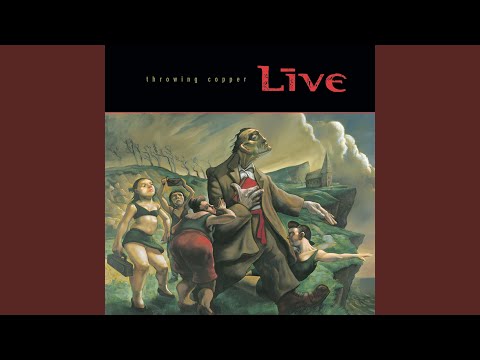
This is the opening track on Live's breakthrough album, Throwing Copper, which sold 8 million copies in America.
This was used in the 1994 comedy In The Army Now, starring Pauly Shore.