The Bonny Swans

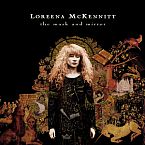
Album: The Mask and Mirror (1994)
Play Video

Songfacts®:

  • Although "The Bonny Swans" is an original composition by Loreena McKennitt, it is based closely on a traditional murder ballad "The Cruel Sister," also known as "Two Sisters," "The Twa Sisters" and a plethora of other names in several languages, though its first appearance in print appears to have been as "The Miller And The King's Daughter" as a broadside of 1656. "The Twa Sisters" is a Child Ballad like "The Unquiet Grave."

    Whatever its provenance, it is doubtful if any earlier version sounded quite like "The Bonny Swans." An American student of Celtic culture (who shall remain nameless) once said that hearing a voice like this was one of the things that convinced him there really is a God in Heaven. While most musicologists wouldn't go quite that far, it has to be said that the siren-like soprano voice of the Canadian multi-instrumentalist coupled with a fine guitar riff echoed in a call-and-response manner, where the same notes are answered by her violinist gives this song a dreamlike quality in live concert. The softer and longer album version runs to an extended 7:21.
  • In this latter-day adaptation of a tale of wanton cruelty, there are three sisters, the daughters of a farmer, two of whom are walking by the river when the older one pushes the younger one in. As the price of saving her from drowning, the elder sister demands she give her the hand of her betrothed. Sadly, the poor girl drowns and is taken from the water by a miller, whose daughter has mistaken her for a swan. A harp maker passes by, and fashions a harp from the fingers, hair, and breast bone of the dead woman. Then the harp maker takes the harp to the court of a king - who appears to be the farmer - and the harp plays by itself, powered by the younger sister's soul, accusing the older sister (referred to as a "false sister"), whose name is soon revealed to be Anne, of murder ("Who drowned me for the sake of a man"). >>>
    Suggestion credit:
    Alexander Baron - London, England, for above 2
  • This song's instrumental accompaniment features a Bodhrán, an Irish frame drum with a goatskin head tacked to one side (synthetic heads or other animal skins are sometimes used). The other side is open-ended for one hand to be placed against the inside of the drum head to control the pitch and timbre. It also features a bouzouki, a stringed instrument originating in Greece and eventually brought over to Ireland, sounding somewhat similar to a guitar. The instrumentation is a cross between rock and Irish folk music, with Loreena McKennitt on vocals, accordion and keyboards, Hugh Marsh on violin, Anne Bourne on cello, George Coller on acoustic bass, Donal Lunny on bodhrán and bouzouki, and Brian Hughes on acoustic and electric guitar. >>>
    Suggestion credit:
    Annabelle - Eugene, OR

Comments: 1

  • Peter from AustraliaIt seems weird that the farmer turns into a king very quickly, maybe he won the lottery! ;-D
    It would make more sense if the lyric was ' a father who lived in the north country...'
see more comments

Editor's Picks

Facebook, Bromance and Email - The First Songs To Use New Words

Facebook, Bromance and Email - The First Songs To Use New WordsSong Writing

Where words like "email," "thirsty," "Twitter" and "gangsta" first showed up in songs, and which songs popularized them.

Stand By Me: The Perfect Song-Movie Combination

Stand By Me: The Perfect Song-Movie CombinationSong Writing

In 1986, a Stephen King novella was made into a movie, with a classic song serving as title, soundtrack and tone.

Adele

AdeleFact or Fiction

Despite her reticent personality, Adele's life and music are filled with intrigue. See if you can spot the true tales.

Ian Anderson: "The delight in making music is that you don't have a formula"

Ian Anderson: "The delight in making music is that you don't have a formula"Songwriter Interviews

Ian talks about his 3 or 4 blatant attempts to write a pop song, and also the ones he most connected with, including "Locomotive Breath."

John Lee Hooker

John Lee HookerSongwriter Interviews

Into the vaults for Bruce Pollock's 1984 conversation with the esteemed bluesman. Hooker talks about transforming a Tony Bennett classic and why you don't have to be sad and lonely to write the blues.

Al Jourgensen of Ministry

Al Jourgensen of MinistrySongwriter Interviews

In the name of song explanation, Al talks about scoring heroin for William Burroughs, and that's not even the most shocking story in this one.