Every Race Has A Flag But The Coon

Album: Music from the New York Stage (1900)
Play Video

Songfacts®:

  • Although "Every Race Has A Flag But The Coon" was written by two white men, who almost certainly had their tongues firmly in their cheeks when they put pen to paper, this doubtful ditty actually inspired the creation of a Pan-African flag.

    The latter half of the Nineteenth and early Twentieth Centuries saw the rise of two black leaders who saw far beyond the calls for integration and assimilation by attempting to literally drag blacks up from slavery by their bootstraps. One of these men was Booker T. Washington (1856-1915), an educator as well as a politician; the other was Marcus Garvey (1887-1940), who among other things founded the Universal Negro Improvement Association. In 1920, Garvey's organization created the Pan-African Flag, and the man himself said: "Show me the race or the nation without a flag, and I will show you a race of people without any pride. Aye! In song and mimicry they have said, 'Every race has a flag but the coon.' How true! Aye! But that was said of us four years ago. They can't say it now..."

    Though Washington's greatness would soon be universally acknowledged, the Jamaican-born Garvey's ideas of black economic independence and separatism didn't go down at all well with the powers-that-be, and in 1923 he was sentenced to five years' imprisonment after being railroaded by the FBI for mail fraud. Although he died without even coming close to realizing his dream, in 1964, Garvey's remains were exhumed from Kensal Green Cemetery in London where he died, and returned to his native Jamaica. In November 1964, he was officially proclaimed Jamaica's first National Hero. His remains were re-interred at a shrine in National Heroes Park.
  • "Every Race Has A Flag But The Coon" was written by lyricist Will A. Heelan and composer J. Fred Helf; it was published originally at New York by Jos. W. Stern in 1900, when the coon song was at its very peak. According to the cover of one printing of the sheet music, it was sung by Lottie Gilson, Marie Dressler, Williams and Walker, Frances Curran, Hodges and Launchmere, and many others. >>>
    Suggestion credit:
    Alexander Baron - London, England, for above 2

Comments

Be the first to comment...

Editor's Picks

Maxi Priest

Maxi PriestSongwriter Interviews

The British reggae legend tells the story of his #1 hit "Close To You," talks about his groundbreaking Shabba Ranks collaboration "Housecall," and discusses his latest project with Robin Trower.

Max Cavalera of Soulfly (ex-Sepultura)

Max Cavalera of Soulfly (ex-Sepultura)Songwriter Interviews

The Brazilian rocker sees pictures in his riffs. When he came up with one of his gnarliest songs, there was a riot going on.

Tom Keifer of Cinderella

Tom Keifer of CinderellaSongwriter Interviews

Tom talks about the evolution of Cinderella's songs through their first three albums, and how he writes as a solo artist.
Jim Adkins of Jimmy Eat World

Jim Adkins of Jimmy Eat WorldSongwriter Interviews

Jim talks about the impact of "The Middle" and uses a tree metaphor to describe his songwriting philosophy.
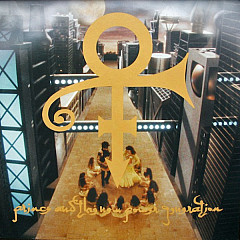
Evolution Of The Prince Symbol

Evolution Of The Prince SymbolSong Writing

The evolution of the symbol that was Prince's name from 1993-2000.
Queen

QueenFact or Fiction

Scaramouch, a hoople and a superhero soundtrack - see if you can spot the real Queen stories.