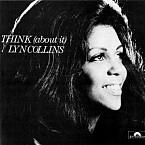
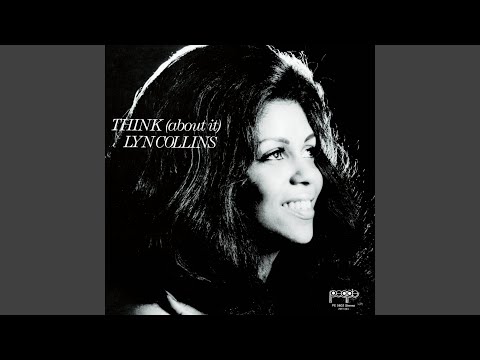
Think (About It)

Album: Think (About It) (1972)
Charted: 66
Play Video

Songfacts®:

  • "Think (About It)" is best known for being the source material of many hip-hop tracks. The song is a musical toy box of breaks, hooks, grooves and stabs that show up as samples on literally thousands of songs. Some are subtle, like on Janet Jackson's "Alright" where the vocal shrieks are in the mix. Others borrow huge swaths of the song, most famously "It Takes Two" by Rob Base & DJ E-Z Rock. That one uses the "whoo, yeah" throughout the entire song and loops the drum and bass groove along with Collins' vocal when she sings:

    It takes two to make a thing go right
    It takes two to make it outta sight
  • The song was written and produced by James Brown, the biggest source of samples in hip-hop history. Brown had his own record label called People that he used to release material from his bandmembers and associates like Fred Wesley and Maceo Parker. Lyn Collins was one of his backup singers; she got his attention by sending tapes to his manager and tracking Brown down when he played anywhere near where she lived in Texas. Eventually she wrangled an audition and got the gig.

    "Think (About It)" was the first single Collins released, and her most successful. The follow-up, "Me And My Baby Got A Good Thing Going," also made an impact, as did a duet with Brown called "What My Baby Needs Now Is A Little More Lovin'." She released another album on People in 1975 but it didn't generate any hits.

    According to the documentary James Brown - Soul Survivor, Collins was also Brown's girlfriend, and he kept her under his thumb. Collins, who died in 2005 at 56, said that Brown installed a dedicated phone line in her house that she was expected to answer any time he called.
  • In this song, Collins puts the guys in her life on notice, letting them know she and her sisters aren't going to tolerate their misdeeds any more. Under this new policy, they will suffer no more heartbreak, no more misery. Their plan to accomplish this: Think.
  • Think is the kind of percussive word that appealed to James Brown, whose lyrics were mostly there to support the groove. In 1960, Brown covered a song by the vocal group The 5 Royales called "Think," which he re-released in 1973 after "Think (About It)" charted.
  • Brown borrowed a bit of the lyrics from the 5 Royales song. In their "Think," they sing:

    Think about the good thing
    Think about the right thing


    Collins uses variations on these lines in her vocal.

    It's interesting to "think" about what would have happened if Lowman Pauling, the member of The 5 Royales who wrote "Think," was given a composer credit on "Think (About It)." His estate (Pauling died in 1973) or whoever owned his rights to the song would have earned royalties from the thousands of subsequent samples.

Comments

Be the first to comment...

Editor's Picks

Graham Nash

Graham NashSongwriter Interviews

Graham Nash tells the stories behind some of his famous songs and photos, and is asked about "yacht rock" for the first time.

Ralph Casale  - Session Pro

Ralph Casale - Session ProSongwriter Interviews

A top New York studio musician, Ralph played guitar on many '60s hits, including "Lightnin' Strikes," "A Lover's Concerto" and "I Am A Rock."

Rob Halford of Judas Priest

Rob Halford of Judas PriestSongwriter Interviews

Rob Halford dives into some of his Judas Priest lyrics, talking about his most personal songs and the message behind "You've Got Another Thing Comin'."

Corey Hart

Corey HartSongwriter Interviews

The Canadian superstar talks about his sudden rise to fame, and tells the stories behind his hits "Sunglasses At Night," "Boy In The Box" and "Never Surrender."

Incongruent Opening Acts

Incongruent Opening ActsSong Writing

Here's what happens when an opening act is really out of place with the headliner, like when Beastie Boys opened for Madonna.

Edwin McCain

Edwin McCainSongwriter Interviews

"I'll Be" was what Edwin called his "Hail Mary" song. He says it proves "intention of the songwriter is 180 degrees from potential interpretation by an audience."