Baby Don't Get Hooked on Me

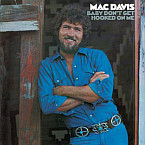
Album: Baby Don't Get Hooked on Me (1972)
Charted: 29 1
Play Video

Songfacts®:

  • When Mac Davis' producer, Rick Hall, asked him to write a "hook" song, Davis took it literally, coming up with the line "baby, don't get hooked on me" and a melody to go with it. Hall loved it, so Davis finished writing the song that night and recorded it with Hall the next day. The song hooked plenty of fish (listeners), going to #1 on both the Hot 100 and Adult Contemporary charts.
  • In this song, a love interest is getting a little too comfortable with Davis, so he gives her a warning, telling her not to get hooked on him because he's bad news: he'll just use her and set her free. Unlike songs like "Brandy (You're a Fine Girl)" where the singer can't commit but shows some compassion for the girl, in this one Davis doesn't seem to care a whit about her feelings:

    Girl don't let your life get tangled up with mine
    'Cause I'll just leave you, I can't take no clinging vine


    Davis didn't like what he wrote, but once he recorded the song, it was too late: Columbia Records heard its hit potential and put it out as a single. "I thought it was super egotistical and pretentious," David told Billboard.
  • This was recorded at Fame Studios, which was run by Rick Hall in Muscle Shoals, Alabama. In the '60s, soul classics from the likes of Wilson Pickett and Etta James were recorded there; in 1969 four top musicians at Fame left to start Muscle Shoals Sound Studios nearby, establishing two top-tier facilities in this remote locale. When Davis recorded this song in 1972, both studios were going strong.
  • Mac Davis had hits as a songwriter before he started his solo career; he wrote Elvis Presley's "A Little Less Conversation" and "In The Ghetto." He released his first album in 1970, then his second a year later. Baby Don't Get Hooked On Me was his third album, and a breakthrough, selling over a million copies in America thanks largely to this title track. Davis moved into acting at the end of the decade, starring in the highly acclaimed North Dallas Forty in 1979 and the lowly acclaimed The Sting II in 1983.
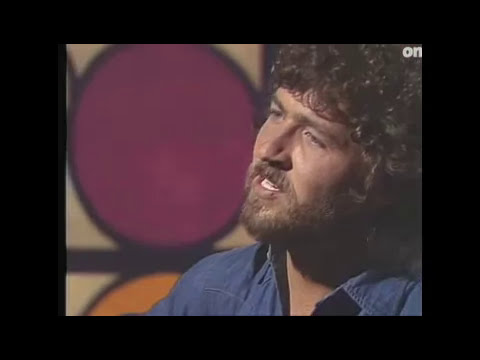
  • Davis performed this song on a number of TV shows. Most singers wore slick fashions or formal wear when they did TV, but Davis wore his "blue suit" - blue jeans and a denim jacket. "When I went to Vegas I wore a tux sometimes, and sometimes I had special clothes made," he told Songfacts. "Then later on I got to thinking, they're not coming to see that, so I went back to my jeans and I played in jeans. So I didn't try to be anybody but me. Whatever there was about me that I could sell, I did."
  • Davis performed this on The Muppet Show when he was a guest star in 1980. He was lowered into an aquarium scene on a fishhook, where he sings it to a mermaid played by Miss Piggy. Thankfully, they edit the line, "It's warm where you're touching me."

Comments

Be the first to comment...

Editor's Picks

Bill Medley of The Righteous Brothers

Bill Medley of The Righteous BrothersSongwriter Interviews

Medley looks back on "Unchained Melody" and "You've Lost That Lovin' Feelin'" - his huge hits from the '60s that were later revived in movies.
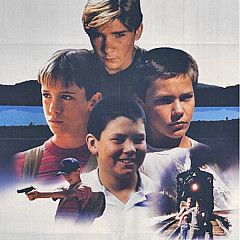
Stand By Me: The Perfect Song-Movie Combination

Stand By Me: The Perfect Song-Movie CombinationSong Writing

In 1986, a Stephen King novella was made into a movie, with a classic song serving as title, soundtrack and tone.

Penny Ford of Snap!

Penny Ford of Snap!Songwriter Interviews

The original voice of Snap! this story is filled with angry drag queens, video impersonators and Chaka Khan.

Shaun Morgan of Seether

Shaun Morgan of SeetherSongwriter Interviews

Shaun breaks down the Seether songs, including the one about his brother, the one about Ozzy, and the one that may or may not be about his ex-girlfriend Amy Lee.

Sending Out An SOS - Distress Signals In Songs

Sending Out An SOS - Distress Signals In SongsSong Writing

Songs where something goes horribly wrong (literally or metaphorically), and help is needed right away.
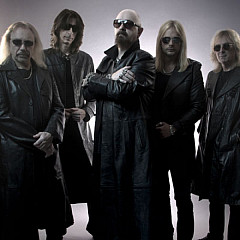
Judas Priest

Judas PriestSongwriter Interviews

Rob Halford, Richie Faulkner and Glenn Tipton talk twin guitar harmonies and explain how they create songs in Judas Priest.