This well-known gospel song is also known as "Precious Lord, Take My Hand" or simply "Precious Lord," and was written de profundis by the black American Thomas Dorsey, who is not to be confused with the trombonist and bandleader Tommy Dorsey. Much great poetry and music is inspired by personal tragedy, and this modern hymn, which can be said to have started the gospel genre, is generally recognized as his greatest composition out of more than 400 songs.
Thomas A. Dorsey had religion and music in his blood; he was born in 1899, the son of a minister and a piano teacher. Unsurprisingly, he became a professional musician, and in 1925 married his first wife, Nettie. The following year he suffered a nervous breakdown, and ended up turning to religion in a big way, finally taking up the post of Musical Director at the Pilgrim Baptist Church, Chicago, in 1932. In August of that year, his wife died during childbirth. His newborn son died the following day.
What happened next is related in an article published in a 2003 issue of Today's Christian, ten years after his death. Unsurprisingly, Dorsey's faith took a severe blow: "I felt that God had done me an injustice. I didn't want to serve him anymore or write gospel songs. I just wanted to go back to that jazz world I once knew so well," he said, but in the midst of despair, a friend visited him and arranged for him to be left alone in a music room with a piano.
"It was quiet; the late evening sun crept through the curtained windows," Dorsey recalled. For the first time in many days, he sat at a piano using his fingers to browse the keys. Soon, he experienced a personal revival: "I felt at peace. I felt as though I could reach out and touch God. I found myself playing a melody, one I'd never heard or played before, and words... just seemed to fall into place."
The song was an immediate and permanent hit. Dorsey himself said, "This is the greatest song I have written." He went on to sing and direct "Precious Lord" at churches and concerts around the world, and by 2003 it had been translated into thirty-two languages.
Although he is generally credited with writing the music, he lifted or adapted the melody from the 1844 hymn "Maitland", which was composed by George N. Allen, but if Dorsey's account of how he came to write his song is true, and there is no reason to doubt it, this was almost certainly subconscious plagiarism.
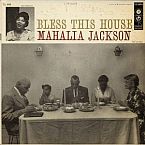
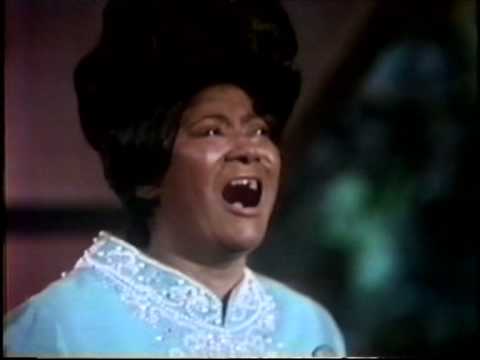
The earliest known recording of "Take My Hand, Precious Lord" was made by Emory Johnson, August 16, 1938, and released on the Decca label. The great American gospel singer Mahalia Jackson sung it at the funeral of Martin Luther King Junior in 1968, and it was sung at her funeral four years later by Aretha Franklin.
Nina Simone is one of the numerous artists to have recorded it; her 1968 version runs to a modest 1 minute 52 seconds; other versions are much longer.
In December 2008, the British born soul singer Micha Paris presented an edition of
Songs Of Praise for BBC Television in which she said it was the song that inspired her to sing gospel.
>>
Suggestion credit:
Alexander Baron - London, England, for all above
Aretha Franklin sang this at Mahalia Jackson's funeral on January 31, 1971. Among the over 40,000 mourners were Coretta Scott King and Sammy Davis, Jr.
>>
Suggestion credit:
Bertrand - Paris, France
This was Martin Luther King's favorite record. He played it during times of stress and often invited Jackson to perform at civil rights rallies to inspire the crowds. She sang it at King's funeral in April 1968.
Ledisi sang this in the 2014 movie Selma, where she portrayed Mahalia Jackson.
Beyoncé performed this song at the Grammy Awards in 2015, where her self-titled album was up for Album Of The Year (it lost to Morning Phase by Beck). She was joined by a group of performers who made the "Hands up, don't shoot" gesture in reference to the killing of Michael Brown, an unarmed black man who was shot by police in Ferguson, Missouri.
In 1957, Elvis Presley recorded this for his Peace In The Valley EP, and that same year he included it on his first Christmas album. The 2022 biopic Elvis captured the singer's emotions surrounding the murder of Martin Luther King Jr. and included a funeral scene with Mahalia Jackson (played by Cle Morgan) singing the tune. Morgan's vocals were dubbed by gospel singer Lenesha Randolph.