Don't Worry

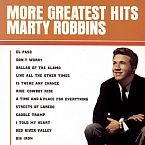
Album: More Greatest Hits (1961)
Charted: 3
Play Video

Songfacts®:

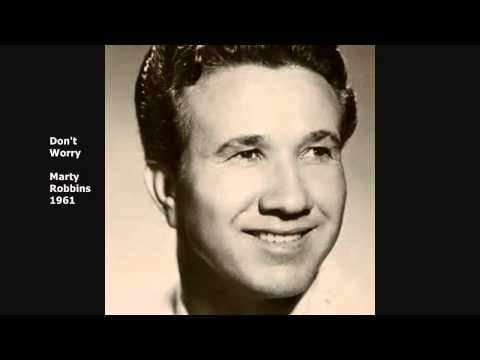
  • Marty Robbins wrote this heartbreaker where he takes a pragmatic view of love and loss, telling his girl to kiss him goodbye because he knows it's over. In his outlook, love is a zero-sum game, with one heart filled every time another breaks.

    The song crossed over to the pop chart and was also Robbins' seventh #1 on the Country chart, where it stayed at the peak position for ten weeks.
  • The song features an early example of guitar distortion, which was a happy accident. An electrical fault in the preamplifier of session musician Grady Martin's 6-string bass created the distortion that was recorded on the track. Although Martin was unhappy with the sound, it was so effective that Robbins' producer, Glenn Snoddy, left it as it was. The distortion starts at the 1:25 mark.

    Martin used the same malfunctioning preamplifier to record an instrumental named "The Fuzz" a year later. That song prompted The Ventures to seek out a way to reproduce the sound for their own music, which led to the invention of the fuzzbox by Orville "Red" Rhodes, which then led to the commercially available Maestro FZ-1 Fuzz-Tone. The Maestro appeared on many '60s hits, perhaps most notably on the Rolling Stones "(I Can't Get No) Satisfaction," and was a landmark tool in the evolution of distortion in music.
  • Eight-year-old LeAnn Rimes won a round on Star Search when she performed this tune on the talent competition in 1991. Rimes also recorded it for her self-titled album in 1999.

Comments: 5

  • Dennis Rader from Nashville TnThe channel strip on the console had a component which blew, remember the instrument was a six string bass playing a simple tik tak part to match the upright bass. That is a muffled type of sound, not strong at all. Then Grady Martin hits the break much stronger than the tik tak happens cuz it’s a SOLO. A piece in THE STRIP blew.
    They removed and kept the strip then rever engineered the first ever Fuzz Pedal for guitar.
    When it happened they all kept playing because that’s what you do in a session. They jumped a bit, looked around, but kept playing.
    Finish the chart, let it ring out and when the recorder is stopped, only then do you talk.
    If a producer or engineer stops the track he has a reason to do so. True story.
  • Ann Montgomery from Seymour, TnI don't care whether it was planned, an accident or a figment of my imagination, it absolutely made a great song even more stunning. And a huge attention getter as well! A fantastic arrangement all because of this "distortion!!
  • Dantheman from Versailles, KentuckyThis comment about the "accidental" guitar distortion doesn't make any sense. Why would the distortion "accidentally" begin at precisely the time the guitar began playing a lead line in the instrumental break, then disappear again until the very end of the song, when it accidentally happens again just as it is supposed to play the very last line? Nope. Both those guitar leads were a planned part of the song, and the distortion - however it was created - was also pre-planned.
  • Barry from Sauquoit, NyPer: http://www.legacy.com/ {05-27-2018}...
    Murfreesboro, Tennessee (AP) — A recording engineer whose invention of a pedal that allowed guitarists to create a fuzzy, distorted sound most famously used by Keith Richards in the Rolling Stones' hit "(I Can't Get No) Satisfaction" has died...
    Glenn Snoddy was 96. His daughter Dianne Mayo said Saturday that Snoddy died Monday, May 21st, 2018, of congestive heart failure at his Murfreesboro, Tennessee, home...
    Snoddy was helping record country artist Marty Robbins' song "Don't Worry" in 1961 when a malfunction caused the distortion in a guitar solo. When other musicians sought the same effect, Snoddy couldn't recreate it in the studio but invented a pedal where a guitarist could switch into the sound with a tap of the foot...
    Richards' "Satisfaction" riff with the fuzz tone is one of the most recognizable ones in rock history...
    May Mr. Snoddy R.I.P.
  • Barry from Sauquoit, NyOn January 24th 1961, "Don't Worry" by Marty Robbins entered Billboard's Hot Top 100 chart; and on March 20th, 1961 it peaked at #3 (for 1 week) and spent 15 weeks on the Top 100 (and 7 of those 15 weeks were on the Top 10)...
    And on February 21st, 1961 it reached #1 on Billboard's Hot Country/Western Sides chart, and as stated above it remained in the top spot for 10 weeks (the record that finally pushed it out of the #1 was the Willie Nelson composed song, "Hello Walls", sung by Faron Young)......
    R.I.P. Mr. Robbins, born Martin David Robinson, (1925 - 1982).
see more comments

Editor's Picks

Cheerleaders In Music Videos

Cheerleaders In Music VideosSong Writing

It started with a bouncy MTV classic. Nirvana and MCR made them scary, then Gwen, Avril and Madonna put on the pom poms.

Shaun Morgan of Seether

Shaun Morgan of SeetherSongwriter Interviews

Shaun breaks down the Seether songs, including the one about his brother, the one about Ozzy, and the one that may or may not be about his ex-girlfriend Amy Lee.

Real or Spinal Tap

Real or Spinal TapMusic Quiz

They sang about pink torpedoes and rocking you tonight tonight, but some real lyrics are just as ridiculous. See if you can tell which lyrics are real and which are Spinal Tap in this lyrics quiz.

Ian Anderson of Jethro Tull

Ian Anderson of Jethro TullSongwriter Interviews

The flautist frontman talks about touring with Led Zeppelin, his contribution to "Hotel California", and how he may have done the first MTV Unplugged.

Stan Ridgway

Stan RidgwaySongwriter Interviews

Go beyond the Wall of Voodoo with this cinematic songwriter.

Dar Williams

Dar WilliamsSongwriter Interviews

A popular contemporary folk singer, Williams still remembers the sticky note that changed her life in college.