I Don't Care

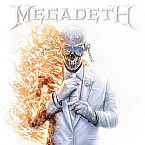
Album: Megadeth (2025)
Play Video

Songfacts®:

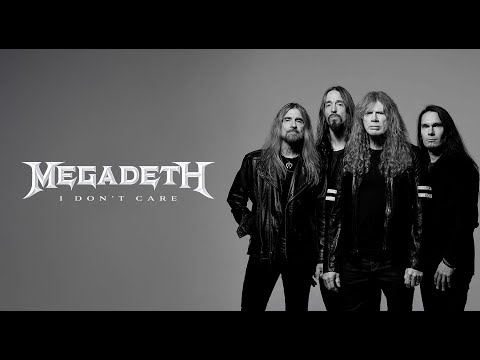
  • "I Don't Care" kicks off with Dave Mustaine's thunderous guitar solo before sliding into a sneering vocal that owes as much to punk's spit-in-your-eye attitude as it does to thrash metal discipline. Structurally, it's built around a direct, frequently repeated line built on variants of "I don't care...," which gives the song a street-corner menace rather than the intricate labyrinths of, say, "Holy Wars... The Punishment Due."
  • Mustaine treats indifference as a survival skill. Across the verses, he shrugs off morality ("I don't care when the truth is a lie"), class structures ("I don't care if I'm not your class"), and even mortality itself ("I don't care if you live or die").

    Mustaine framed the song as a kind of fantasy of emotional honesty. "How many times have you wanted to say this to someone?" he asked. "Deep down inside, if we had the balls, we would tell more people, 'I don't care' more often." In other words, it's the internal monologue most people have while smiling politely; Megadeth simply turns it up loud enough to rattle the windows.
  • The chorus escalates from indifference to outright condemnation, with Mustaine unloading a barrage of insults:

    He was a hater and a thief, a maggot in dead meat
    A traitor and a creep, a jack-off and a sheep
    You know a rat never learns, you get what you deserve


    The target is unnamed, but Megadeth fans - armed with decades of lineup changes and grudges - have been quick to speculate. Mustaine has a long tradition of settling scores in song, from "Set The World Afire" to "Liar."
  • Musically, the track is a deliberate left turn. Instead of Megadeth's usual hyper-precise, technical thrash, "I Don't Care" leans into a raw, punk-influenced grind. Mustaine explained that parts of the main riff had been rattling around since The Sick, The Dying... And The Dead! era, but the execution was intentionally stripped back. He's particularly proud of the guitar textures.

    "There is the main rhythm riff, next, a very deliberate down-picking part, next, the octave chords with jump picking on octave notes (while still down-picking!)," he said. "And the soloing and back and forth between me and Teemu (Mäntysaari) is magnificent!"
  • The music video, directed by Keith J. Leman, follows the same philosophy. Mustaine explicitly vetoed anything that smelled of polish. "This is a punk song," he told Rolling Stone, rejecting the idea of an "artsy-fartsy" production. Instead, the video dives into skate culture chaos: graffiti, smashed property, unruly house parties, and young skaters tearing through spaces like they've never heard the word permission.
  • Mustaine described the video as a glimpse into being a young Dave again, "hanging out with friends, drinking beer, lighting fires, skating, and attending house parties." The band performance shots cut in between the mayhem, with Mustaine glaring into the camera and making it abundantly clear that his give-a-damn meter remains permanently broken.
  • A memorable on-set moment came when Mustaine smashed a prop beer bottle over an actor's head several times. "The only one that truly looked convincing was when I hit a guy square in the face," he recalled. "I broke one on his face, and he replied, 'It didn't quite work.' So everyone urged me, 'Hit him harder.'"
  • "I Don't Care" is the second single from Megadeth's self-titled album. The track debuted on November 14, 2025, following the lead single, "Tipping Point." The album is Megadeth's 17 and final studio album, serving as a farewell release after the band announced their disbandment in August 2025.
  • Megadeth performed "I Don't Care" live for the first time on January 17, 2026 at Let There Be Shred, a one-day fan event held a short distance outside of Nashville in La Vergne, Tennessee.
  • When it came time to record the vocals for "I Don't Care," Mustaine walked into the studio without a fully mapped-out lyrical plan and ended up delivering most of the final words spontaneously.

    "The first time I sang it, it reminded me a lot of Nirvana and then Fear," Mustaine explained to Guitar World, referencing the grunge pioneers and the aggressive Los Angeles punk band as tonal influences hovering in the background during the early takes.

    Mustaine admitted he was in what he described as one of his typically confrontational moods when he recorded the initial vocal pass. After hearing it back, producer Chris Rakestraw suggested he temporarily fill the song's middle section with placeholder syllables rather than finalized lyrics.

    Instead, Mustaine leaned into the song's abrasive attitude. "Chris goes, 'You need to just go 'da da da da da' during that middle part there,'" he recalled. "I kind of tilted my head, went in there and just said the most obnoxious things I could say, and there you go."

Comments

Be the first to comment...

Editor's Picks

Adam Schlesinger of Fountains of Wayne

Adam Schlesinger of Fountains of WayneSongwriter Interviews

The guy who brought us "Stacy's Mom" also wrote the Jane Lynch Emmy song and Stephen Colbert's Christmas songs.

Real or Spinal Tap

Real or Spinal TapMusic Quiz

They sang about pink torpedoes and rocking you tonight tonight, but some real lyrics are just as ridiculous. See if you can tell which lyrics are real and which are Spinal Tap in this lyrics quiz.

Donald Fagen

Donald FagenSongwriter Interviews

Fagen talks about how the Steely Dan songwriting strategy has changed over the years, and explains why you don't hear many covers of their songs.

Amy Lee of Evanescence

Amy Lee of EvanescenceSongwriter Interviews

The Evanescence frontwoman on the songs that have shifted meaning and her foray into kids' music.

Kelly Keagy of Night Ranger

Kelly Keagy of Night RangerSongwriter Interviews

Kelly Keagy of Night Ranger tells the "Sister Christian" story and explains why he started sweating when he saw it in Boogie Nights.

Into The Great Wide Open: Made-up Musicians

Into The Great Wide Open: Made-up MusiciansSong Writing

Eddie (played by Johnny Depp in the video) found fame fleeting, but Chuck Berry's made-up musician fared better.