The Conjuring

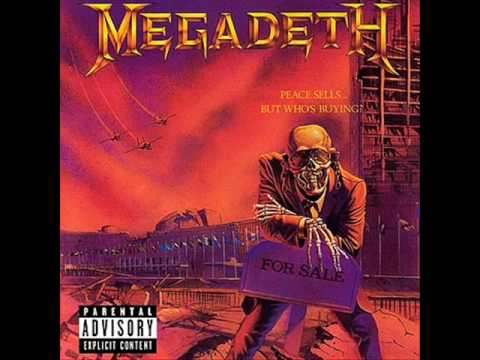
Album: Peace Sells... But Who's Buying? (1986)
Play Video

Songfacts®:

  • This song is about Dave Mustaine's high school experiments with black magic. The lyrics contain actual instructions for casting hexes on people, which is why Mustaine renounced live performances of the song after he converted to Christianity in 2002.

    On The Morning Blaze with Gus & Izzy show out of Fresno, California's 105.1 The Blaze, Mustaine said, "I used to do black magic when I was a kid, and I put a hex on a dude and his leg kind of got messed up. The other one was, I put a sex hex on this girl and the next night she was in my bed, so I think that it worked."
  • Mustaine contends that those successful hexes ruined his life. Speaking to Total Guitar in 2011, he said, "People say, 'Goddamn, Dave never gets a break, he's had such a hard life,' and I just think, 'No, Dave didn't - he got into black magic and it ruined his life.' It wasn't that I was a bad guy or that I had a big mouth, it was that I got into witchcraft and black magic and it ruined my life. Fortunately for me, with all the work and the love of my friends, and not giving up with my guitar playing, I got over it."
  • Digging into the lyrics, we get a picture of how the hexes were set up.

    The word "sanguinary" means "bloodthirsty" or "causing much bloodshed," so the song starts off talking about a sect that causes bloodshed. A "conventicle" is a secret or unlawful religious meeting. To "anathematize" means to curse or denounce. So, the song's opening is some fancy, cool-sounding words saying "our bloodthirsty dark-religious sect is getting together to curse everyone who opposes us."

    From there, we find instructions to "burn sacred oil" and to use the compass' cardinal points of North, South, East, and West, which is something common to Wicca, black magic, and Crowleyan magic, if not all major forms of magic. There is of course the lighting of candles, the "lash of a black cat's eye," "straw of a broom," all of which are folded up in a parchment paper and burned.

    Where the song's meaning is less clear is in who, exactly, is being conjured. Whoever it is instructs us to not seek the devil or priests, but instead this "devil's advocate, a salesman, if you will," who has a place in Mephisto's Hall of Fame.

    Perhaps presaging Mustaine's later struggles, the figure in this song declares at the end that, "I've got your soul, I've got your soul. The conjuring. Obey!"

    However outrageous it may sound, Mustaine took all of this very seriously.
  • Long after his conversion to Christianity, Dave Mustaine considered revisiting this song, as his fears of conjuring up bad spirits abated. "When I first got saved, I was really scared and I was basically holding on to anything that I heard in church," he told Blabbermouth in 2016. "I've grown. I've learned a lot and lightened up a lot."

    He added: "I evolve in my outlook and my personal journey here, being a positive person and being a positive influence on other people's lives. So as long as it doesn't hurt anybody, I wouldn't mind doing the song again, 'cause it is a good song."

    On June 12, 2018, Megadeth played "The Conjuring" for the first time in 17 years during their set at Aréna, Plzen, The Czech Republic. They have played it regularly since.
  • Other Megadeth songs discussing Mustaine's black magic experiments include "Bad Omen," "Good Mourning/Black Friday" and "Five Magics."

Comments

Be the first to comment...

Editor's Picks

Edie Brickell

Edie BrickellSongwriter Interviews

Edie Brickell on her collaborations with Paul Simon, Steve Martin and Willie Nelson, and her 2021 album with the New Bohemians.

Hawksley Workman

Hawksley WorkmanSongwriter Interviews

One of Canada's most popular and eclectic performers, Hawksley tells stories about his oldest songs, his plentiful side projects, and the ways that he keeps his songwriting fresh.

Into The Great Wide Open: Made-up Musicians

Into The Great Wide Open: Made-up MusiciansSong Writing

Eddie (played by Johnny Depp in the video) found fame fleeting, but Chuck Berry's made-up musician fared better.

Best Band Logos

Best Band LogosSong Writing

Queen, Phish and The Stones are among our picks for the best band logos. Here are their histories and a design analysis from an expert.

Charlie Daniels

Charlie DanielsSongwriter Interviews

Charlie discusses the songs that made him a Southern Rock icon, and settles the Devil vs. Johnny argument once and for all.

Supertramp founder Roger Hodgson

Supertramp founder Roger HodgsonSongwriter Interviews

Roger tells the stories behind some of his biggest hits, including "Give a Little Bit," "Take the Long Way Home" and "The Logical Song."