This song is about making a change and realizing that it has to start with you. It was one of just two songs on the
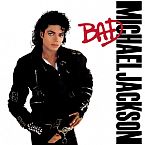
Bad album that Jackson didn't write. The song was written by Siedah Garrett and Glen Ballard; Garrett also sang backup on the track. Ballard went on to write and produce for Alanis Morissette and Dave Matthews; Garrett also sang on Jackson's "
I Just Can't Stop Loving You" and later joined the Brand New Heavies.
Jackson and his producer, Quincy Jones, chose this song for the album after looking for "an anthem" that as Jones said would spread some "sunshine on the world." He invited some songwriters from his publishing company to present songs, and they chose this one.
This was the fourth of five US #1 hits from the Bad album.
In a 2017 interview with Songwriter Universe, co-writer Siedah Garrett said: "The song was deeper than just the visual of a man looking at himself in the mirror. It was that, juxtaposed with the idea of a man going deeper inside himself to change from within. To make a difference on the outside, you have to first start from within. So I think that Michael just got it... he got the meaning of the song right away."
The Andrae Crouch Gospel Choir sang on this. They also appeared on Madonna's "
Like A Prayer" and Rick Astley's "
Cry For Help."
The song's lyricist, Siedah Garrett, was a member of the Quincy Jones-produced five-piece, Deco, when she penned this tune. She had never written a song before when Jones invited her along to a meeting with other songwriters at the producer's home to come up with material for Jackson's next album. The appointment was for 11 a.m., but as Garrett explained to author Adam White, she arrived an hour late. "I got lost," she explained. When she finally arrived, Jones told the assembled company, "I just want hits, that's all I want."
Garrett took the commission to her writing partner, the little-known Glen Ballard, who later achieved enormous success as a co-writer and producer with Alanis Morrisette on her first albums. "I sat down and started playing a figure on the keyboard and Siedah opened up her notebook," Ballard recalled to SongTalk magazine. Garrett caught Ballard's attention with some lyrics about a man looking in the mirror. She had been holding onto the title for about a year. "I have a book and when I hear things that I like, I write it down. I keep a pad in my car at all times."
By the end of the week the pair had completed a demo, with Garrett's guide vocal. Garrett recalled to SongTalk the rest of the song's story: "We had the demo of the song done on a Friday evening. Knowing that Quincy Jones' offices were going to be closed until Monday, I called [Quincy] and said, 'I can't wait until Monday.' He told me to bring the tape over. I did. Four hours later – four hours! – he called me. He said, 'Baby, the song is great. It's really good. But– ' I said, 'But what?' And he said, 'I don't know. I've been playing songs for Michael for two years. And he has yet to accept an outside song.'
Three days later I got a call from Quincy and he told me that Michael loved the song and wanted to cut it. I screamed! Couldn't believe it.
Then he said that Michael had a great idea for the background; he's gonna have the Winans and Andre Crouch an a choir. Then he said, 'and I might be able to squeeze you in on that.' I said, 'Q Babe! Thanks!' [Laughs]
A few days before the session I got a call from Quincy. He told me Michael wanted to extend the bridge and needed some new lyrics for it. And he was trying to tell me the message that should be in these new lyrics. He would say, 'Michael wants so-and-so,' and then, in the background I would hear, [softly and high-pitched] 'Mmmrrrmmrr…' And it was Michael, you know?
This went on for a little while, with Quincy translating for Michael. Finally, Quincy says, 'Hold on,' and puts Michael Jackson on the phone, right? I'm home cooking dinner, right? And inside I'm like 'OMIGOD!! It's MICHAEL JACKSON!!' But on the phone I'm like [softly and coolly], 'Yes, Michael?' Really cool, you know?
He said, 'I love your song and I think you have a great voice.'
I said, 'Wow. Thanks! Thanks for doing it, dude!' [Laughs]
So Michael tells me what he wants and I take off to find the answer to his dilemma in the bridge. I came up with three different ideas for the part. But then the song turned out to be long anyway, that they never used it. So it's pretty much as it was in demo form with the exception of the key change."
Jackson was so impressed by the soulful beauty of Garrett's voice on the demo that he enlisted her to sing a duet with him on "I Just Can't Stop Loving You."
Glen Ballard programmed the drums on this song using a Linn 9000, which he also used to sequence it. The live instruments were Randy Kerber on synthesizer, Dann Huff on guitar and Greg Phillinganes on keyboards. There is no bass, but Kerber's synthesizer fills in the low end.
Garrett explained to SongTalk how she asked God for some divine inspiration for this song: "I said, 'I want to write a song for Michael Jackson.' Since I wanted Michael to know who I was, I was thinking in my mind, 'What can I say to him that he wouldn't be afraid to say to the rest of the world?' And this song came through. [Claps hands and laughs.]"
When Jackson asked Garrett where she got the idea for the song, she replied that she asked God for it. Said Garrett: "My answer to him was that 'I asked for it.' I didn't mention God because I didn't know where he was as far as religion goes. But he knewwho I was talking about. I didn't ask my neighbor George for it!"
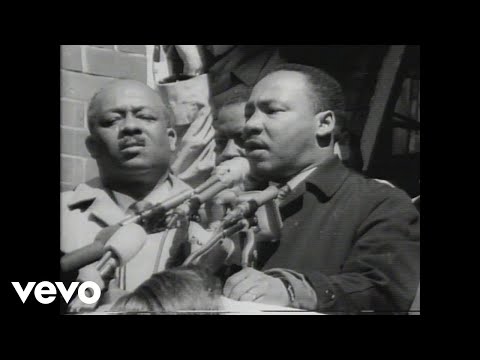
The music video, directed by Donald Wilson, was almost entirely a compilation of raw news footage, covering everything from homelessness to racial violence. Wilson explained the idea to Rolling Stone: "Larry [Stossel, Epic exec] told me Michael wanted to do something real heart-wrenching and tell a story, and could I go meet with him. This was the day after Thanksgiving. We met in the attic of [Jackson manager] Frank DiLeo's home in Encino – even just the attic was a palace. So, Michael and I sat down and just started making a list of things that we could think of. I had two or three hand-written pages of ideas. Michael wasn't the kind of guy who told you what to do, he would inspire you to go do it with his backing.
I went to all these places that have archival news footage and say, 'Give me all your worst stuff.' And by the end of the day, I'd looked at dead bodies and massacres and famine. After a while, I would go to a bar – immediately. It was brutal.
I probably had 200 hours of footage. My goal kind of was, if you could take the video and play it in reverse, it starts from the planet out in space and then a child in an incubator and then young children; and by the time you get to the end of the video, all hell's broken loose. It's just sort of man's laziness about doing things. I'm gonna make this thing out of 80 percent news footage that people have already seen and they change the channel because it's too hard to watch, or it's too boring. I'm gonna use the same stuff and make them go, 'Wow, I've never seen that before.' Oh yeah, you have.
Before Michael passed we were actually thinking about doing an updated version. I would have hated to do it and not be better, which is kinda the reason I didn't go for it. That thing was so magical in a weird kind of way."
Andrae Crouch helped Michael Jackson arrange the song. The gospel star also arranged music for the 1985 film The Color Purple, which earned him an Academy Award nomination.
Crouch was dyslexic and to help him create this song he drew a mirror with an image in it. "I memorized everything through sight, the shape of the word," he told The Associated Press.
"Some things that I write, you'll see a page with cartoon pictures or a drawing of a car - like a Ford - or a flag. I still do it on an occasion when a word is strange to me," Crouch added. "So when I finish a song, I thank God for bringing me through. You have to press on and know your calling. That's what I've been doing for all my life. I just went forward."
Glen Ballard was working as a producer for Quincy Jones' label, Quest, when he wrote this song with Siedah Garrett. He came close to placing a song on the
Thriller album called "Nightline," but it got bumped when Jackson came up with "Beat It" and "Billie Jean" (The Pointer Sisters ended up recording "Nightline"). It looked like he was going to get shut out of "Bad" as well, but "Man In The Mirror" made the cut - the last song added to the album.
Jones was a huge influence on Ballard, who leaned that a calm and respectful studio environment allowed artists to do their best work if you let them. "With Quincy, I spent a good decade in the studio with him from about 1980 to 1990, and he was always positive,"
Ballard told Songfacts. "Even when something wasn't going right, he never made anybody feel bad about it. I saw how he grew things with encouragement and nourishment as opposed to berating people, so that's my natural approach. I can't work under those other circumstances, or I prefer not to."
On the first UK singles chart after the death of Michael Jackson, this re-entered at #11, the highest position of Jackson's sixteen entries in the top 75. This was a surprise because it only reached #21 on its original release. The following week it climbed to #2, the highest of Jackson's record breaking 27 songs in the UK Top 75, (including several with the Jackson 5/The Jacksons).