(If Loving You Is Wrong) I Don't Want to Be Right

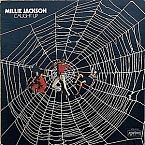
Album: Caught Up (1974)
Charted: 42
Play Video

Songfacts®:

  • "(If Loving You Is Wrong) I Don't Want to Be Right" began life in the Stax ecosystem, written by Homer Banks, Carl Hampton, and Raymond Jackson. It was originally intended for the girl group The Emotions (you'll remember them for the 1977 hit "Best Of My Love") but became famous through Luther Ingram, whose 1972 version turned quiet adultery into a radio-friendly confession.
  • Millie Jackson's 1974 version stretched past the 11-minute mark and became the structural backbone of Caught Up, a concept album that treats infidelity not as a cautionary tale but as a multi-episode drama. Her version unfolds in three parts: the song proper, Jackson's spoken interlude "The Rap," and a reprise that lands like the closing argument of a very persuasive trial.

    "The Rap," written by Jackson, is the album's nerve center, a five-minute monologue in which an unapologetic mistress calmly, wryly explains why her arrangement with a married man suits her just fine. It's explicit, observant, and startlingly grown-up, which in 1974 was practically revolutionary.
  • Record executives were unconvinced. Radio songs were supposed to clock in under three minutes, not wander through multiple sections like a short play with musical accompaniment. Enter Frankie Crocker at WBLS in New York, who took an acetate (a test pressing of an album sent to DJs) and played it with such conviction that resistance collapsed. Against industry logic, the extended track became a hit.
  • The album's concept emerged in the studio: "What came up, came out,"Jackson explained to Atlanta magazine.
  • Caught Up treated relationships with unusual sophistication, presenting an affair from both women's perspectives. Jackson saw it less as provocation than storytelling, shaped by her childhood.

    "I was doing it the way I felt about it," she told Uncut magazine. "My biological mother died before I was 2 years old. My father would not let my mother's father, the minister, have me. I was with my father, who was running the farm. In the summertime, I'll go visit my mother's parents. So that's quite a mixed up life. Caught Up was more like a story to me. I was telling the story, and the story was long, so you just add another song to keep the story going."
  • Caught Up was recorded at Muscle Shoals Sound Studio in Alabama and Criteria Studios in Miami, pairing Jackson with producer Brad Shapiro and the Muscle Shoals Rhythm Section: Barry Beckett, David Hood, Roger Hawkins, and Jimmy Johnson. Their lush, almost orchestral arrangements gave Jackson a cinematic backdrop, sharply contrasting with Ingram's leaner, straighter soul original. Where Ingram sounded conflicted, Jackson sounded decided.
  • Jackson's performance earned a Grammy nomination for Best R&B Vocal Performance, Female at the 1975 awards, where she competed against Aretha Franklin, who ultimately won for "Ain't Nothing Like the Real Thing." The nomination validated Jackson's approach at a time when female artists, especially outspoken ones, struggled for airplay and institutional approval.
  • Barbara Mandrell turned the song into a country hit in 1978, taking it to #1 on the Country chart and into crossover territory, while Rod Stewart recorded it for his album Foot Loose & Fancy Free, releasing it as a UK single that reached #23 in 1980. Few songs move so comfortably between soul confession, country remorse, and rock introspection.

Comments

Be the first to comment...

Editor's Picks

Susanna Hoffs - "Eternal Flame"

Susanna Hoffs - "Eternal Flame"They're Playing My Song

The Prince-penned "Manic Monday" was the first song The Bangles heard coming from a car radio, but "Eternal Flame" is closest to Susanna's heart, perhaps because she sang it in "various states of undress."

Dean Pitchford

Dean PitchfordSongwriter Interviews

Dean wrote the screenplay and lyrics to all the songs in Footloose. His other hits include "Fame" and "All The Man That I Need."

Philip Cody

Philip CodySongwriter Interviews

A talented lyricist, Philip helped revive Neil Sedaka's career with the words to "Laughter In The Rain" and "Bad Blood."

Steven Tyler of Aerosmith

Steven Tyler of AerosmithSongwriter Interviews

Tyler talks about his true love: songwriting. How he identifies the beauty in a melody and turns sorrow into art.

Michael W. Smith

Michael W. SmithSongwriter Interviews

Smith breaks down some of his worship tracks as well as his mainstream hits, including "I Will Be Here For You" and "A Place In This World."

Millie Jackson

Millie JacksonSongwriter Interviews

Outrageously gifted and just plain outrageous, Millie is an R&B and Rap innovator.