
Medusa
by Moby

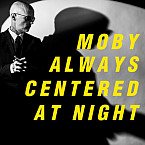
Album: Always Centered at Night (2022)
Play Video

Songfacts®:

  • On June 1, 2022, Moby launched his own record label, Always Centered at Night. To mark the occasion, he released "Medusa" as the label's first single.

    But behind the launch of Always Centered at Night was a more profound purpose. Moby's goal was to focus on working with lesser known yet undeniably talented artists, the sort of people who deserve to be heard but who might otherwise be overshadowed by the latest reality TV pop sensation.

    "Medusa" features one such artist: Aynzli Jones, a UK rapper and songwriter with Jamaican roots who's perhaps best known for co-writing Doja Cat's "Woman."
  • Jones and Moby had crossed creative paths once before in 2008 on the track "Alice," back when Jones was an up-and-coming rapper trying to find his footing.
  • Apparently, Jones has more talents than he lets on. "When I sent him this track," Moby told The Sun, "he sent back these phenomenal voices, half of which were sung. And I asked him, 'Who's singing?' And he said, 'Bro, don't tell anyone, but that's me.'"

    Moby was flabbergasted, as one would be. "I was blown away. He's one of the most gifted singers I've ever heard. But he's shy about letting the world know."
  • Lyrically, "Medusa" is all about those inner battles we all fight – the personal struggles, the repeated mistakes, and the perpetual need for change. The song's imagery is intense:

    The lights are blinding
    Behind us
    Medusa is dancing


    For those who didn't pay attention during Greek mythology class, Medusa is the one who could turn you to stone just by looking at you. Here, she's less a monster and more a metaphor for feeling stuck or paralyzed by past mistakes or fears.

    But there's more to it than that. In mythology, Medusa wasn't always a snake-haired monster; she was once a beautiful woman. This whole transformation thing ties in neatly with the song's theme of needing to change, to break free from whatever metaphorical stony curse you've placed upon yourself.
  • Always Centered at Night isn't just the name of the new record label; it's also the title of Moby's first album under the new banner, which includes "Medusa." The album is a collaborative project featuring some of Moby's favorite vocalists. And where did the name come from? Ah, now that's a story. Moby explained to The Sun:

    "I dropped out of university because I was having terrible panic attacks," he began. "I started hanging out at this tiny dive bar near New York City, a place where all the misfit degenerates in my area gathered. One night, or rather, early morning - it was about five a.m., and we were all drunk on the street - my friend Althea, a remarkable Black graffiti artist and poet, started spinning around and murmuring, 'I'm only centered at night.' And I've always loved that idea."

Comments

Be the first to comment...

Editor's Picks

John Waite

John WaiteSongwriter Interviews

"Missing You" was a spontaneous outpouring of emotion triggered by a phone call. John tells that story and explains what MTV meant to his career.

Charlie Daniels

Charlie DanielsSongwriter Interviews

Charlie discusses the songs that made him a Southern Rock icon, and settles the Devil vs. Johnny argument once and for all.

Barry Dean ("Pontoon," "Diamond Rings And Old Barstools")

Barry Dean ("Pontoon," "Diamond Rings And Old Barstools")Songwriter Interviews

A top country songwriter, Barry talks about writing hits for Little Big Town, Tim McGraw and Jason Aldean.

Director Nick Morris ("The Final Countdown")

Director Nick Morris ("The Final Countdown")Song Writing

Nick made some of the biggest videos on MTV, including "The Final Countdown," "Heaven" and "Don't Know What You Got (Till It's Gone)."

John Kay of Steppenwolf

John Kay of SteppenwolfSongwriter Interviews

Steppenwolf frontman John Kay talks about "Magic Carpet Ride," "Born To Be Wild," and what he values more than awards and accolades.

Supertramp founder Roger Hodgson

Supertramp founder Roger HodgsonSongwriter Interviews

Roger tells the stories behind some of his biggest hits, including "Give a Little Bit," "Take the Long Way Home" and "The Logical Song."