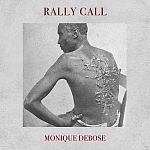
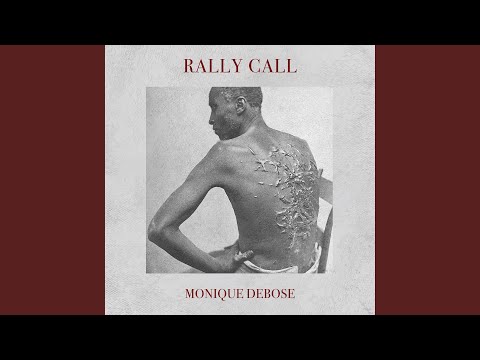
Rally Call

Album: released as a single (2020)
Play Video

Songfacts®:

  • Monique DeBose calls this song "an anthem for people who have been disenfranchised." It was released in the summer of 2020 at a time when many Americans felt their voices where being shouted down by a society reckoning with centuries of oppression. "I wrote 'Rally Call' because I was tired of feeling like my voice didn't matter and that I was having to erase myself in order for white America to feel comfortable," she told Songfacts. "The phenomenon that seems to occur in our culture is that black people have this unspoken place and I'm just tired of living in that phenomenon."

    DeBose is mixed race: her father is mother is Irish American her father is African American. Growing up, she was exposed to both worlds.
  • DeBose wrote this song with the brothers Isaac and Thorald Koren, who recorded as The Kin before setting their sights on songwriting and production for other artists.
  • DeBose evokes the era of slavery with the opening lines:

    I'm in the fields
    my body's broke, my spirit is tired


    Later, she sings:

    Get off your knees
    And get rid of those papers


    In her Songfacts interview, she explained: "The lyrics, 'get rid of those papers,' are in reference to when black people were unable to walk around without getting questioned about where they were going, and having to provide their papers. I'm just trying to express how the mindset of negative racial bias needs to be cut off, for everybody. It's not helping anyone, no matter a person's color. I want my music to be a medicine, to help educate, and to help heal."
  • "Rally Call" was released on August 28, 2020, the anniversary of some important events in Black history. That was the day in 1955 when the Black teenager Emmett Till was murdered; it was also when Martin Luther King Jr. gave his "I have a dream" speech in 1963, and when Barack Obama accepted the Democratic nomination in 2008.

    When the song was released in 2020, the Black Lives Matter movement was in full swing, with protests taking place around the country.
  • The video was shot at the Great Wall of Crenshaw, a mural in Los Angeles that depicts historically significant African Americans. Mixed with the performance footage are disturbing images like advertisements for slave auctions and photos of lynchings. These are contrasted with modern scenes of protesters supporting Black Lives Matter.
  • DeBose does a bit of improv vocalizing in this song. That's something she picked up at the University of California, Berkeley when she joined an improvisational singing group.

Comments

Be the first to comment...

Editor's Picks

Director Mark Pellington ("Jeremy," "Best Of You")

Director Mark Pellington ("Jeremy," "Best Of You")Song Writing

Director Mark Pellington on Pearl Jam's "Jeremy," and music videos he made for U2, Jon Bon Jovi and Imagine Dragons.

Why Does Everybody Hate Nu-Metal? Your Metal Questions Answered

Why Does Everybody Hate Nu-Metal? Your Metal Questions AnsweredSong Writing

10 Questions for the author of Precious Metal: Decibel Presents the Stories Behind 25 Extreme Metal Masterpieces

Greg Lake of Emerson, Lake & Palmer

Greg Lake of Emerson, Lake & PalmerSongwriter Interviews

Greg talks about writing songs of "universal truth" for King Crimson and ELP, and tells us about his most memorable stage moment (it involves fireworks).

Paul Williams

Paul WilliamsSongwriter Interviews

He's a singer and an actor, but as a songwriter Paul helped make Kermit a cultured frog, turned a bank commercial into a huge hit and made love both "exciting and new" and "soft as an easy chair."

Harry Wayne Casey of KC and The Sunshine Band

Harry Wayne Casey of KC and The Sunshine BandSongwriter Interviews

Harry Wayne Casey tells the stories behind KC and The Sunshine Band hits like "Get Down Tonight," "That's The Way (I Like It)," and "Give It Up."

Tony Iommi of Black Sabbath, Heaven And Hell

Tony Iommi of Black Sabbath, Heaven And HellSongwriter Interviews

Guitarist Tony Iommi on the "Iron Man" riff, the definitive Black Sabbath song, and how Ozzy and Dio compared as songwriters.