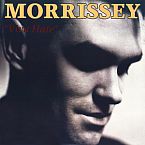


Suedehead

Album: Viva Hate (1988)
Charted: 5
Play Video

Songfacts®:

  • The name "Suedehead" came from the title of a book by British author Richard Allen about post-skinhead gangs known as "suedeheads." The lyrics don't seem to have much to do with the novel, and the word suedehead never appears.

    The song describes a person who seems to be a haunting presence in Morrissey's life:

    Why do you come here
    When you know it makes things hard for me?


    And it sounds like they were intimate, as Moz repeats the line "It was a good lay" at the end of the song.

    He says it's about a real person, but he won't say who. He did reveal that the song takes place during his early teenage years around 1972.
  • Morrissey was a journalist for the Record Mirror before forming The Smiths with guitarist Johnny Marr in 1982. The group released four albums that were very popular in their native UK, with Marr distinguishing the group musically with a guitar sound both jangly and modern, and Morrissey adding emotive vocals with lyrics that revealed a tortured soul. When they split in 1987, Morrissey wasted no time in getting his solo career started. "Suedehead" was issued as his first single in February 1988, just five months after the last Smiths album.

    The song rose to #5 in the UK, higher than any Smiths single. Morrissey kept the momentum going with his next single, "Everyday Is Like Sunday," which rose to #9. His solo career proved long and fruitful, and in the '90s he was able to draw crowds in America, something The Smiths were never able to.
  • The British band Suede, known for '90s hits like "Stay Together" and "Animal Nitrate," didn't name themselves after this song (they liked the way "Suede" looked on posters) but were big fans of Morrissey and The Smiths. Their lead singer, Brett Anderson, told The Observer in 1992: "When we started the group, we felt that people were starved for music which allowed them to let themselves go. The last group like that was The Smiths."
  • On the opening track of his debut solo album, Heartbreaker (2000), Ryan Adams argues with vocalist/guitarist Dave Rawlings about which album "Suedehead" first appeared on. The 37-second track, listed as "(Argument with David Rawlings Concerning Morrissey)," finishes with a flubbed start of "To Be Young (Is To Be Sad, Is To Be High)," the first song on the album.
  • This isn't the first song Morrissey titled after a piece of literature that he never mentioned in the lyric. The Smiths song "How Soon Is Now?" is titled after a line in a book called Popcorn Venus by Marjorie Rosen.
  • Morrissey wrote this song with his producer, Stephen Street, who also played bass on the track. Street was an engineer for The Smiths and got on well with Morrissey. A few years later, he became Blur's producer.

Comments: 4

  • Dagenham Dave from ZurichSuede did not take the name from that song, but from a shop called "Suave & Elegant", later changing it to Suede. The band was heavily influenced by the Smiths though.
  • Mary from Tampico, MexicoI always thought this song was about someone breaking up with someone else and then trying to be with that person again acting like nothing happened and being stubborn, when really the other person don't care anymore

    I really like this song :)
  • Steve from Chino Hills, CaThis is one of those songs about a situation where you have to experience for yourself in order to appreciate. It's about dating someone who ultimatly likes you a lot more than you like them. They infringe on personal space and basicaly hang around too much. In this song the subject is so insecure that she (he-who knows!) had to break into the singer's diary. In true male fashion the singer writes off the relationship with the immortal words "It was a good lay." This beg's the million dollar question, how can a man who was sworn to celebacy write such a thing. Richard Blade, a DJ at KROQ in Los Angeles at the time asked Morriissey, and his repsonse was "That was a long time ago."
  • Dave from Cardiff, WalesMorrissey's second solo hit "Every Day Is Like Sunday" repeated "Suedehead"'s UK Top 10 success in 1988, but was totally different in style to its predecessor
see more comments

Editor's Picks

Stand By Me: The Perfect Song-Movie Combination

Stand By Me: The Perfect Song-Movie CombinationSong Writing

In 1986, a Stephen King novella was made into a movie, with a classic song serving as title, soundtrack and tone.

Modern A Cappella with Peder Karlsson of The Real Group

Modern A Cappella with Peder Karlsson of The Real GroupSong Writing

The leader of the Modern A Cappella movement talks about the genre.

Jeff Trott

Jeff TrottSongwriter Interviews

Sheryl Crow's longtime songwriting partner/guitarist Jeff Trott reveals the stories behind many of the singer's hits, and what its like to be a producer for Leighton Meester and Max Gomez.

Michael Schenker

Michael SchenkerSongwriter Interviews

The Scorpions and UFO guitarist is also a very prolific songwriter - he explains how he writes with his various groups, and why he was so keen to get out of Germany and into England.

Loudon Wainwright III

Loudon Wainwright IIISongwriter Interviews

"Dead Skunk" became a stinker for Loudon when he felt pressure to make another hit - his latest songs deal with mortality, his son Rufus, and picking up poop.

Little Big Town

Little Big TownSongwriter Interviews

"When seeds that you sow grow by the wicked moon/Be sure your sins will find you out/Your past will hunt you down and turn to tell on you."