

Death Blooms

Album: L.D. 50 (2000)
Play Video

Songfacts®:

  • Mudvayne lead singer Chad "Kud" Gray told MTV about this track: "The song is basically about being OK to die. You have to have a sense of self-fulfillment before you're actually able to go to the other side and be prepared for it. Everything we write about is a process of being human, so this is just one more thing."
  • Chad Gray's lyrics on this song were inspired by his grandmother, Betty Stogsdill Rau, and how she was neglected by her family because she was getting on in years. She had a profound influence on Chad's life; she raised Chad and used to bring him to the local choir where he learned to sing.

    Rau died in 2005, having battled cancer for several years. "My grandma was like my angel, she was everything to me," Gray said in a 2015 Songfacts interview.

    The song is sung from Rau's perspective as she lays dying, begging to be released from her failing mortal coil:

    I'm lost in a structure that's collapsing, don't want it
    Cast into, maker take the body, don't want it, it wants me
  • The "Death Blooms" music video shows images of an old woman wandering a beach in Malibu, California, with jump-shots of her looking frightened, sad, and even frightening, like something from a horror movie. Eventually a young girl buries her in the sand and, along with a mystical Chad Gray, helps her reach a happy afterlife.

    Other parts of the video show the band performing in historic Seaview Hospital on Staten Island, New York – and this may provide a key to understanding the beach scenes. Seaview was also a filming location for the 1990 film Jacob's Ladder, starring Tim Robbins. Jacob's Ladder references a Medieval theologian who wrote that dying human beings undergo a purification by spiritual beings. If the person clings to life, they see the spiritual agents as demons causing pain and suffering. If a person accepts their fate and surrenders, those demons become angels, liberating them from the shackles of physical existence. That's what happens to Tim Robbins at the end of the film and what seems to be happening to Gray's grandmother on the beach in the music video.

    The video was directed by Thomas Mignone, who also did Mudvayne's "Dig." The concept is death ultimately fulfilling life, juxtaposing the cold, barren institutional setting where many people die, with the beach, which is connected to nature.
  • Given the band's angry sound and garish stage outfits, listeners might be surprised at the tenderness of Gray writing a song in tribute of his grandmother. But over the years since their 1997 debut, Mudvayne became increasingly vocal in explaining that the anger in their music is meant to be a path to something more, with their songs intended to give catharsis and healing rather than fixation on the negative. Gray has repeatedly stated that music saved his life, and he's trying to give the same gift to his own listeners.
  • Even though Gray wrote this song about his grandmother, he told the Scandalous podcast that even he didn't understand all the lyrics. They came to him in a flash of inspiration. He didn't fight them because they captured the feeling he wanted to portray in an abstract way.
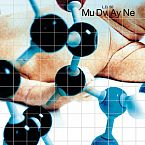
  • "Death Blooms" was the second single released off Mudvayne's debut major-label studio album, L.D. 50 (it was preceded by "Dig"). The title L.D. 50 was taken from a medical term meaning "median lethal dose," which refers to the amount of a substance sufficient to kill 50% of a test population.

    The making of the album was hectic and pressured, as the band didn't have all their songs ready and were on a tight schedule. They recorded at The Warehouse Studio in Vancouver, British Columbia, Canada, but never got out to see the town. Some of the sound engineers went days without sleep, according to drummer Matthew McDonough. In 1997 the band had an earlier release with their EP Kill, I Oughtta, recorded with Epic Records.

Comments: 7

  • Matt from Wilmington, Ohthis is a very awsome song love it
  • Rhys from Mandurah, WaThis Song rules aye love mudvayne!
  • Clovis from Ft. Wayne, Inthis song kicks ass and all i can say is that it prolly has something to do with dying of old age.
  • Craig from Lubbock, TxThis song has a very philosophical meaning to me as well, whether Chad Gray meant it to or not. This song reminds me of the classic battle of the ancient philosophers, such as Socrates, Aristotle, and Plato. They all believed in the other world, the one you go to when you die, and it's superior power to this one. They, especially Plato, agreed that such power could be experienced on this plane if one could learn to ignore the distractions. Everyone is torn in three directions in life, constantly, and this is similar to today's modern theories of the Id, Ego, and Super Ego. These philosophers believed that one is torn between the mind, the heart, and the lower regions. The mind is the intellect and logical part of us. The heart is the passionate yet irrational part of us. The lower regions represent the source of everyone's greatest weaknesses. Socrates stated that the very need for food, our hunger, showed just how weak and imperfect the human body is. It represents the basic desires, like those for food or sexual pleasure. On a related tangent, Buddhism is the only religion, that I know of, that believes that the ultimate happiness (Nirvana, comparable to "heaven") can be achieved on earth, on this plane. How can this be done with so much pain in life?, one may ask. Pain is the absence or removal of a fulfilled desire. One attains Nirvana by gradually realeasing all desires in life. It starts by renouncing worldly possessions, but along the way, one is supposed to no longer need food as well. To me, this is the essence of what the ancient philosophers believed, as well as the key underlying meaning of this song. "Pull me out of body, don't want it, don't want in...don't want it, it wants me... memories in me, cocooned in misery...The darkness overcomes, soul soars to the other plane, I sail through purgatory's bay." The ancient philosophers were right. Everything changes (Staind would agree), there are only two constants in life, work and pain. Learn to enjoy the work, learn to appreciate and learn from pain, they you will understand and love the essence of life. "In the space between a blink and a tear, Death Blooms"
  • Nicole from Chippewa Falls, WiI think that this song has a lot of meaning and Chad Gray (the singer and song writer) is a great song writer. He Writes about things that are not only weird and exciting but also things that he wants us to know about and to write about this song means that he probably wants us to take care of our people and not neglect them!!! I love you Chad
  • Prophet from East Haven, Vtthe prayer type saying at the end of the song is the best part of the entire song.
  • Gary from Madisonville, KyIt's about becoming old and not wanting to live anymore. You feel your time has come and there is no point in your staying and decaying, so to speak, on this earth.
see more comments

Editor's Picks

Trans Soul Rebels: Songs About Transgenderism

Trans Soul Rebels: Songs About TransgenderismSong Writing

A history of songs dealing with transgender issues, featuring Pink Floyd, David Bowie, Morrissey and Green Day.

Melanie

MelanieSongwriter Interviews

The singer-songwriter Melanie talks about her spiritual awakening at Woodstock, "Brand New Key," and why songwriting is an art, not a craft.

90210 to Buffy to Glee: How Songs Transformed TV

90210 to Buffy to Glee: How Songs Transformed TVSong Writing

Shows like Dawson's Creek, Grey's Anatomy and Buffy the Vampire Slayer changed the way songs were heard on TV, and produced some hits in the process.

Robert DeLeo of Stone Temple Pilots

Robert DeLeo of Stone Temple PilotsSongwriter Interviews

Stone Temple Pilots bass player Robert DeLeo names the songs that have most connected with fans and tells the stories behind tracks from their Tiny Music album.

Matthew Wilder - "Break My Stride"

Matthew Wilder - "Break My Stride"They're Playing My Song

Wilder's hit "Break My Stride" had an unlikely inspiration: a famous record mogul who rejected it.

David Sancious

David SanciousSongwriter Interviews

Keyboard great David Sancious talks about his work with Sting, Seal, Springsteen, Clapton and Aretha, and explains what quantum physics has to do with making music.