Come Along And Say You Will

Album: Archives Volume 2: 1972-1976 (2020)
Play Video

Songfacts®:

  • "Come Along and Say You Will" is a pretty opaque song. It opens with a chorus that goes:

    Come along and say you will
    Be the one to change the meaning
    Of the writing on the wall
    The lonely politician
    Is lying in the hall


    The verses then ask an unidentified person why they walk around the center of the room with a nail through their hand. The politician from the chorus is never elaborated on.

    It's a story that can go in a few different directions, with none of them making a whole lot of sense. Seeing as how there are only a few concrete images to touch upon, however, it seems likely that this is a political song.
  • The term "writing on the wall" means there's some kind of obvious impending change, usually of the doomed sort. Rarely is the term used with a positive connotation. It comes from the biblical book of Daniel, in which a ghostly hand writes on the wall of King Belshazzar's feast room the words "numbered, numbered, weighed, and they are divided."

    Combine the "writing on the wall" term with the "lonely politician," who's the one clear character we've got, and you've got yourself a recipe for a political song.

    Richard Nixon who was a bane to all left-leaning "hippie" types (like Neil), was president when Young wrote the son in 1972. Nixon's presidency was one of the most divisive presidencies in American history. The Vietnam War was also still raging at this time, and few things bothered the consciences of the flower generation more than the Vietnam War.

    So, precisely what Young wants is unclear, but he seems to want some kind of solid political change.
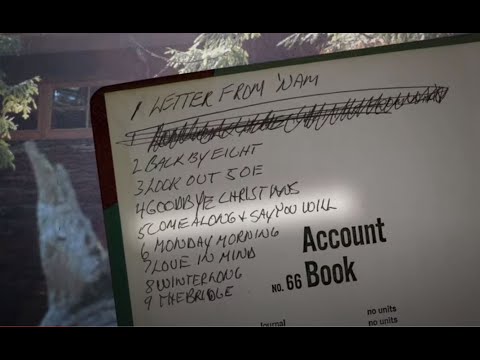
  • Young released the original cut of this song to subscribers of the Neil Young Archives on October 14, 2020, as an early taste of Archives Volume 2: 1972-1976, which was due out in November of that year.

    He recorded the song way back on December 15, 1972, at his Broken Arrow Ranch barn-studio. The Stray Gators backed him on it, with Ben Keith playing pedal steel guitar, Kenny Buttrey playing drums, and Tim Drummond playing bass. The Stray Gators also backed Young on Harvest in 1972, Harvest Moon in 1992, and the live album Time Fades Away in 1973.

    The song was in fact intended to be on Time Fades Away, but it didn't get selected for the final cut. Young and the Gators did play it live at least 11 times on that tour, though.

    So, the song had been heard live, but 2020 saw the first release of the song in its original studio form.

Comments

Be the first to comment...

Editor's Picks

Donnie Iris (Ah! Leah!, The Rapper)

Donnie Iris (Ah! Leah!, The Rapper)Songwriter Interviews

Before "Rap" was a form of music, it was something guys did to pick up girls in nightclubs. Donnie talks about "The Rapper" and reveals the identity of Leah.

David Bowie Leads the Society for Prevention of Cruelty to Long-Haired Men

David Bowie Leads the Society for Prevention of Cruelty to Long-Haired MenSong Writing

Bowie's "activist" days of 1964 led to Ziggy Stardust.

Bob Daisley

Bob DaisleySongwriter Interviews

Bob was the bass player and lyricist for the first two Ozzy Osbourne albums. Here's how he wrote songs like "Crazy Train" and "Mr. Crowley" with Ozzy and Randy Rhoads.

La La Brooks of The Crystals

La La Brooks of The CrystalsSong Writing

The lead singer on "Da Doo Ron Ron" and "Then He Kissed Me," La La explains how and why Phil Spector replaced The Crystals with Darlene Love on "He's A Rebel."

Randy Houser

Randy HouserSongwriter Interviews

The "How Country Feels" singer talks Skynyrd and songwriting.

Laura Nyro

Laura NyroSongwriting Legends

Laura Nyro talks about her complex, emotionally rich songwriting and how she supports women's culture through her art.