Extra, Extra

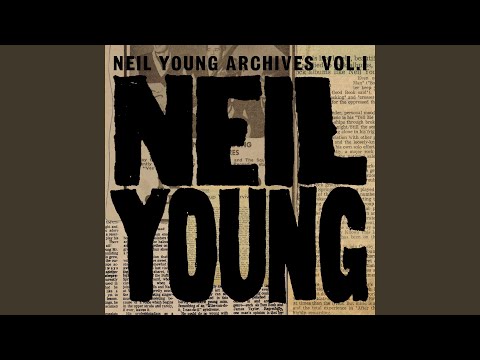
Album: Neil Young Archives Vol. 1 (1963—1972) (2009)
Play Video

Songfacts®:

  • Long before the internet, we often got our news from physical newspapers. Those newspapers were published every morning, but sometimes extraordinary events would necessitate a special edition published off-schedule and sold ASAP. Such events could be declarations of war, outbreaks of disease, or something similarly cataclysmic. When this happened, street vendors would shout, "Extra! Extra!" to notify passersby.

    The once-common "Extra! Extra!" phrase serves as this song's title because it tells the story of a vendor who sees a man and wonders "what made him this way." While there's no explanation of "what this way" means initially, the rest of the song makes clear that the way is "haggard and destroyed by life."

    The rest of the song consists of the old man telling the vendor his bitter story of betrayal and abandonment by friends and lovers alike. Each verse ends with the chorus, which is a variation of the words, "when it's born, it's warm, then it gathers." The song is a pessimistic account of a man done wrong by life, or at least a man who believes he's been done wrong by life. As in most such real-world testaments, the wronged is often blind to his or her own contribution to their ruination.

    The last verse is a bit confusing because it seems to flip their roles. "As I went on my way," Young sings, seemingly indicating he was the one passing by while the vendor remains in place. It could be a trippy poetic device to switch them around, but most likely it was just an oversight. This song was written early in Young's career and was never finalized, recorded only as a demo that wasn't released to the public for several decades.
  • Young wrote the song in 1965, the same period in which he produced "The Rent Is Always Due," "Don't Pity Me Babe," and "Nowadays Clancy Can't Even Sing." The common thread running through all of these songs is a deep pessimism and world-weariness that doesn't seem to fit Young's then-20 years. There's a reason for this.

    At that period in his life Young was dealing with a lot of rejection and failure. It was a sad, wandering time that followed the breakup of his Toronto band named 4 To Go. The group started with high hopes but never even played a show. They practiced and tried to find an in, but the Toronto music scene was "locked up" as Young told John Einarson in Don't Be Denied. He'd been going hard, trying to make it as a musician for some time, and the failure hurt. It's easy to imagine him projecting himself into that disillusioned old man lecturing the paper vendor about life's futility.
  • Young recorded the song as a demo for Elektra in New York City on December 15, 1965. Peter K. Siegel coproduced it with him. Young finally released the song on the Neil Young Archives Vol. 1 (1963—1972) in 2009.
  • In Don't Be Denied, Einarson also notes that this was the period when Young was starting to play around with the kind of lyrics he admired from Bob Dylan, who at that time was six albums deep into his career, including the seismic Bringing It All Back Home and Highway 61 Revisited.

Comments

Be the first to comment...

Editor's Picks

Philip Cody

Philip CodySongwriter Interviews

A talented lyricist, Philip helped revive Neil Sedaka's career with the words to "Laughter In The Rain" and "Bad Blood."

Michael Franti

Michael FrantiSongwriter Interviews

Franti tells the story behind his hit "Say Hey (I Love You)" and explains why yoga is an integral part of his lifestyle and his Soulshine tour.

Graham Parker

Graham ParkerSongwriter Interviews

When Judd Apatow needed under-appreciated rockers for his Knocked Up sequel, he immediately thought of Parker, who just happened to be getting his band The Rumour back together.

Dennis DeYoung

Dennis DeYoungSongwriter Interviews

Dennis DeYoung explains why "Mr. Roboto" is the defining Styx song, and what the "gathering of angels" represents in "Come Sail Away."

Chris Frantz of Talking Heads

Chris Frantz of Talking HeadsSongwriter Interviews

Talking Heads drummer Chris Frantz on where the term "new wave" originated, the story of "Naive Melody," and why they never recorded another cover song after "Take Me To The River."

Dar Williams

Dar WilliamsSongwriter Interviews

A popular contemporary folk singer, Williams still remembers the sticky note that changed her life in college.