The Old Laughing Lady

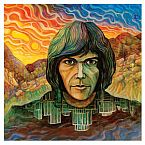
Album: Neil Young (1969)
Play Video

Songfacts®:

  • Despite having never been released as a single and appearing on an oft-overlooked album, "The Old Laughing Lady" is one of Neil Young's most-loved songs. He's played it regularly at live performances throughout nearly every stage of his illustrious career. Considering this song alongside "Old Man," Neil Young may be the only major music figure to have two odes to geriatric characters counted among his most fan-friendly tunes.
  • Because of the song's first line ("Don't call pretty Peggy), there's an obvious temptation to connect "The Old Laughing Lady" to Young's ex-wife Pegi Morton Young, who is the subject of his song "Unknown Legend." This is merely coincidence, though, because Young didn't meet Morton until 1974, while "The Old Laughing Lady" first came out 1968.
  • The lyrics of the song are ambiguous and only become more mysterious the more they're scrutinized. From the start we're told to not call Pretty Peggy because "she can't hear you no more," but we're never told exactly why she can't hear us. "You can't have a cupboard if there ain't no wall" comes across as a sort of Zen koan, absurd at first lesson but holding deep implications upon contemplation. One of the more subtly interesting lines is, "He loves his old laughing lady 'cause the taste is so sweet." The use of "the taste" rather than the expected "her taste" opens the doors for all kinds of interpretation.
  • In addition to the understated weirdness of the song is the music backing the lyrics. In August 1969, Greil Marcus of Good Times observed, "The soul chorus that backed [Young] on masterpieces like 'The Old Laughing Lady' approached a feeling something like that which one might expect from the Brides of Dracula."

    This statement came amidst Marcus' observation of the Neil Young album as a whole, with him adding, "The songs, again, were scary and at times virtually maudlin, creepy, almost a horror show."

    This combination of eerie music and lyrics has prompted all manner of interpretations of what "The Old Laughing Lady" actually means. One thought that pops up frequently on message boards is that it's a code for addiction. This is an interesting idea and the song can be heard in that way. Young also has dealt with addiction many times in his songs. Still, it may be reaching a bit to ascribe such an easily concrete interpretation to the song. Like Bob Dylan and many other great artists, Young has always employed ambiguity as a creative tool.
  • Though Young didn't meet former wife Pegi Morton Young until five years after the release of this song, there's an interestingly odd synchronicity between her and "The Old Laughing Lady."

    The first line of the song uses her name, though it's generally spelled as "Peggy," rather than "Pegi." Stranger than that, Morton has stated that she is known for her distinctive laugh. After the two divorced in 2014, Morton released an album titled Raw, all about her relationship with Young. One of the songs was titled, "You Won't Take My Laugh Away From Me." In speaking about the song, Morton said, "My laugh has always been rather distinctive. It's something I can hold on to that's still mine."

    Almost certainly just a strange coincidence, but it's the sort of thing that can get the more metaphysically minded going. Maybe it's nothing... or maybe the old laughing lady really has been here before.
  • Most of the Neil Young album was produced and arranged by David Briggs with Young. "The Old Laughing Lady," "I've Loved her So Long," and "String Quartet from Whiskey Boot Hill" were the only three songs produced and arranged by Jack Nitzsche, Ry Cooder, and Neil Young.
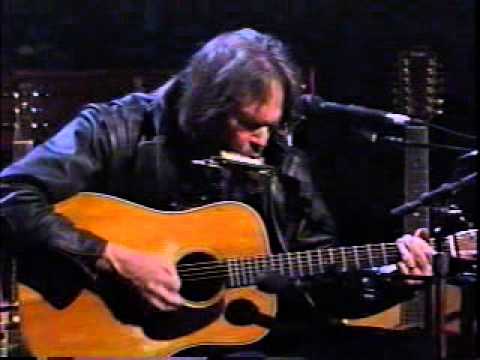
  • According to Young's account in the book Shakey, he wrote this song on napkins in a Detroit, Michigan, folk club/coffeehouse called the Chess Mate.
  • The track uses Jack Nitzsche's vocal-muting technique, which he called "pre echo." As Young describes it, the technique made him sound "a million miles away but right there."

Comments: 4

  • John T from MiI'm pretty sure that the the flashing of light is gunshots following a fight. Every line in the song is a description of a different tragedy caused by alcohol. Car crashes, homelessness, falls, violence, broken relationships, chronic disease: people dying or just disappearing before their time. All coded in a few verses that sound like a beautiful love song until you really listen. Neil was such a genius.
  • Bob from Beverly Hills, CaThere used to be a brand of cooking wine called Laughing Lady when I was a kid in the 70's. It would be something that bums and hardcore alcoholics would buy to get buzzed because it's cheap and has a high alcohol by volume. For that reason, I assumed the song was about alcoholism.
  • Martin from MnThe Old Laughing Lady, is about a ghost. The rumbling and flash of light? ... it's a ghost lady alright.
  • Cho Cho from Pennsylvania Addiction. Chasing the dragon. Trying to keep that high which ain’t gonna happen. Taste is sweet when you can get it
see more comments

Editor's Picks

Donnie Iris (Ah! Leah!, The Rapper)

Donnie Iris (Ah! Leah!, The Rapper)Songwriter Interviews

Before "Rap" was a form of music, it was something guys did to pick up girls in nightclubs. Donnie talks about "The Rapper" and reveals the identity of Leah.

David Bowie Leads the Society for Prevention of Cruelty to Long-Haired Men

David Bowie Leads the Society for Prevention of Cruelty to Long-Haired MenSong Writing

Bowie's "activist" days of 1964 led to Ziggy Stardust.

Bob Daisley

Bob DaisleySongwriter Interviews

Bob was the bass player and lyricist for the first two Ozzy Osbourne albums. Here's how he wrote songs like "Crazy Train" and "Mr. Crowley" with Ozzy and Randy Rhoads.

La La Brooks of The Crystals

La La Brooks of The CrystalsSong Writing

The lead singer on "Da Doo Ron Ron" and "Then He Kissed Me," La La explains how and why Phil Spector replaced The Crystals with Darlene Love on "He's A Rebel."

Randy Houser

Randy HouserSongwriter Interviews

The "How Country Feels" singer talks Skynyrd and songwriting.

Laura Nyro

Laura NyroSongwriting Legends

Laura Nyro talks about her complex, emotionally rich songwriting and how she supports women's culture through her art.