The Rent Is Always Due

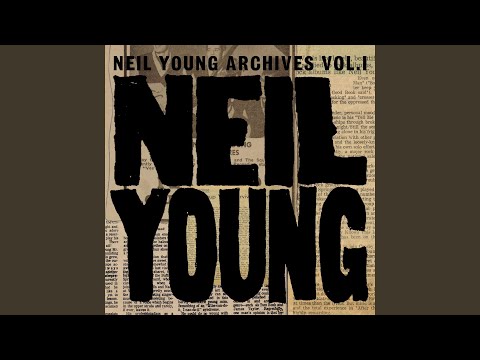
Album: Neil Young Archives Vol. 1: 1963–1972 (2009)
Play Video

Songfacts®:

  • "The Rent Is Always Due" is about the early days of Neil Young's musical career, when he was still trying to make a name for himself and meeting a lot of rejection. The chorus of "the rent is always due" refers to financial pressures and to the sense that life's demands are never-ending.

    He wrote the song in 1965, during the same period that produced "Nowadays Clancy Can't Even Sing," "Extra, Extra," and "Don't Pity Me Babe." He had just left behind his band, 4 To Go, after getting nowhere with what had initially seemed to be a promising unit. At 20, Young went all-in as a musician. He had no backup plan and never felt he had the option to be anything else, so there was a great deal of pressure on him during this time of repeated failure.

    This is what Young refers to in this song when he talks about putting on blue jeans, grabbing a guitar, and singing. Nothing positive was materializing, and he had no real choice but to keep driving ahead to victory.
  • This song is an early version of "I Am A Child," which Young released with the Buffalo Springfield in 1968 on Last Time Around. The similarity can mostly be heard in the chord progression, but thematically there's also a clear connection.

    "The Rent is Always Due" starts out discussing a "silver child" and refers to a simpler time in life, of a satin face that separates "cloudy men." Though it's more elliptical than "I Am A Child," it's still dealing with the separation between childhood and adulthood, between times without worry and times when the rent is perpetually due.
  • This song shows the influence that Bob Dylan was having on Young at that time. John Einarson notes in Don't Be Denied that this change in Young's words could be seen starting at this period in 1965, as Young was getting more symbolic and surrealistic. 1965 was the year Dylan released his fifth and sixth albums, Bringing It All Back Home and Highway 61 Revisted, which saw Dylan getting increasingly far out with his words.

    Stretching this influence on Young a bit, it's interesting to note that "It's Alright, Ma (I'm Only Bleeding)" came out on Bringing It All Back Home, because that song starts with the lines, "Shadows even the silver spoon, the handmade blade, the child's balloon," which are condensed in a way in the first line of "The Rent Is Always Due," which is, "Your silver child." Einarson doesn't make this connection in his book, and Young has never spoken publicly on it, but it's interesting brain candy.
  • Young recorded the song as a demo for the Elektra record label on December 15, 1965, in New York City. Peter K. Siegel co-produced it with him. The song was tucked away for decades but released in 2009 on The Archives Vol. 1 1963–1972.
  • The Brylcreem fools
    Just standing on
    Digesting all their lives


    Brylcreem is a hair-styling cream out of Britain. It's been around since 1928 and known for giving slicked hair a distinctly high shine.

Comments

Be the first to comment...

Editor's Picks

Little Big Town

Little Big TownSongwriter Interviews

"When seeds that you sow grow by the wicked moon/Be sure your sins will find you out/Your past will hunt you down and turn to tell on you."

Millie Jackson

Millie JacksonSongwriter Interviews

Outrageously gifted and just plain outrageous, Millie is an R&B and Rap innovator.

Don Dokken

Don DokkenSongwriter Interviews

Dokken frontman Don Dokken explains what broke up the band at the height of their success in the late '80s, and talks about the botched surgery that paralyzed his right arm.

Martyn Ware of Heaven 17

Martyn Ware of Heaven 17Songwriter Interviews

Martyn talks about producing Tina Turner, some Heaven 17 hits, and his work with the British Electric Foundation.

Sending Out An SOS - Distress Signals In Songs

Sending Out An SOS - Distress Signals In SongsSong Writing

Songs where something goes horribly wrong (literally or metaphorically), and help is needed right away.

John Lee Hooker

John Lee HookerSongwriter Interviews

Into the vaults for Bruce Pollock's 1984 conversation with the esteemed bluesman. Hooker talks about transforming a Tony Bennett classic and why you don't have to be sad and lonely to write the blues.