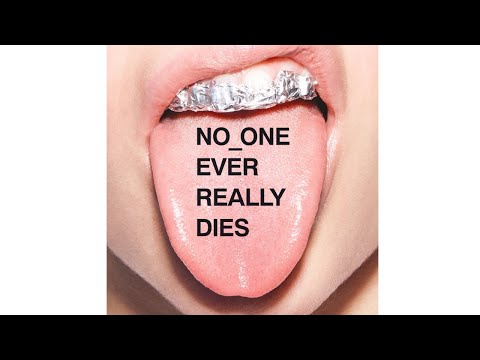
Don't Don't Do It!
by N.E.R.D (featuring Kendrick Lamar)

Album: No One Ever Really Dies (2017)
Play Video

Songfacts®:

  • This socially aware song was written by Pharrell Williams after the fatal police shooting of 43-year-old African-American Keith Lamont Scott in Charlotte, North Carolina in 2016. "I was watching the news. This gentleman by the name of Keith Scott was in his minivan," explained Pharrell to Zane Lowe during his Beats 1 show. "He was waiting on his child to get off the school bus. The authorities were looking for someone, someone who did not fit his description and based on what the story was, the vehicle did not fit the description either. I'm not sure if the vehicle was even part of the search."
  • Scott's wife can be heard yelling "Don't do it!" in the background on the tape of the shooting. "She's filming the entire thing on her camera phone. She is saying, 'Don't do it. Don't don't do it. Don't do it Keith. Don't don't do it,'" Pharrell said. "She's telling the authorities that her husband has a TBI, that's a Traumatic Brain Injury."

    "They're telling him to put his hands up or whatever and she knows, you can tell in her voice that she sees what's going to happen," he added. "She's saying, 'Don't do it. Don't do it Keith. Don't don't do it.' And of course you know the way that turned out - he was killed."
  • The song's instrumentation is upbeat despite its tragic storyline. Pharrell explained the dissonance between the topic and the sound of the track to The Guardian:

    "We have that crazy, crazy man [running the country] but also they have police that shoot unarmed black people the whole time," he said. "It rains and they shoot black people. I hid the story in something that's so jubilant because that way you won't miss the message."
  • The song's intro was written (but not performed) by Frank Ocean. "He is the arch of no compromise, no concession and very colorful with it," Pharrell said of the singer-songwriter. "And that's what, I feel like, that's what is very interesting about his journey. Because if you understand him then, you know anything that he's ever done is just what he's really, really, really felt."
  • Ocean has previously worked with Pharrell on several his tracks. The pair co-produced "Sweet Life" and "Pink + White," while Pharrell served as co-writer on "End/Golden Girl."
  • Kendrick Lamar contributes a blistering verse in which he tackles police brutality, the death of African Americans and the media. "The way that he handles the pen is kind of how Miles Davis handled the trumpet. Or how Coltrane fingers just shifted and sifted through his saxophone keys," said Pharrell about the Compton MC. "It's like his melodies are as prolific and what he has to say has so much harmony and so much color in it."

    Lamar appears on another song from the No One Ever Really Dies album, "Kites," which also features M.I.A.

Comments

Be the first to comment...

Editor's Picks

Graham Nash

Graham NashSongwriter Interviews

Graham Nash tells the stories behind some of his famous songs and photos, and is asked about "yacht rock" for the first time.

Ralph Casale  - Session Pro

Ralph Casale - Session ProSongwriter Interviews

A top New York studio musician, Ralph played guitar on many '60s hits, including "Lightnin' Strikes," "A Lover's Concerto" and "I Am A Rock."

Rob Halford of Judas Priest

Rob Halford of Judas PriestSongwriter Interviews

Rob Halford dives into some of his Judas Priest lyrics, talking about his most personal songs and the message behind "You've Got Another Thing Comin'."

Corey Hart

Corey HartSongwriter Interviews

The Canadian superstar talks about his sudden rise to fame, and tells the stories behind his hits "Sunglasses At Night," "Boy In The Box" and "Never Surrender."

Incongruent Opening Acts

Incongruent Opening ActsSong Writing

Here's what happens when an opening act is really out of place with the headliner, like when Beastie Boys opened for Madonna.

Edwin McCain

Edwin McCainSongwriter Interviews

"I'll Be" was what Edwin called his "Hail Mary" song. He says it proves "intention of the songwriter is 180 degrees from potential interpretation by an audience."