
Lavender Fields

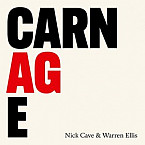
Album: Carnage (2021)
Play Video

Songfacts®:

  • In "Lavender Fields," Nick Cave sings about traveling along a "singular road," then through fields of lavender, over the hills deep in the fields, and finally into the sky. The song relies on imagery alone to tell its story, and its resulting ambiguity is malleable enough for listeners to project whatever they'd like onto it. Cave did have a distinct meaning with this one, though.

    In The Red Hand Files (Cave's email newsletter) Issue #68, sent September 29, 2021, Cave explained that he wrote this song during the COVID-19 lockdowns in Brighton, England. During that time, he regularly had hours-long conversations with his friend, the Irish songwriter and musician Sean O'Hagan (frontman of The High Llamas).

    One of the topics that frequently came up in the conversations was religion. O'Hagan remarked that in his seeking, Cave was walking a "singular road." That term became the seed for "Lavender Fields."

    I'm traveling appallingly alone
    On a singular road


    Those two lines sparked the rest of the song. Cave described it as "a gift from the gods!"
  • The "singular road" line is good-humored but ironic because, in Cave's view, everyone is traveling the same road in this place we call Life, Death, and Whatever Comes After.

    "The song is mostly about change," Cave wrote in his newsletter, "moving away from one state of being toward another, or so it seems to me."

    He describes the final verse about a "pale bird wheeling in the sky" as a conversion experience that brings with it a "spiritual renewal."

    The song's 3:12 mark, when Cave sings the final line ("that's just a feeling, a feeling when you die"), is meant to be the end of the initial song and of the life described within it, but it quickly transitions to a hymn that continues for over a minute longer. That hymn is meant to be whatever comes after this life or within this life after parts of us die, escorting us to the next destination, "that of transcendent change."
  • Cave advises that this song is best listened to without thinking about his inspired meaning because its real purpose is to transport us "up and away, away."
  • Carnage is a the first full album by Nick Cave and Warren Ellis. Ellis had been with Cave's band, the Bad Seeds, since 1993, and the pair had worked together on multiple soundtracks, but Carnage was the first album on which they wrote and recorded all new songs together.

Comments

Be the first to comment...

Editor's Picks

Philip Cody

Philip CodySongwriter Interviews

A talented lyricist, Philip helped revive Neil Sedaka's career with the words to "Laughter In The Rain" and "Bad Blood."

Michael Franti

Michael FrantiSongwriter Interviews

Franti tells the story behind his hit "Say Hey (I Love You)" and explains why yoga is an integral part of his lifestyle and his Soulshine tour.

Graham Parker

Graham ParkerSongwriter Interviews

When Judd Apatow needed under-appreciated rockers for his Knocked Up sequel, he immediately thought of Parker, who just happened to be getting his band The Rumour back together.

Dennis DeYoung

Dennis DeYoungSongwriter Interviews

Dennis DeYoung explains why "Mr. Roboto" is the defining Styx song, and what the "gathering of angels" represents in "Come Sail Away."

Chris Frantz of Talking Heads

Chris Frantz of Talking HeadsSongwriter Interviews

Talking Heads drummer Chris Frantz on where the term "new wave" originated, the story of "Naive Melody," and why they never recorded another cover song after "Take Me To The River."

Dar Williams

Dar WilliamsSongwriter Interviews

A popular contemporary folk singer, Williams still remembers the sticky note that changed her life in college.