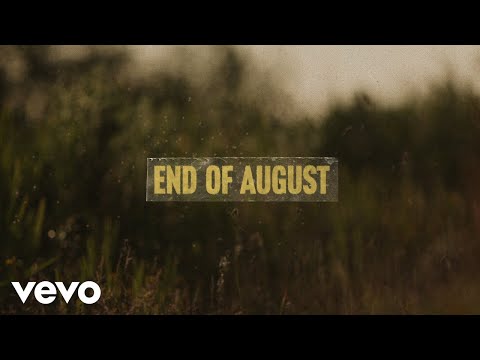
End Of August

Album: The Great Divide (2026)
Charted: 68 14
Play Video

Songfacts®:

  • "End of August" opens Noah Kahan's fourth album, The Great Divide, not with a bang but with a hum - literally. The first sound is bugs, the late-summer drone of creatures still alive but already fading, which tells you almost everything about the song's emotional weather. At 5:17, it's one of the album's longest tracks, and it uses that space patiently, less as a conventional opener than as a slow walk into a landscape.
  • The title captures a very specific melancholy: that strange annual moment when summer hasn't quite ended, yet everyone has already started grieving it. Noah Kahan turns late August in rural Vermont into something nearly mythic: humid air, empty roads, insect chorus, haunted woods.

    "I wanted to create a scene that just felt like late summer in Vermont or in a small town where there's just that total quiet and you can almost hear music in the air," Kahan told Apple Music. "One thing that my family and I have in Vermont is, like, I walk through the woods and the woods are haunted, but not by mean spirits. We've all individually said, 'Oh, I heard voices in the woods,' and when I was writing that, I wanted it to feel like what those voices would sing if you were just like walking through the woods or driving past the woods in Vermont."
  • Time and place are the song's true protagonists. The familiar route home - New York plates tracked to the county line, Interstate 89 threading through New Hampshire and Vermont, the traffic light where you can speed through because the camera's down - roots the song in hyper-specific geography. Kahan often writes place as psychology, and here the road becomes memory's bloodstream. Few songwriters make regional directions feel so freighted.
  • The opening couplet introduces Kahan's driving companions as quiet, familiar presences.

    Richie and Austen are often along for the ride
    They don't say a lot, but they know every inch of this drive


    "Richie" is Richard Kahan, Noah's older brother, who became a professional firefighter. This is not Richard's first appearance in Kahan's work: Stick Season's "New Perspective" was written about him, referencing "attention-deficit kids in their gym clothes" and the shared difficulty of growing up and growing apart.

    Austen is likely a friend or someone from Kahan's Vermont circle.

    Neither of Noah's companions needs to speak; they know the drive, and so do we by the end of the song.
  • September's arrival triggers going off medication, a confession delivered almost as a seasonal inevitability rather than a crisis:

    The minute that September hits
    I'm going off my medicine


    In Kahan's work, September marks the slide toward the bleak emotional territory explored in the song "Stick Season." Summer warmth recedes, and something darker starts pacing at the edge of the frame. That idea of "stick season" - the stripped, muddy lull between foliage and first snow - has long functioned as one of Kahan's richest metaphors for depression and emotional suspension. "End of August" is the threshold before that descent, still glowing but dimming, and it gives the album its first great thematic clue: The Great Divide will be as concerned with seasonal and psychic transition as with relationships, the two things, in Kahan's world, being barely distinguishable.
  • Noah Kahan wrote "End of August" with Aaron Dessner and produced it with Dessner and Gabe Simon. Best known for his work with The National and his collaborations with Taylor Swift, Dessner brings a widescreen spaciousness that suits the song's half-memory, half-landscape mood. It is one of several Great Divide tracks on which Dessner collaborated, marking his arrival as a significant new creative partner in Kahan's world alongside longtime producer Gabe Simon.
  • The bugs heard in the opening seconds later gave the expanded edition, The Great Divide: The Last Of The Bugs, its subtitle; a neat example of Kahan turning incidental texture into mythology. Even the insects become part of the album's symbolic vocabulary.

Comments

Be the first to comment...

Editor's Picks

Five Rockers Who Rolled With The Devil

Five Rockers Who Rolled With The DevilSong Writing

Just how much did these monsters of rock dabble in the occult?
Dave Edmunds

Dave EdmundsSongwriter Interviews

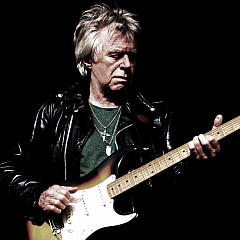
A renowned guitarist and rock revivalist, Dave took "I Hear You Knocking" to the top of the UK charts and was the first to record Elvis Costello's "Girls Talk."
History Of Rock

History Of RockSong Writing

An interview with Dr. John Covach, music professor at the University of Rochester whose free online courses have become wildly popular.
David Bowie Lyrics Quiz

David Bowie Lyrics QuizMusic Quiz

How well do you know your David Bowie lyrics? Take this quiz to find out.
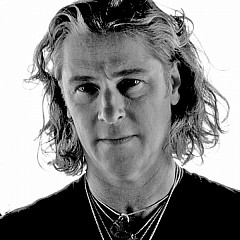
Ed Roland of Collective Soul

Ed Roland of Collective SoulSongwriter Interviews

The stories behind "Shine," "December," "The World I Know" and other Collective Soul hits.
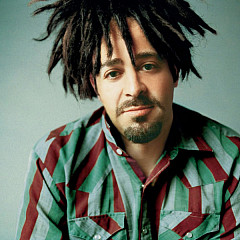
Adam Duritz of Counting Crows

Adam Duritz of Counting CrowsSongwriter Interviews

"Mr. Jones" took on new meaning when the song about a misguided view of fame made Adam famous.