Mad Dogs And Englishmen

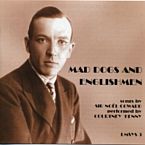
Album: Mad Dogs And Englishmen (1954)
Play Video

Songfacts®:

  • This song, which is one of his very finest, became Noël Coward's signature tune. In his biography, A Talent To Amuse, Sheridan Morley said Coward wrote it while driving from Hanoi to Saigon "without pen, paper, or piano." In Noël Coward: The Complete Lyrics, more detail is given by Coward himself: "I wrestled in my mind with the complicated rhythms and rhymes of the song until finally it was complete, without even the aid of pencil and paper. I sang it triumphantly and unaccompanied to my traveling companion on the verandah of a small jungle guest house. Not only Jeffrey, but the gecko lizards and the tree frogs gave every vocal indication of enthusiasm."
  • Noël Coward was born in 1899 at the peak of the British Empire, the greatest empire in history, on which the Sun never set. "Mad Dogs And Englishmen" satirizes the Colonials who ran this Empire, and who in the 1930s were still administering it as if they ruled the Earth. To emphasize this he included a few bars of "Rule, Britannia!" The song was first performed in The Third Little Show at the Music Box Theatre, New York, on June 1, 1931, by Beatrice Lillie. Shortly it went into the revue Words And Music, and then into Coward's own cabaret act. "Mad Dogs And Englishman" was Prime Minister Winston Churchill's favorite Coward song.
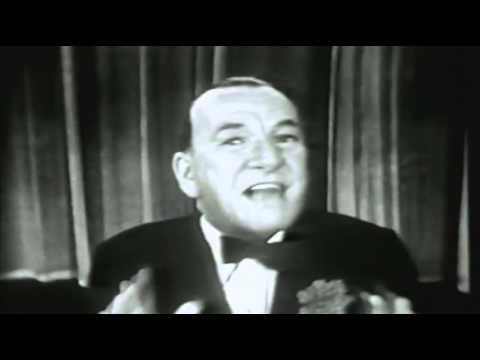
  • Coward performed his signature tune many times, but probably the most alluring performance was on his TV debut as a performer. In November 1954, he was offered a four week contract to appear at the Desert Inn, Las Vegas, the following June at the then not inconsiderable salary of $35,000 a week. Although his works had been performed on Broadway since the 1920s, Coward was apprehensive that his brand of humor would not be appreciated in a post-war USA; he needn't have worried. Everything about Coward radiated style, even the way he held a cigarette. As the quintessential, slightly eccentric, upper class English gentleman he was adored by American audiences, and on October 22, 1955, he shared the billing with Mary Martin in a one-off special for CBS called Together With Music, a ninety minute program of songs and sketches. In the show he half sang, half recited "Mad Dogs And Englishmen" to raptuous applause from the live TV audience. This program contains what is believed to be the only footage of Coward performing his cabaret act.
  • Coward died in 1973, but five years before his death he was in the Far East where, according to his song:

    In Hong Kong
    They strike a gong
    And fire off a noonday gun
    To reprimand each inmate
    Who's in late

    And where, as Sheridan Morley put it "surrounded by photographers, he solemnly but cautiously fired off the gun which he had immortalized... 37 years earlier."
  • The song's title has also found its way into the Oxford Dictionary Of Modern Quotations. >>
    Suggestion credit:
    Alexander Baron - London, England, for all above

Comments

Be the first to comment...

Editor's Picks

Second Wind Songs

Second Wind SongsSong Writing

Some songs get a second life when they find a new audience through a movie, commercial, TV show, or even the Internet.

The Fratellis

The FratellisSongwriter Interviews

Jon Fratelli talks about the band's third album, and the five-year break leading up to it.

Eagles Lyrics Quiz

Eagles Lyrics QuizMusic Quiz

Lots of life lessons in these Eagles lyrics - can you match them to the correct song?

Charlie Benante of Anthrax

Charlie Benante of AnthraxSongwriter Interviews

The drummer for Anthrax is also a key songwriter. He explains how the group puts their songs together and tells the stories behind some of their classics.

Rock Revenge Songs

Rock Revenge SongsMusic Quiz

John Lennon, Paul Simon and Lynyrd Skynyrd are some of the artists who have written revenge songs. Do you know who they wrote them about?

Adam Young of Owl City

Adam Young of Owl CitySongwriter Interviews

Is Owl City on a quest for another hit like "Fireflies?" Adam answers that question and explains the influences behind many others.