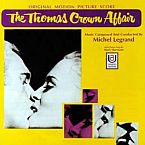
"The Windmills Of Your Mind" was written for the 1968 Steve McQueen movie
The Thomas Crown Affair and features in the film. Director Norman Jewison wanted a trippy song that sounded like the Beatles' "
Strawberry Fields Forever" for a scene where McQueen's character is
flying a glider. The song provides a contrast to the visual: McQueen appears firmly in control, but the music makes viewers feel the trepidation going through his mind.
The music was written by the French composer Michel Legrand, with the lyric by Marilyn and Alan Bergman. It took the Bergmans a while to come up with the title, which they chose because they thought it was interesting.
Marilyn and Alan Bergman wrote many popular songs in the '60s, '70s and '80s, many for films. Their other works include "
The Way We Were" from the 1973 film of the same name, and the theme to the 1967 movie "
In The Heat Of The Night," performed by Ray Charles.
"The Windmills Of Your Mind" won the 1969 Oscar for Best Song From A Film. Frank Sinatra presented the award.
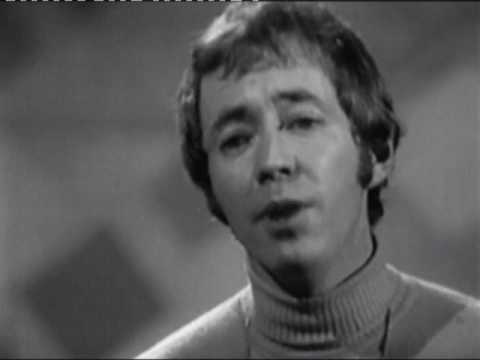
The song was sung by the Englishman Noel Harrison, the son of the British actor Rex Harrison of the popular '60s TV spy series The Girl From U.N.C.L.E. Noel was better known as an actor - none of the other songs he recorded had much impact.
The song was a hit in the UK, where it went to #8, but in America the most popular version is by Dusty Springfield, who released a popular version on her 1969 album Dusty In Memphis that went to #31 in the US. A version by Jimmie Rodgers reached #123 that same year.
Marilyn Bergman recalled to the ASCAP Extended Songwriters' Workshop how this song came about: "That was an assignment, for a picture called The Thomas Crown Affair. It was a picture about a very wealthy playboy who has been everywhere and done everything, and for a thrill, plans a very complicated bank heist. There was a scene in which he is flying a glider for pleasure while he's planning the bank heist, and the director shot six- or seven-minutes of him circling in the glider - which is a dream for a songwriter: no dialogue, no sound effects, just a little shoosh of wind. Norman Jewison, the director, wanted a song that exposed no character, that didn't tell any plot - he just wanted the restlessness and uneasiness of the character underlined. Michel wrote six or seven full melodies, and when we work with him, we write to his melodies, because even though he expresses himself perfectly in English, his French accent is such that things can come out sounding a little like calypso songs! He played us these wonderful melodies, and we agreed to sleep on it. The next morning all three of us had independently chosen this oddball melody, almost baroque in feel. It was the opposite of what we had thought we would have chosen the night before."
Alan Bergman added: "I think we chose it because it's kind of a ribbon, a circular melody that reflected the flight of a glider very well."
Noel Harrison once said of this song: "It didn't seem like a big deal at the time. I went to the studio one afternoon, sang it and pretty much forgot about it. I didn't realize until later what a timeless, beautiful piece Michel Legrand and the Bergmans had written. It turned out to be my most notable piece of work."
In the 1999 remake of The Thomas Crown Affair, this song appears twice: first by Chico O'Farrill and His Orchestra, then by Sting over the closing credits.
Harrison had trouble with the lyric, "Like a tunnel that you follow to a tunnel of its own, down a hollow to a cavern where the sun has never shone." Marilyn Bergman recalled: "In Britain, they don't say 'shone' in the past tense. They say 'shon,' rhyming with 'upon.' The sun 'shon' yesterday. He started to sing the song and he sang 'tunnel of its own... where the sun has never shon.' We said 'No, it's shone.' And he said 'No, it's our language!' And we said, 'Yes, but it's our song.' So reluctantly, he sang 'shone' and our rhyme was intact."
A version by Mel Tormé from 1969 closes out the 2025 season 2 finale of the mind-bending series Severance in a scene where the characters Mark and Helly make a slow-motion escape. The song's use is a nod to The Thomas Crown Affair, where Steve McQueen's character leads a double life. In Severance the characters lose memory of their outside lives when they enter the workplace.