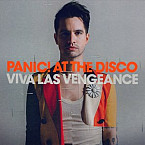

Viva Las Vengeance

Album: Viva Las Vengeance (2022)
Play Video

Songfacts®:

  • Panic At The Disco frontman Brendon Urie grew up in Las Vegas. Here he evokes his younger days in Sin City while alluding to some personal troubles. The song title plays on the name of a 1964 Elvis Presley movie and song.
  • In the first verse, Urie struggles to create art, and when he does, someone pilfers it.

    Someone did me wrong, stole my favorite song, yes, it really hurt

    Urie may be referencing former POTUS Donald Trump using Panic! At The Disco's "High Hopes" at a re-election rally in June 2020, when Urie was very much anti-Trump.
  • The second verse concerns a hacking incident. We do not the details, but Urie likely highlights this to make a point about the lack of truth on the internet.
  • Having grown up amid the glitz and seediness of Las Vegas, Urie has experienced everything the city offers. On the chorus he's hooked up with a prostitute who warns him that the pleasure he seeks is momentary and ultimately the city will have its revenge on him.

    Shut up and go to bed
    She said "Viva Las Vengeance"
  • By the end of the song, Urie is distressed over all the criticism dished out to him, but he will continue to make music.

    I'm being buried alive
    Didn't wanna kill the DJ
    But it can't hurt to try


    Urie could be referencing The Smiths' "Panic," where singer Morrissey repeats the lines "hang the DJ" and "hang the blessed DJ."

    As a sidenote, Panic! At The Disco didn't take their name from The Smiths' song, despite its references to "panic on the streets" and "burn down the disco." Rather, they named themselves after a line in Orange County pop-punk outfit Name Taken's 2004 track "Panic."
  • This bombastic slice of power pop is the lead single and title track of Panic! At The Disco's seventh studio album, Viva Las Vengeance. Urie recorded the record using a tape machine in Los Angeles alongside his producer Jake Sinclair. "Viva Las Vengeance is a look back at who I was 17 years ago and who I am now with the fondness I didn't have before," Urie said. "I didn't realize I was making an album and there was something about the tape machine that kept me honest."
  • Frequent Panic collaborator Brendan Walter ("High Hopes") directed the campy video. The clip starts with Brendon Urie playing piano with an accompanying band on a '60s-style TV variety show. "Welcome to Viva Las Vengeance," the caption accompanying the visual reads. "This is the tale about growing up in Las Vegas. It's about love, fame, burnout and everything that happens in between."

    As the song progresses, the instruments attack Urie onstage. He continues to perform, even as his piano eats him alive.
  • Urie previously paid tribute to his Vegas roots on Panic's 2013 album Too Weird To Live, Too Rare To Die! He wanted its "Vegas Lights" track to become an anthem for the city.

Comments

Be the first to comment...

Editor's Picks

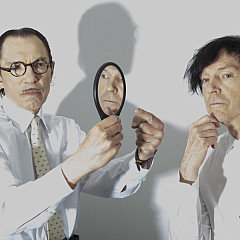
Ron and Russell Mael of Sparks

Ron and Russell Mael of SparksSongwriter Interviews

The men of Sparks on their album Hippopotamus, and how Morrissey handled it when they suggested he lighten up.

Dean Friedman - "Ariel"

Dean Friedman - "Ariel"They're Playing My Song

Dean's saga began with "Ariel," a song about falling in love with a Jewish girl from New Jersey.

Lip-Synch Rebels

Lip-Synch RebelsSong Writing

What happens when Kurt Cobain, Iron Maiden and Johnny Lydon are told to lip-synch? Some hilarious "performances."
Stand By Me: The Perfect Song-Movie Combination

Stand By Me: The Perfect Song-Movie CombinationSong Writing

In 1986, a Stephen King novella was made into a movie, with a classic song serving as title, soundtrack and tone.
Martin Page

Martin PageSongwriter Interviews

With Bernie Taupin, Martin co-wrote the #1 hits "We Built This City" and "These Dreams." After writing the Pretty Woman song for Go West, he had his own hit with "In the House of Stone and Light."
James Williamson of Iggy & the Stooges

James Williamson of Iggy & the StoogesSongwriter Interviews

The Stooges guitarist (and producer of the Kill City album) talks about those early recordings and what really happened with David Bowie.