Give Up the Funk (Tear the Roof off the Sucker)

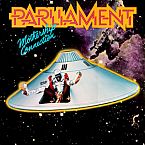
Album: Mothership Connection (1975)
Charted: 15
Play Video

Songfacts®:

  • Originally the single was released with the title reversed, as "Tear the Roof off the Sucker (Give Up the Funk)." It was written by Parliament members Jerome Brailey, George Clinton, and Bootsy Collins.

    It is certainly one of the most famous songs from, if not the definitive example of, the P-Funk genre. In fact, we get the term "p-funk" from the collective Parliament-Funkadelic, managed by George Clinton. A few dozen other groups have since followed suit within this genre they invented.
  • "Give Up The Funk" uses a jazz construction, beginning with three themes introduced and explored separately which are then woven together. Ray Davis raps "tear the roof off the sucker" at the beginning. Throughout the song, interaction is heard between bass, drums, vocals, and synthesizers. An ensemble sound is achieved with only a few parts.
  • Ever been to a George Clinton/P-Funk concert? You'll hear the phrase "Give up the funk" sometimes hundreds of times, starting with the crowd imploring the band to take the stage (shows rarely start on time, and the concertgoers can get quite worked up). Throughout the show, a few sayings will be repeated over and over, including the two mentioned in this song's title, and other classics like "turn this mother out." It can be quite a spiritual and communal experience, and this song is often the centerpiece.

    These types of chants are often heard in kirtans, where Hindu mantras are repeated over and over in a quest for enlightenment. What's going on in the P-Funk world is more based on church music, but serves the same purpose, but Clinton points out that you have to be careful with them. "The chants are like church grooves that get you in that state where you're receptive to opening up your mind and coming up with positive things," he told Songfacts. "At the same time, you have to be careful that somebody doesn't program you. You have to do it consciously, knowing that you're opening yourself up and people can program you when you open up like that. So, that's why we do a lot of nonsensical stuff that's just fun."
  • Regarding "Tear the Roof off the Sucker," this chant is often blended with "The Roof Is on Fire," which was popularized in concerts by Rockmaster Scott & The Dynamic Three when they performed the 1984 song of that name.
  • You of course recognize this song from its many appearances in TV commercials, including those for MasterCard, Pringles Potato Chips, Honda, and Moro Nuts. It's also appeared in the films Slums of Beverly Hills (1998), Undercover Brother (2002), Beauty Shop (2005), and Cloverfield (2008).
  • Bill Martin's Avant Rock: Experimental Music from the Beatles to Bjork put it well: "Although the Funkadelic albums are hilarious in their sheer nastiness and compulsive danceability, Parliament's Mothership Connection is the album I always go back to. 'Good evening' the DJ intones at the start, and you know that you're in good hands. If Funkadelic's music is often about the (justifiable) anger within, Mothership Connection is about that voice of redemption that speaks from beyond."
  • The group felt that the music industry was trying to shut them out at the time, and they were demanding to be let in, so to speak. Hence the phrase: "Let us in, we'll turn this mutha out!" >>
    Suggestion credit:
    Simon - Atlanta, GA
  • The rapper Gerardo reworked this song under the title "We Want The Funk" and released it as the follow-up to his 1991 hit "Rico Suave." His version, which features George Clinton in the video, went to #16 in the US.

    MC Hammer used the other part of the chant for his 1988 track "Turn This Mutha Out." Others to sample or interpolate the song include Snoop Dogg on his 1993 debut single ""Who Am I? (What's My Name?)" and Heavy D on his 1989 song "More Bounce."

Comments: 6

  • Funkyin2023 from TexasGUTF is also in the movie Moneyball. It’s the song Jeremy Giambi is getting down to (can’t blame him) in the locker room after a loss and Billy Bean goes in to shut him the hell up. Lololololol
  • Stukka63 from St.augustine, Fla.Regardless of whatever type music your into, this just kicks ass.
  • Johnny from Claxton, GaP funk means "pure funk".... it's a play on a street description for drugs... "P" means it's pure... as in "make my funk the "p" funk.. i want my funk uncut."

    No offense Simon, but your explanations are just explanations that sounded as if they should be right... to you. And the music industry wasn't trying to shut them out... rob them blind maybe... but George and company were greatly in demand.
  • Camille from Toronto, OhThe song has terrific attitude. They get as close as you can get without using the M-F word with their lyrics: "Tear the roof off the mother, sucker". In fact, it's hard to believe they got so much airplay due to how the lyrics could potentially sound to the casual listener. Still, I love it and wish we heard it more often on the radio.
  • Simon from Atlanta, GaBtw, "p funk" is short for a Parlia-Funkadelicment thang".
  • Simon from Atlanta, GaThey felt that the music industry was trying to shut them out at the time, and they were demanding to be let in, so to speak. Hence the phrase: "Let us in, we'll turn this mutha out!"
see more comments

Editor's Picks

La La Brooks of The Crystals

La La Brooks of The CrystalsSong Writing

The lead singer on "Da Doo Ron Ron" and "Then He Kissed Me," La La explains how and why Phil Spector replaced The Crystals with Darlene Love on "He's A Rebel."

Janet Jackson

Janet JacksonFact or Fiction

Was Janet secretly married at 18? Did she gain 60 pounds for a movie role that went to Mariah Carey? See what you know about Ms. Jackson.

Trans Soul Rebels: Songs About Transgenderism

Trans Soul Rebels: Songs About TransgenderismSong Writing

A history of songs dealing with transgender issues, featuring Pink Floyd, David Bowie, Morrissey and Green Day.

Mac Powell of Third Day

Mac Powell of Third DaySongwriter Interviews

The Third Day frontman talks about some of the classic songs he wrote with the band, and what changed for his solo country album.

Sarah Brightman

Sarah BrightmanSongwriter Interviews

One of the most popular classical vocalists in the land is lining up a trip to space, which is the inspiration for many of her songs.

Andy McClusky of OMD

Andy McClusky of OMDSongwriter Interviews

Known in America for the hit "If You Leave," OMD is a huge influence on modern electronic music.