Patsy Cline

Patsy Cline Artistfacts

  • September 8, 1932 - March 5, 1963
  • Patsy Cline was born Virginia Hensley in Winchester, Virginia in 1932. Her father left the family in 1947, but Patsy's mother, just 16 when Patsy was born, introduced her to singing at their local church. Despite no formal musical training and never learning to read music, Cline began to perform on local radio stations under the name Ginnie Hensley. Her professional career would be marked by highs and lows, but Patsy Cline is still known as one of the great icons of country music with a rich voice that helped her become one of country's first stars to cross over into pop stardom.
  • Four Star Records offered Cline her first recording contract in 1955, but the feisty Cline was never very happy with the material or the financial arrangements. She was only allowed to record songs written by studio writers, which did lead to her first big hit, "Walkin' After Midnight." The song went to #2 on the Country chart and #12 on the Pop chart in 1957. The piano player on the song was Owen Bradley, who went on to be one of the most successful and respected producers in Country music.
  • Cline's career endured a dry spell after her success with "Walkin' After Midnight" and the end of her contract with Four Star Records. In need of money and a career boost, she signed with Decca Records in 1960, teaming up with Owen Bradley. Despite occasional disagreements with him, Cline's career took off under Owens. "I Fall to Pieces" became a cross over hit in 1961, hitting #1 on the country chart and #12 on the pop charts. However, a serious car accident in June left her unable to devote time to promoting the song and her momentum slowed.
  • Later in 1961, Cline was presented with a song by a young songwriter, Willie Nelson. Her first reaction to "Crazy" was not a good one, but after reworking it to suit her vocal style, the song was a Top 10 hit on both the country and pop charts and became Cline's signature song. Nelson said in a documentary on Cline's life that her interpretation of "Crazy" is his favorite cover of any of his songs. Cline followed it up with "She's Got You," which she promoted on American Bandstand with Dick Clark in 1962.
  • In the early '60s, Cline became a star, performing in venues including the Grand Ol' Opry, the Hollywood Bowl, Carnegie Hall, and as a headliner for her own show at The Mint casino in Las Vegas. She took on a mentor role to Loretta Lynn and Lynn credits her with teaching her how to dress the part as a Country star. However, Cline also shared with her close friends, such as Lynn, June Carter, and Dottie West that she believed she did not have long to live.
  • Cline performed at a benefit concert in Kansas City, Kansas for the family of disc jockey Cactus Jack Call on March 3, 1963. Call had died in an auto accident a month earlier. Unable to leave Kansas City on March 4 due to inclement weather, it is widely reported that Cline refused Dottie West's offer to return with her to Nashville by car, saying, "Don't worry about me, Hoss. When it's my time to go, it's my time to go." Cline's private plane left Kansas City on March 5 and stopped for fuel in Dyersburg, Tennessee. Despite more weather warnings, the plane took off and crashed shortly after leaving Dyersburg, killing Cline, the pilot, and two of her fellow Grand Ol' Opry stars, Cowboy Copas and Hawkshaw Hawkins. She became the first female solo artist to be inducted into the Country Music Hall of Fame in 1973.
  • Cline's final song at the Kansas City benefit concert was a brand-new tune, "I'll Sail My Ship Alone," which she had recorded the previous month.

Comments: 1

  • Aurelia from GeorgiaI love Patsy Cline. Easily in my top 5 favorite singers. R.I.P Patsy
see more comments

Editor's Picks

Graham Parker

Graham ParkerSongwriter Interviews

When Judd Apatow needed under-appreciated rockers for his Knocked Up sequel, he immediately thought of Parker, who just happened to be getting his band The Rumour back together.
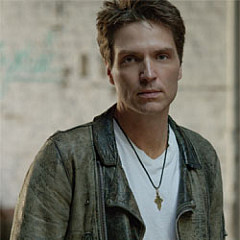
Richard Marx

Richard MarxSongwriter Interviews

Richard explains how Joe Walsh kickstarted his career, and why he chose Hazard, Nebraska for a hit.
Bob Dylan Lyric Quiz

Bob Dylan Lyric QuizMusic Quiz

Think you know your Bob Dylan lyrics? Take this quiz to find out.

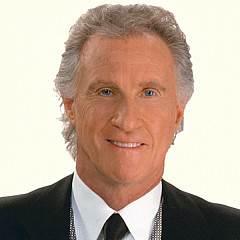
Bill Medley of The Righteous Brothers

Bill Medley of The Righteous BrothersSongwriter Interviews

Medley looks back on "Unchained Melody" and "You've Lost That Lovin' Feelin'" - his huge hits from the '60s that were later revived in movies.
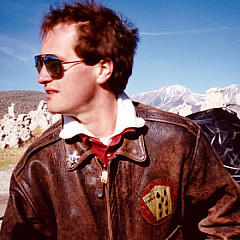
Director Nick Morris ("The Final Countdown")

Director Nick Morris ("The Final Countdown")Song Writing

Nick made some of the biggest videos on MTV, including "The Final Countdown," "Heaven" and "Don't Know What You Got (Till It's Gone)."
Lace the Music: How LSD Changed Popular Music

Lace the Music: How LSD Changed Popular MusicSong Writing

Starting in Virginia City, Nevada and rippling out to the Haight-Ashbury, LSD reshaped popular music.