This being a Patti Smith song, it's filled with symbolism and meaning, looking at how gender intersects with the divine. Most of the lines start with "she," with the opening line, "She is benediction," implying a blessing.
"I had the concept to write a lyric line that would have several levels - the love of one human being for another and the love of ones creator,"
Smith wrote on her website. "So in a sense, the song addresses both physical and spiritual love."
The last line in the chorus is often interpreted as "heroin," but it's really "heroine":
Some strange music draws me in
Makes me come on like some heroine
"Heroin" seemed logical considering there are also references to addiction and intoxication ("She is addicted to thee... "She intoxicated by thee"), but the song is not about drugs. She's dancing barefoot because the music is pulling her into a state of higher consciousness, relieving her of her inhibitions and making her feel like a heroine, the feminine form of "hero."
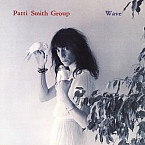
The lyrics didn't come with the album, but a blurb on the sleeve read, "Dedicated to the rites of the heroine," which was the only way to know for sure that Smith wasn't singing the homophone "heroin." Smith says she was asked to change the word to avoid confusion and make the song more marketable, but she refused. This certainly stymied the song commercially, but Smith wasn't going to compromise her art.
Jim Morrison of The Doors was an influence on this song. "I always imagined Jim Morrison singing it, which resulted in me singing and recording it in a lower vocal register," Smith wrote. "I wanted the verse to have a masculine appeal and the chorus to have a feminine one."
At the end of the song, Smith recites some of her poetry ("The plot of our life sweats in the dark like a face..."), which is something Morrison innovated on Doors songs like "
Peace Frog" and "
The WASP (Texas Radio and The Big Beat)."
In some live versions, Smith would start the song with this spoken intro:
We shut our eyes, we stretch out our arms
And whirl on a pane of glass
An affixation
A fix on anything
The line of life, the limb of tree
The hands of he
The promise that she
Is blessed among women
"Dancing Barefoot" is one of Smith's most popular songs, and one of her favorites, performed at most of her concerts. It was never a hit, but neither were any of her songs with the exception of the Bruce Springsteen-written "
Because The Night." Considering her acclaim (Smith was inducted into the Rock and Roll Hall of Fame in 2007) it's surprising how few albums she sold and how rarely she made the charts. A song like "Dancing Barefoot" certainly could have become a hit if she had made some concessions and did the standard promotion, but that wasn't her M.O. Fans, journalists, and other musicians (like Springsteen) did what they could to spread the word, but mass appeal eluded her, which seemed to be for the best. Even decades later, many listeners were pleasantly surprised to discover her music and peel back the layers of her lyrics.
The music was written by Ivan Kral, a guitarist/bassist who collaborated on many of Smith's early tracks.
Todd Rundgren produced the
Wave album and played bass on this song. He had hits as a solo artist in the early '70s with "
Hello It's Me" and "
I Saw The Light" but was mostly focused on producing other artists later in the decade. Before producing
Wave, he did Meat Loaf's
Bat Out Of Hell, which is quite a contrast. That very bombastic album became immensely popular, outselling
Wave many times over.
This wasn't the first time Smith fainted at drug references in a song that's not about drugs. Her 1976 song "
Poppies" seems to be about opium, but is really an anti-radio song about pop music.
On the album notes, the song is dedicated to "Jeanne Hebuterne, mistress of Amedeo Modigliani."
Modigliani was an Italian painter who died from tuberculosis in 1920. The next day, Hebuterne joined him death by jumping out of a window.
U2 recorded this song in 1989, releasing it as the B-side of their "
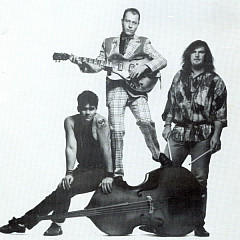
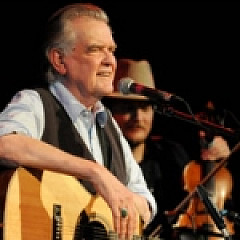
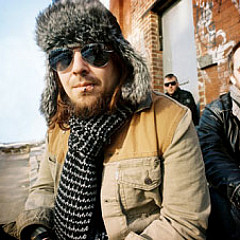
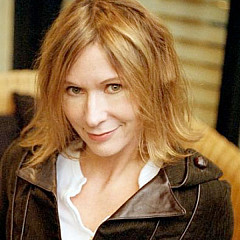
When Love Comes To Town" single. Other artists to cover it include The Mission UK, Johnette Napolitano, Simple Minds, and Shakespears Sister.
"Dancing Barefoot" is the theme song to the 2023 miniseries Daisy Jones & The Six, about a fictional band from the '70s. The series uses a lot of original music, but producers felt "Dancing Barefoot" encapsulated the story better than anything they could write. The main character, Daisy (played by Elvis Presley's granddaughter Riley Keough), makes a spiritual connection with music that eventually leads her to the band.
Johnny Depp (yes, the actor - he's also a musician) and Alison Mosshart teamed up to perform Dancing Barefoot at "People Have the Power: A Celebration of Patti Smith," a tribute concert held at Carnegie Hall on March 26, 2025.