Days We Left Behind

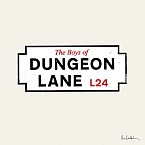
Album: The Boys of Dungeon Lane (2026)
Play Video

Songfacts®:

  • "Days We Left Behind" is an autobiographical song rooted in Paul McCartney's working-class upbringing in post-war Liverpool. The tender, stripped-back track transports him back to his pre-fame days of "smoky bars and cheap guitars" in his home city, capturing a sense of irretrievable but treasured time. McCartney released it as the lead single from his 18th solo album, The Boys of Dungeon Lane.
  • McCartney calls it a "memory song." The working-class streets of Speke and the pull of the Mersey come into focus with the same affectionate detail he once gave "Penny Lane," only this time the tour guide is older, a bit mistier around the edges, and more inclined to linger.

    "I do often wonder if I'm just writing about the past but then I think how can you write about anything else? It's just a lot of memories of Liverpool," McCartney reflected. "It involves a bit in the middle about John and Forthlin Road which is the street I used to live in. Dungeon Lane is near there. I used to live in a place called Speke which is quite working class. We didn't have much at all but it didn't matter because all the people were great and you didn't notice you didn't have much."
  • During the bridge McCartney sings about the creative partnership that would change music history:

    And wrote a secret code
    To never be spoken
    I stand by what I said
    The promise that I made
    Will never be broken


    McCartney lived at 20 Forthlin Road in Allerton, a suburb of Liverpool, during his teenage years, having moved there with his family in 1955. John Lennon was a regular visitor to the house, and it was here that Lennon and McCartney wrote many of their early Beatles songs together. The lyric's "secret code" evokes the almost private musical language the two developed in that room.
  • See the boys of Dungeon Lane
    Along the Mersey shore


    The album title, and a key image in the song, comes from Dungeon Lane, a street in Speke, the working-class Liverpool neighborhood where McCartney spent part of his childhood. The lane leads down to the shore of the Mersey.
  • In the skies the skylarks rise
    Above the sounds of war


    Ahead of the album announcement, McCartney shared a playlist on his website of songs inspired by birds, including Beatles favorites "And Your Bird Can Sing" and "Blackbird," alongside his 2005 solo piece "Jenny Wren." McCartney's interest in birds goes back to his childhood. "I loved bird watching when I was a kid, because I like to be able to get out of the normal stream of life," he said on his Life In Lyrics podcast. "We were about a mile away from quite deep countryside, so I used to just go out on my own, just being away from the normal stuff - school, family life."
  • Andrew Watt, who produced Hackney Diamonds for The Rolling Stones and has worked with Elton John, Ozzy Osbourne, and Iggy Pop, co-produced the track with McCartney. Their creative partnership began in 2021 when during a casual session McCartney happened upon a chord he didn't recognize. This was a rarity for the ex-Beatle, so he continued to work on it, adding two more chords to the first. Watt encouraged McCartney to finish the idea, and it turned into the new album's opening track, "As You Lie There." Recording sessions took place intermittently over five years, split between sessions in Los Angeles and Sussex, fitting around McCartney's touring schedule.

Comments

Be the first to comment...

Editor's Picks

Pam Tillis

Pam TillisSongwriter Interviews

The country sweetheart opines about the demands of touring and talks about writing songs with her famous father.

00s Music Quiz 1

00s Music Quiz 1Music Quiz

Do you know the girl singer on Eminem's "Stan"? If so, this quiz is for you.

Linda Perry

Linda PerrySongwriter Interviews

Songwriting Hall of Famer Linda Perry talks about her songs "What's Up" and "Beautiful," her songwriting process, and her move into film music.

Judas Priest

Judas PriestSongwriter Interviews

Rob Halford, Richie Faulkner and Glenn Tipton talk twin guitar harmonies and explain how they create songs in Judas Priest.

Who Wrote That Song?

Who Wrote That Song?Music Quiz

Do you know who wrote Patti Smith's biggest hit? How about the Grease theme song? See if you can match the song to the writer.

Penny Ford of Snap!

Penny Ford of Snap!Songwriter Interviews

The original voice of Snap! this story is filled with angry drag queens, video impersonators and Chaka Khan.