Where Have All The Cowboys Gone?

Album: This Fire (1996)
Charted: 15 8
Play Video

Songfacts®:

  • In this song, Paula Cole plays a woman who is swept off her feet by a rugged cowboy in a '56 Chevy. She's happy to be his housewife while he provides for the family, but after a while lethargy sets in and her cowboy is more of a bum, hanging out at the bar while she takes care of the household.

    In a Songfacts interview with Cole, she said: "It's so many things woven together: wit, irony, humor, melancholy, and gender role examination. It's all these things put together musically in this plaintive, Americana pop way."
  • Cole is a staunch feminist and wrote this song with a sideways glance at gender stereotypes. The nuance of the song was lost on many listeners, who thought it was simply about a woman yearning for a manly man to take care of her.
  • "Where Have All The Cowboys Gone?" was the breakout hit from Cole's second album, which she wrote and produced herself after working with Kevin Killen on her 1994 debut, Harbinger. She wrote the song and demoed it with a rumba feel, but that didn't fly. "Nobody paid any attention to it with a rumba feel, and that bothered me," Cole told Songfacts. "For some reason the song was speaking to my unconscious and was saying, 'Believe in me. Hey, I'm down here, I'm good.' It bothered me enough that I re-demoed it with like a Ringo Starr reprise of 'Sgt. Pepper's Lonely Hearts Club Band.' On that album, Paul McCartney counts off at the last song, 'One, two, three, four... [drum beat].' That's Ringo.

    So, I sampled Ringo and looped it for just home demo purposes, not for the recording, and then I put on the catchy BVs [backing vocals] and added a bridge and suddenly everyone was really over the top about the song. And I knew going into This Fire that it was an important song and it was probably going to be my first single.

    I loved the way "When Doves Cry" sounded, from Prince, and the lack of bass and how it sounded coming through a piece of s--t car stereo system all high end. It translated beautifully. I wanted it to translate to radio without bass muddying this particular song. I wanted crowd noise throughout the track to give it feel and ambience. I wanted the catchiness of the background vocals, and most of all I wanted humor and wit, like XTC of England, that wonderful British rock group. I was really in admiration of their wit and their humor and I thought, 'What do I need to write with some wit and humor and irony.'"
  • Cole earned seven Grammy nominations in 1998, three specifically for this song: Record of the Year, Song of the Year, and Best Female Pop Vocal Performance. This Fire was up for Album of the Year and Best Pop Album, and Cole was also nominated for Best New Artist and Producer of the Year. "Sunny Came Home" by Shawn Colvin won the Song and Record of the Year awards, and Bob Dylan got Album of the Year for Time Out Of Mind, but Cole won for Best New Artist, beating out Erykah Badu, Fiona Apple, Hanson and Puff Daddy.

    At the ceremony, Cole performed part of the song (ending with some impressive beatboxing) in a whiparound segment where Colvin and Sarah McLachlan also sang their hits. Cole had never watched the Grammys before she was on it, and she didn't bother to shave her armpits, which was noticeable in her acceptance speech. This became a talking point, which irked Cole as it shifted the story from her accomplishment to her appearance. "I hated the fashion statement element of pop," she told Songfacts. "I had hairy armpits and they made such a big fuss about it. I was touring in Europe where they don't even give a f--k about that. I came back and it was just weird."
  • With her Producer of the Year nomination, Cole became the first woman nominated for the award on her own. The following year, Sheryl Crow and Lauryn Hill were up for the award.
  • Cole's next single was "I Don't Want To Wait," a substantial hit that was chosen as the theme song for the TV series Dawson's Creek in 1998 while it was still on the charts.

    This song and the Grammy acclaim that came with it earned Cole a main stage spot on the Lilith Fair, a popular festival organized by Sarah McLachlan to showcase female artists. Cole toured as McLachlan's opening act in 1995, which is when the Lilith Fair concept started to form. It ran for three years, with Cole on board the first two.

    "It was really wonderful," Cole said in her Songfacts interview. "Audiences were fantastic and I loved that we raised money for women's shelters in every community we played. In hindsight, I think it might have been better just for me to have continued on my own path and not blended it with the movement because I got lumped in. And, in reality, my music is nothing like Sarah McLachlan's. Hers is very peaceful, kind of Enya-like, and I'm really dark and intense and raging and it's very different."
  • Cole ran into rough waters when she released her follow-up album, Amen, in 1999. With the Lilith Fair winding down and her style of confessional songwriting falling out of favor, it got little attention and sold poorly. Cole didn't release another album until 2007, when she returned with Courage.
  • There is no bass on this song. Most of the instrumentation consists of drums by Jay Bellerose and guitars by Greg Leisz, who used a variety of lap steel, acoustic, pedal steel and electric guitars. A bed of ambient crowd noise was used to create the feel of a bar and give texture to the sections where the guitars droop out.
  • Ten different mixes of this song, many with an techno flavor, were issued in 1997 in a "Maxi-Single" format. The album version runs 4:26 and was trimmed to 3:46 for the single, removing the count-in and some of the outro.
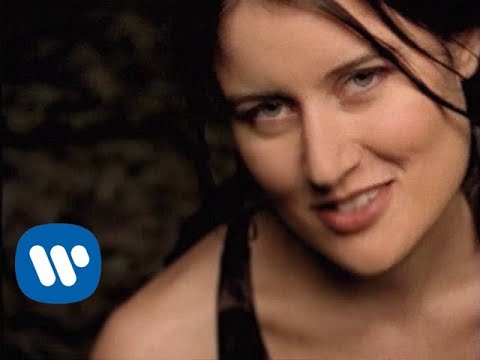
  • The veteran director Ed Steinberg did the video for this song, which has a rustic feel centered around various shots of Cole singing into the camera. Cole hated doing videos, but knew they had to be done. She couldn't muster any real acting, but was albe to sing into the camera and do a little dancing.
  • In 2016, Cole released a new version of this song on her album This Bright Red Feeling with the line changed from "I will wash the dishes while you go have a beer" to "You go wash the dishes while I go have a beer." She also shot a new video for the song, which was directed by her good friend Melora Hardin, known for her roles on Transparent and The Office.

Comments: 5

  • A Makeshift Psychologist from TnI surreptitiously enjoyed the album as a white American boy, all I can surmise is that men find out the white picket fence family of four is not all it´s hyped up to be.
  • Tony from San DiegoI knew what this annoying song meant the first time I hear it. I was 16, it was the 90s feminist movement that lead to weak men of the 21st century. I had friends that didn’t realize it the song was a female empowerment song. I knew when she sarcastically sneers telling him to “you go have a beer.”!

    Anyways, it’s a stupid song. Paints men as 50s greaser womanizer. Ive been burned enough by women where I no longer care what women want. I never figured it out in the first place but now I just don’t care. If you’re too nice they’ll find you weak, If you're not already nice she’ll think you’re and dick. If you grow suspicious of certain behavior that almost always means cheating, she’ll accuse you of being overbearing, if you don’t she’ll accuse you of not caring enough. Men, don’t try to understand women. Women understand women and they hate each other. But the sisterhood is strong. As much as they compete with one another and secretly don’t really like one another, they will lie for each other. They will keep each others secrets. And they don’t do it out of loyalty, they do it because they’ve all sort of blackmailed each other that way. If a girl tells another girls boyfriend the truth about something, her s--t will quickly be exposed in return.
  • Patrick from LouisvilleAfter raising the children and working the farm, you'd think she'd know how her man takes his coffee.
  • Career Woman Who Likes Beer from Flyover CountryHey, I think I found the guy who missed the entire point of the song. He’s in Ohio.
  • Male Who Respects Paula Cole's Opinion And Would Like To Express My Own from OhioCowboys weren't so much a heroic bunch and not all males are jerks....not to mention the fact that some women are too. Anyway, please keep this in mind the next time you compose lyrics so stereotypical as "I will do the dishes, while you go have a beer" Doesn't make things any better you know, just creates more separation. Our opinions count too, regardless of whether we're an "alpha" or not.
see more comments

Editor's Picks

Dave Alvin - "4th Of July"

Dave Alvin - "4th Of July"They're Playing My Song

When Dave recorded the first version of the song with his group the Blasters, producer Nick Lowe gave him some life-changing advice.

Second Wind Songs

Second Wind SongsSong Writing

Some songs get a second life when they find a new audience through a movie, commercial, TV show, or even the Internet.

Jack Blades of Night Ranger and Damn Yankees

Jack Blades of Night Ranger and Damn YankeesSongwriter Interviews

Revisit the awesome glory of Night Ranger and Damn Yankees: cheesily-acted videos, catchy guitar licks, long hair, and lyrics that are just plain relatable.

Waiting For The Break of Day: Three Classic Songs About All-Nighters

Waiting For The Break of Day: Three Classic Songs About All-NightersSong Writing

These Three famous songs actually describe how they were written - late into the evening.
Jimmy Jam

Jimmy JamSongwriter Interviews

The powerhouse producer behind Janet Jackson's hits talks about his Boyz II Men ballads and regrouping The Time.

Donnie Iris (Ah! Leah!, The Rapper)

Donnie Iris (Ah! Leah!, The Rapper)Songwriter Interviews

Before "Rap" was a form of music, it was something guys did to pick up girls in nightclubs. Donnie talks about "The Rapper" and reveals the identity of Leah.