Go West

Album: Very (1993)
Charted: 2
Play Video

Songfacts®:

  • "Go West" was originally recorded by the American disco outfit Village People, the group that gave us the iconic gay anthems "Y.M.C.A." and " In The Navy." Their "Go West" single was released in June 1979 and enjoyed modest success, becoming a Top 20 hit in Belgium, Ireland, and the UK, and reaching a respectable #45 on the Hot 100.
  • The lyrics of "Go West" were penned as an ode to San Francisco, envisioned as a utopian Shangri-La for the Gay Liberation movement. It was a call to head westward to a place of freedom and acceptance, a concept that resonated deeply with the LGBTQ+ community.
  • In 1992, the avant-garde filmmaker Derek Jarman asked the Pet Shop Boys to perform at an AIDS charity event at The Haçienda nightclub in Manchester. Keyboardist Chris Lowe selected "Go West" for their performance.

    During this performance, singer Neil Tennant found himself in a bit of a pickle – he couldn't quite remember the lyrics. Still, something clicked, and the duo decided to record "Go West" as a single.

    "When the Village People sang about a gay utopia it seemed for real," Lowe later explained. "I knew that the way Neil would sing it would make it sound hopeless."
  • For their version of "Go West," the Pet Shop Boys assembled a male voice choir to give the song a fuller, more majestic sound. They also extemporized on Pachelbel's Canon In D Major chord progression, weaving it into the opening of the song.
  • Lyrically, the Pet Shop Boys' rendition retains its status as a gay anthem, but it also takes on additional layers of meaning. Released shortly after the breakup of the Soviet Union, the words also reflected the geopolitical shifts of the time – how Russia, after decades of Cold War isolation, was beginning to look towards the West.
  • The single soared to #2 in the United Kingdom and topped the charts in Germany, Finland, Iceland and Ireland.
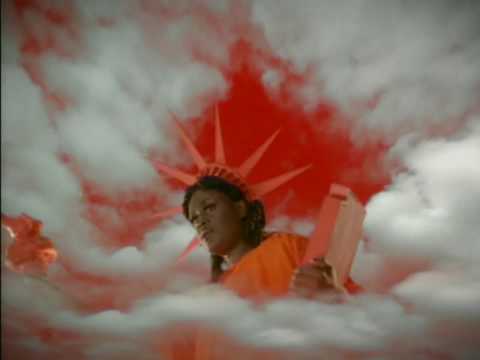
  • The music video is a visual feast of Soviet iconography and capitalist allusions, bridging the ideological divide of East and West. A vibrant red Statue Of Liberty sets the scene, but the mood dives as we cut to a gray city choked with red stars – a communist nightmare. Towering cosmonaut monuments make the message clear.

    An army of identical Soviet soldier march relentlessly up a skyward staircase. Where to? The camera pans out to reveal a colossal black Statue Of Liberty, a powerful symbol against the drab city. The video uses contrasting colors and imagery to depict a yearning for freedom, a digital dream of escaping oppression.
  • As part of the video, director Howard Greenhalgh and his team tried to film in Moscow's Red Square without permission. They managed to shoot for a whole 15 seconds before being removed. Greenhalgh recalled on Channel 5's Greatest Pop Videos 1993:

    "It was all about Russia opening its doors to the west and all that entails. Neil said, 'Can we do some kind of us in Moscow and us in New York and so obviously New York Statue of Liberty Russia big red flags and Russian monuments, Russian gymnasts because that's a kind of Pet Shop Boys thing.' The staircase, I think, was Neil's idea. It fitted in with the march."
  • Soccer fans, especially in England and Germany, have embraced the song, crafting their own versions for their teams. A DJ's decision to play "Go West" during halftime at a 1994 match between Paris Saint-Germain and Arsenal led to the Arsenal fans immortalizing it as one of the most recognizable of football chants. Initially sung as "one nil to the Arsenal," reflecting the score at the time, the chant has morphed into countless variations across the British terraces.

    German fans have crafted their own versions for their teams. "Olé, jetzt kommt der BVB" ("Olé, here comes the BVB") booms from the stands of Borussia Dortmund. And there's the rallying cry of FC Schalke 04 fans, "Steht auf, wenn ihr Schalker seid!" ("Stand Up, if you're a Schalke Fan").

    The song's reach extends beyond football. For instance, Polish fans across various sports proudly belt out "Polska, bialo-czerwoni" ("Poland, white and red") to its melody.
  • In director Jia Zhangke's acclaimed 2015 film Mountains May Depart, the song bookends the story, playing in both the opening and closing scenes.

Comments

Be the first to comment...

Editor's Picks

Dwight Twilley

Dwight TwilleySongwriter Interviews

Since his debut single "I'm On Fire" in 1975, Dwight has been providing Spinal-Tap moments and misadventure.

Lita Ford

Lita FordSongwriter Interviews

Lita talks about how they wrote songs in The Runaways, and how she feels about her biggest hit being written by somebody else.

Best Band Logos

Best Band LogosSong Writing

Queen, Phish and The Stones are among our picks for the best band logos. Here are their histories and a design analysis from an expert.

Jimmy Jam

Jimmy JamSongwriter Interviews

The powerhouse producer behind Janet Jackson's hits talks about his Boyz II Men ballads and regrouping The Time.

Charlie Benante of Anthrax

Charlie Benante of AnthraxSongwriter Interviews

The drummer for Anthrax is also a key songwriter. He explains how the group puts their songs together and tells the stories behind some of their classics.

Adam Young of Owl City

Adam Young of Owl CitySongwriter Interviews

Is Owl City on a quest for another hit like "Fireflies?" Adam answers that question and explains the influences behind many others.