A Groovy Kind Of Love

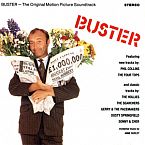
Album: Buster Soundtrack (1988)
Charted: 1 1
Play Video

Songfacts®:

  • "A Groovy Kind Of Love" was one of Phil Collins' nine #1 hits (we're counting his Marilyn Martin duet "Separate Lives" and his "Easy Lover" Philip Bailey team-up "Easy Lover"), but the song was first released in 1966 by a British group called the Mindbenders. Their version went to #2 that year.

    Collins covered the song for the 1988 movie Buster, where he played Buster Edwards. The film is set in the '60s, so the soundtrack is filled with songs from that era. Collins did write an original song with a '60s vibe for the film: "Two Hearts," which was also a #1 hit.
  • "Groovy" was hip lingo in 1966 when the original version of this song was released. By 1988 it was a very dated term, Collins' version wasn't trying to be hip. The appeal of the song is the very straightforward sentiment that evokes a simpler time. The lyrics are almost rudimental. Check out the first lines:

    When I'm feelin' blue, all I have to do
    Is take a look at you, then I'm not so blue
  • "A Groovy Kind Of Love" is one of the few hit songs from the '60s that was written by two women: Carole Bayer Sager and Toni Wine. Carole Bayer Sager, who went on to write "Don't Cry Out Loud" and "Nobody Does It Better," was just 22; Toni Wine was just 17! She ended up singing on "Sugar, Sugar" and wrote a "Black Pearl" for Sonny Charles & The Checkmates, Ltd.
  • The main instrument is a Yamaha CP-70, an electric piano with real strings. Other songs to use the CP-70 include "Steppin' Out" by Joe Jackson and "My Life" by Billy Joel.

    Phil Collins was mainly a drummer but could also play piano pretty well. He handled piano and drum programming/percussion on this track, which also has an orchestral section arranged by Anne Dudley. When Collins played live as a solo artist, he bounced between the drum kit, the piano bench, and the front microphone.
  • The music video shows Collins watching the movie Buster. Around this time he was on MTV a lot, but "A Groovy Kind Of Love" was better suited for the network's adult-oriented sibling, VH1.
  • This wasn't the only '60s hit that Phil Collins revived in the '80s. His cover of "You Can't Hurry Love," originally by The Supremes in 1966, was a #10 hit for Collins in 1982.

Comments: 1

  • Steveazo from San Mateo, CaWhen you say "Phil Collins' nine #1 hits," I don't know if you're counting his #1 with Genesis ("Invisible Touch") or have the wrong info. Actually, excluding "Invisible Touch," Phil has had 7 #1's, including 6 solo ("Against All Odds", "One More Night", "Sussudio", "A Groovy Kind of Love", "Two Hearts", "Another Day in Paradise") and a duet (as you say, "Separate Lives" with Marilyn Martin). "Easy Lover" with Philip Bailey peaked at #2. Since he hasn't had 9 #1's in any other country, I'm also assuming you mean his charted hits in the U.S.
see more comments

Editor's Picks

Facebook, Bromance and Email - The First Songs To Use New Words

Facebook, Bromance and Email - The First Songs To Use New WordsSong Writing

Where words like "email," "thirsty," "Twitter" and "gangsta" first showed up in songs, and which songs popularized them.
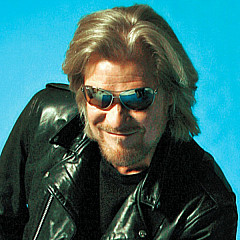
Daryl Hall

Daryl HallSongwriter Interviews

Daryl Hall's TV show is a hit, and he's been inducted into the Rock and Roll Hall of Fame - only one of these developments excites him.
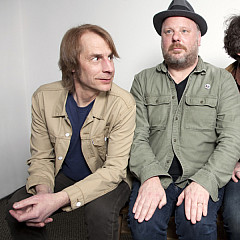
Mark Arm of Mudhoney

Mark Arm of MudhoneySongwriter Interviews

When he was asked to write a song for the Singles soundtrack, Mark thought the Seattle grunge scene was already overblown, so that's what he wrote about.
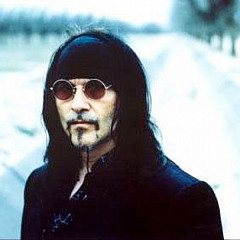
Al Jourgensen of Ministry

Al Jourgensen of MinistrySongwriter Interviews

In the name of song explanation, Al talks about scoring heroin for William Burroughs, and that's not even the most shocking story in this one.
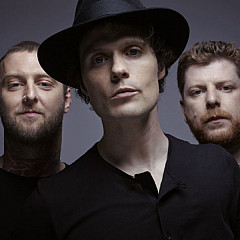
The Fratellis

The FratellisSongwriter Interviews

Jon Fratelli talks about the band's third album, and the five-year break leading up to it.
Chris Frantz of Talking Heads

Chris Frantz of Talking HeadsSongwriter Interviews

Talking Heads drummer Chris Frantz on where the term "new wave" originated, the story of "Naive Melody," and why they never recorded another cover song after "Take Me To The River."