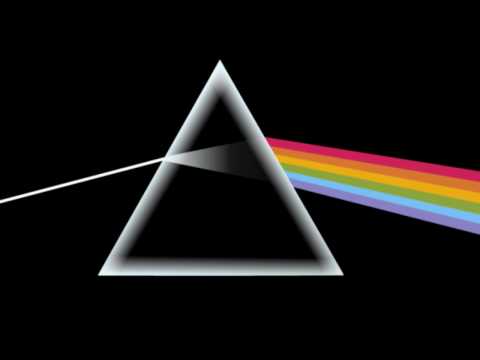
This song is about the bad things money can bring. Ironically, it made Pink Floyd lots of cash, as the Dark Side Of The Moon album sold over 34 million copies.
This is often misinterpreted as a tribute to money. Many people thought the line "Money, it's a gas," meant they considered money a very good thing.
The song begins in an unusual 7/8 time signature, then during the guitar solo the song changes to 4/4, then returns to 7/8 and ends in 4/4 again. When Guitar World February 1993 asked Dave Gilmour where the famous time signature for "Money" came from, the Pink Floyd guitarist replied: "It's Roger's riff. Roger came in with the verses and lyrics for 'Money' more or less completed. And we just made up middle sections, guitar solos and all that stuff. We also invented some new riffs - we created a 4/4 progression for the guitar solo and made the poor saxophone player play in 7/4. It was my idea to break down and become dry and empty for the second chorus of the solo."
Roger Waters is the only songwriter credited on "Money," but the lead vocal is by David Gilmour. Waters provided the basic music and lyrics, while the whole band (Waters, Gilmour, keyboard player Richard Wright and drummer Nick Mason) created the instrumental jam of the song. Gilmour was the one overseeing time changes and responsible for the acclaimed guitar solo.
Many studio effects were used on this song. They were using a new 16-track recorder, which allowed them to layer sounds much easier, but complex studio techniques like this still took a long time to do in 1973, as there weren't digital recorders and samplers available like we have today. If you wanted to copy and paste something, you had to do it the hard way: with a razor blade and splicing tape.
Roger Waters put together the cash register tape loop that plays throughout the song. It also contains the sounds of tearing paper and bags of coins being thrown into an industrial food-mixing bowl. The intro was recorded by capturing the sounds of an old cash register on tape, and meticulously splicing and cutting the tape in a rhythmic pattern to make the "cash register loop" effect.
Bands like The Beatles had used tape loops, but never like this. The tape loop used on this was about 20 feet long, and if you've ever seen a reel-to-reel tape machine, you can imagine how hard it was to keep it playing. In order to get the right tension and continuously feed the machine, they set up the loop in a big circle using microphone stands to hold it up. It was fed through the tape machine and played throughout the song.
The album was engineered by famed British producer and studio genius Alan Parsons at Abbey Road Studios, where he also worked with The Beatles. Parsons later started his own band called The Alan Parsons Project and scored a hit in the '80s with "
Eye In The Sky."
Speaking with Songfacts about the studio habits of The Beatles and Pink Floyd,
Parsons said: "They both liked to use the studio to its fullest, and they were always looking for new effects and new sounds. That was the beauty of working with those guys: There were always new horizons to discover in sound."
>>>
Suggestion credit:
Dave - Marieta, GA, for above 3
The lyrics contain a naughty word:
Don't give me that do goody good bulls--t
"Bulls--t" was left in the original release, but their record company quickly put out a version with the word removed, which became known as the "Bull Blank" version.
Along with "
Us And Them," this is one of two songs on the album to use a saxophone, which was played by Dick Parry. The band wanted to experiment with new sounds on these sessions.
As happens throughout
Dark Side of the Moon, random voices come in at the end. Waters drew up flashcards with deep philosophical questions on them, then showed them to people around the studio and taped their answers. The ones they liked made the album. Among the people questioned: a doorman, a roadie, and Paul McCartney. Most contributions were not used, but McCartney's guitarist at the time,
Henry McCullough, made the final cut with his answer, "I don't know; I was really drunk at the time."
Due to a record company dispute, the band had to re-record "Money" for their 1981 greatest hits album, A Collection Of Great Dance Songs (the title is a joke. You can't dance to Floyd). There are very subtle differences between this version and the original.
If you start the Dark Side Of The Moon CD on the third roar of the MGM lion, "Money" begins just as the film goes to color in The Wizard Of Oz. In the '90s, someone figured out that the album synchs very well to the movie, and word got out. Some venues even held screenings where they would play the movie and album at the same time (we saw one at a planetarium).
In America, "Money" was released as the first single from the album and rose to #13, making it their biggest chart hit until "
Another Brick In The Wall (Part 2)" went to #1 in 1980.
Like many Pink Floyd songs, it was not released as a single in the UK, where it would have been perceived as a sellout.
A cultural difference in the song: the reference to the "football team." In America, the sport is known as soccer.
There is a scene in
The Wall where the main character (Pink) is a student in school, and the teacher catches him writing a poem instead of doing the work he was supposed to be doing. The teacher reads the poem out loud, and it is this song. He makes the student look like a fool and everyone in the classroom laughs at him. The teacher then tells him "It's rubbish laddy, now get back to work!" It probably symbolizes the way that we are raised almost uniform-like throughout our entire lives, starting in school. This is a theme of the movie.
>>>
Suggestion credit:
Derek - Raleigh, NC
The line, "Money, so they say, is a root of all evil today" is a paraphrase from the New Testament - 1 Timothy 6:10: "For the love of money is a root of all kinds of evil."
>>>
Suggestion credit:
Mike - Lunar surface
In 2002, a group called The Easy Star All-Stars recorded a reggae version of the album called Dub Side Of The Moon. On this song, the sounds of money were replaced by sounds of someone smoking from a water-based marijuana delivery device (OK, a bong).
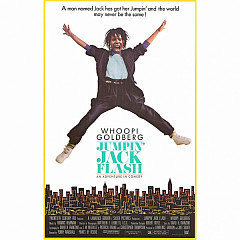
A group called Reloaded, made up of former Guns N' Roses members with
Scott Weiland from The Stone Temple Pilots as lead singer, recorded "Money" for the 2003 movie
The Italian Job.
This was the first project for the group, which eventually changed its name to Velvet Revolver.
In the documentary
The Making of Dark Side of the Moon, it was revealed that Roger Waters wrote this song in his garden. He described the original demo as "prissy and very English."
>>>
Suggestion credit:
Tim - PGH, PA
In Quentin Tarantino's 1992 film
Reservoir Dogs, this song was originally intended to be used in a specific opening sequence. However, after hearing the song "Little Green Bag" by the George Baker Selection, Tarantino decided to use it instead because he it gave him an extreme sense of nostalgia.
>>>
Suggestion credit:
Ashlynd - Charleston, WV
Guitar World asked Gilmour if he was purposely trying to get away from just playing a 12 bar blues on guitar. He replied: "No, I just wanted to make a dramatic effect with the three solos. The first solo is ADT'd - Artificially Double Tracked. I think I did the first two solos on a Fender Stratocaster, but the last one was done on a different guitar - a Lewis, which was made by some guy in Vancouver. It had a whole two octaves on the neck, which meant I could get up to notes that I couldn't play on a Stratocaster."
Asked by Uncut in 2015 if there's a song that reminds him of Roger Waters, David Gilmour replied: "'Money.' I'm not talking about the lyric. Just the quirky 7/8 time reminds me of Roger. It's not a song I would have written. It points itself at Roger."