Controversy

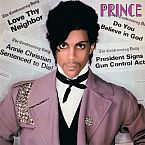
Album: Controversy (1981)
Charted: 70
Play Video

Songfacts®:

  • Prince had stirred up plenty of controversy by 1981, which he addresses in this song, the title track to his fourth album. His previous album, Dirty Mind, was loaded with sexual imagery, but that's not what got people talking. The big questions he states in the lyric:

    Am I black or white, am I straight or gay?

    The first question, is he black or white, is a controversy of his own making. Prince hated doing interviews but had to do at least a few at the behest of his record company. When he did talk to journalists, he was evasive and sometimes lied. One of his first interviews with a major publication came in 1980 when he spoke with the LA Times. Both of his parents are African American, but instead of stating this, he said:

    "My dad is black and Italian. My mom is a mixture of a bunch of things. I don't consider myself part of any race. I'm just a human being, I suppose."

    As a result, he was often reported as being mixed race.

    As for the straight or gay question, that stemmed largely from his very outlandish, often androgynous look. This one appeared to bother him. When he did another interview with the LA Times in 1982, he made a point to "clear up a few rumors" and stated, "I'm not gay."
  • This is the first Prince song where he adressess himself, offering a glimpse into his ethos. A key line is:

    I can't understand human curiosity

    Perhaps more than any other artist in history, Prince spoke through his music. Why anyone would want to know about his personal life was a mystery to him. He also had no attraction to other celebrities, turning down just about every collaboration offer and rarely hobnobbing in rarified air.

    In his own enigmatic way, Prince also eschewed divisions like race, class and gender (his bands were multi-racial and usually included women). Witness these lines near the end of the song:

    Life is just a game, we're all just the same
    Don't ya want to play?
  • In the album version of this song, Prince recites The Lord's Prayer in its entirety ("Our father, who art in heaven..."). According to a BBC documentary screened in November 2011, this was not done to be either controversial or sensationalist. It goes along with a question Prince asks in the song: "Do I believe in God?"

    Prince was raised Seventh Day Adventist and became a Jehovah's Witness in 2003.
  • Prince built this song starting with the drums, which explains the steady beat that dominates the track.
  • "Controversy" was the first single from the album. It peaked at #70 in the US, and the next single, "Let's Work," topped out at #104. At this point, it looked like Prince's sales figures wouldn't ever reflect his obvious talent, but a few years later he was a superstar, landing hits with "1999" and "Little Red Corvette."
  • On the album, "Controversy" runs 7:15, but the single was cut to 3:37, removing the two spoken passages.
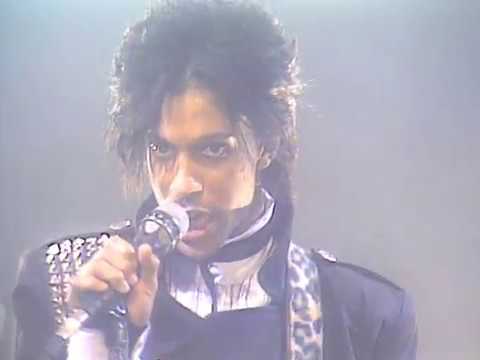
  • Prince made a video for this song where he and his band perform in what appears to be a church. It was directed by Bruce Gowers, who shot the "Sexuality" video the same day on the same set, replacing the stained-glass facade with laser lights.

Comments

Be the first to comment...

Editor's Picks

Philip Cody

Philip CodySongwriter Interviews

A talented lyricist, Philip helped revive Neil Sedaka's career with the words to "Laughter In The Rain" and "Bad Blood."

Michael Franti

Michael FrantiSongwriter Interviews

Franti tells the story behind his hit "Say Hey (I Love You)" and explains why yoga is an integral part of his lifestyle and his Soulshine tour.

Graham Parker

Graham ParkerSongwriter Interviews

When Judd Apatow needed under-appreciated rockers for his Knocked Up sequel, he immediately thought of Parker, who just happened to be getting his band The Rumour back together.

Dennis DeYoung

Dennis DeYoungSongwriter Interviews

Dennis DeYoung explains why "Mr. Roboto" is the defining Styx song, and what the "gathering of angels" represents in "Come Sail Away."

Chris Frantz of Talking Heads

Chris Frantz of Talking HeadsSongwriter Interviews

Talking Heads drummer Chris Frantz on where the term "new wave" originated, the story of "Naive Melody," and why they never recorded another cover song after "Take Me To The River."

Dar Williams

Dar WilliamsSongwriter Interviews

A popular contemporary folk singer, Williams still remembers the sticky note that changed her life in college.