A remarkably innocent song from the man who gave us lascivious tunes like "
Dirty Mind" and "
Soft and Wet," "Raspberry Beret" tells the story of a young man captivated by a lady who comes into the store where he is a lowly employee with a rocky relationship with his boss. This girl is a little crazy - she goes in through the out door - very fashionable, and just a touch rebellious.
A "beret" is a European style of hat that basically looks like a canvas sack held to the head by a tight band. It shares origins between France and Spain, and is the kind of headgear favored by artists, beatniks, hipsters, and intellectual eccentrics the world over. But it's also the headgear of choice for revolutionary militants; Che Guevara sports one in the most famous T-shirt stencil in the world. The reference to being "the kind you find in a secondhand store" invokes the kind of vintage-clothing place hipsters like to shop at, not your neighborhood Goodwill.
Prince originally recorded "Raspberry Beret" in 1982, but re-worked it with his newly re-formed Revolution backing band, which had just crystalized into what would become the fan favorite lineup: Brown Mark on bass, Bobby Z on drums, Wendy Melvoin, Lisa Coleman and Doctor Fink on keyboard, backing guitar, and backing vocals. If you blinked in the mid-'80s, you missed it, because this incarnation of the Revolution broke up by 1986, with Prince firing everybody but Doctor Fink.
This stands as one of the finest examples of the "Minneapolis sound," blending in finger-cymbals, a string section, and a harmonica as a strategy to create a well-rounded groove. This style is sometimes called "The Prince Sound," but there were a lot of other folks making it as well, many of them working with Prince at some point. For a great explanation of that sound and how it led to Paula Abdul's music career, check out the Songfacts
interview with Oliver Leiber.
This song was used in the soundtrack to Girl 6, a 1996 film about a troubled actress turned phone sex worker. It was directed by Spike Lee and has Quentin Tarantino (!) in a supporting role.
At the time this was released, Prince was under fire from Tipper Gore during the notorious PMRC witch hunt, which placed two of his songs on the list of the "filthy 15" - "
Darling Nikki" was the original song that got Tipper's goat. So this is one of the songs where Prince started making his lyrics more family friendly. Nevertheless, you can't miss "Old Man Johnson" as a reference to his you-know-what. Normally we'd stay clear of looking for euphemisms in lyrics, but come on, this is Prince we're talking about.
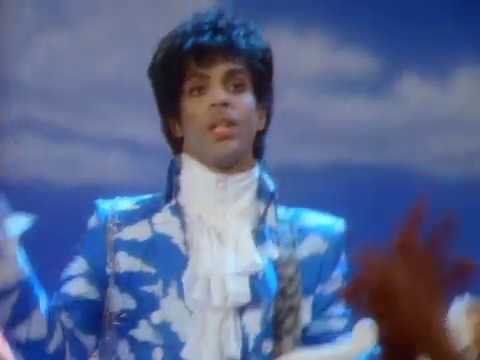
The video is an odd mashup of performance footage and animation. Simon Fields, who was one of the top music video producers at the time, said in the book I Want My MTV: "We filmed a whole video, then Prince got a Japanese animator to do a completely different video and we mashed the two up. He would mess with directors. He would give them the impression that they'd be in charge of the video, then halfway through he'd go 'Thank you,' take what he liked, and edit it himself."
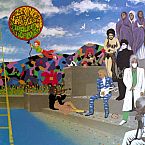
"Raspberry Beret" was the first single from Prince's
Around the World in a Day album, his follow-up to
Purple Rain. Prince initially planned to release the song "Paisley Park" as the lead single on February 27, 1985, the day after the Grammy Awards (where he won three trophies). But Prince changed his mind and decided not to release any singles at all, possibly to stay out of the wake of "
We Are The World," the superstar charity collaboration he didn't show for. The album had very little promotion and was simply shipped to record stores on April 22. The plan to withhold singles proved untenable because MTV and radio had no idea which songs to play without guidance. It became clear that "Raspberry Beret" had the most pop appeal, so it got the call, rising to #2 in the US on July 20, held off by Duran Duran's "
A View To A Kill."
There is a small string section on this song. It was arranged by Lisa Coleman, a member of his band the Revolution.
Prince is notorious for planting hidden messages in his songs, like the backmasking sequence in "
Darling Nikki," so fans were confounded when the video included a coughing jag before Prince started singing. What could it possibly mean? The answer is simple: "I just did it to be sick, to do something no one else would do," he told
Rolling Stone in 1985.
A dreadlocked Pat Smear appears in the video. Smear was a touring guitarist for Nirvana and a founding member of Foo Fighters.
Prince discussed the meaning of Around the World in a Day with Rolling Stone in 1985: "I was trying to say something about looking inside oneself to find perfection. Perfection is in everyone. Nobody's perfect, but they can be. We may never reach that, but it's better to strive than not."
The Electronic Frontier Foundation, a donor-funded nonprofit with the aim of "defending your rights in the digital world," established a "Raspberry Beret Lifetime Aggrievement Award" to bestow upon offenders for "extraordinary abuses of the takedown process in the name of silencing speech." Prince earned the "honor" in 2013 for taking legal action against people for sharing his music online, though he did drop a $22 million copyright lawsuit after an outcry from fans in 2014.
A misheard line in this song provided the band name for The Lightning Seeds, the British act known for the song "
Pure" and the English soccer anthem "
Three Lions." Ian Broudie, who formed the band (which ended up being essentially a solo project, thought the line "thunder drowns out what the lightning sees" was "thunder drowns out the lightning seeds."
"It seemed like a good image," he told
Rolling Stone.