Burn Hollywood Burn

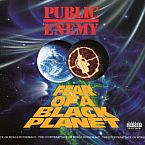
Album: Fear of a Black Planet (1990)
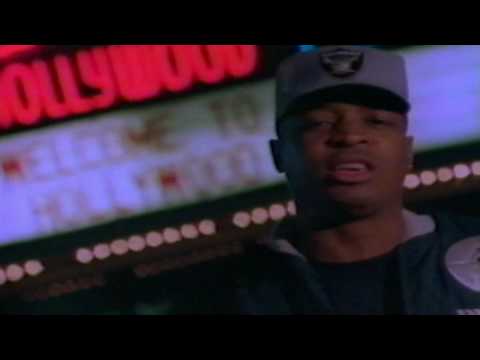
Play Video

Songfacts®:

  • When Spike Lee was given an honorary Oscar at the 2015 Governors Awards, he had some pointed remarks for the attendees. "It's easier to be the president of the United States as a Black person than to be the head of a studio," he said.

    Lee was addressing the dearth of Black representation in movies, a topic Public Enemy took on with their 1990 flamethrower "Burn Hollywood Burn." The song takes the movie industry to task for its portrayal of Black culture, but they're not calling for sensitivity training or diversity initiatives since they have a more radical solution: burn it down.

    It's a metaphor, of course, but the point is that incremental change won't cut it - something that was proven when Lee made his speech. This problem demands a complete overhaul.

    Lee is namechecked in the song:

    So let's make our own movies like Spike Lee
    Cause the roles being offered don't strike me
  • Chuck D of Public Enemy cites the film Driving Miss Daisy in the lyrics as one the perpetuates the Black stereotype Hollywood loves. The 1989 film, which won the Oscar for Best Picture, stars Morgan Freeman as a Black driver who forms a friendship with his white employer, played by Jessica Tandy. This is a film beloved by white audiences that ignores the Black perspective on race relations and oppression.
  • The line, "Step and fetch this s--t" is a reference to the Black actor Stepin Fetchit, who often played a lazy, cartoonish character in many films, mostly in the 1930s and '40s.
  • Ice Cube and Big Daddy Kane each take a verse on this track. They got writers credits on the track along with Chuck D and the producers Keith Shocklee and Eric Sadler.
  • Public Enemy's tracks were built on samples, and this one is based on the bass groove of the 1973 song "Hot Wheels (The Chase)" by Badder Than Evil. It also samples bits of the 1978 track "Dance to the Drummer's Beat" by Herman Kelly & Life and a 1986 James Brown remix of "Give It Up or Turnit a Loose."
  • A memorable performance of this song took place August 22, 1990 when Public Enemy played the Greek Theatre in... Hollywood. Big Daddy Kane and Ice Cube each joined the group on stage to do their verses. Chopmaster J, who was on the tour as a member of Digital Underground, said in his Songfacts interview: "Maria Shriver, Arnold Schwarzenegger and all of the press and all of the cameras were there at the foot of the stage when Chuck came out: 'Burn Hollywood Burn, I smell a riot.' Oh my God! It was the most profound and most powerful thing that I have ever been involved with in hip-hop and have ever seen in hip-hop since."
  • In early January 2025, as wildfires ravaged Los Angeles, some social media users disturbingly adopted "Burn Hollywood Burn" as a celebratory anthem. Chuck D took to Instagram to condemn this misuse of the song, emphasizing its original intent as a protest against systemic inequality.

    "'Burn Hollywood Burn' is a protest song inspired by the Watts rebellion and the phrase coined by the magnificent Montague in 1965, 'burn baby burn,'" he explained. "We created mind-revolution songs aimed at addressing one-sided exploitation by an industry."

    He further clarified, "This track has nothing to do with families losing everything they have in a natural disaster. Learn the history. Godspeed to those in loss."

Comments

Be the first to comment...

Editor's Picks

Randy Newman

Randy NewmanSongwriting Legends

Newman makes it look easy these days, but in this 1974 interview, he reveals the paranoia and pressures that made him yearn for his old 9-5 job.

Ralph Casale  - Session Pro

Ralph Casale - Session ProSongwriter Interviews

A top New York studio musician, Ralph played guitar on many '60s hits, including "Lightnin' Strikes," "A Lover's Concerto" and "I Am A Rock."

Gary Louris of The Jayhawks

Gary Louris of The JayhawksSongwriter Interviews

The Jayhawks' song "Big Star" has special meaning to Gary, who explains how longevity and inspiration have trumped adulation.

Tim McIlrath of Rise Against

Tim McIlrath of Rise AgainstSongwriter Interviews

Rise Against frontman Tim McIlrath explains the meanings behind some of their biggest songs and names the sci-fi books that have influenced him.

Is That Song Public Domain?

Is That Song Public Domain?Fact or Fiction

Are classic songs like "Over The Rainbow" and "Take Me Out to the Ballgame" in the public domain?

George Harrison

George HarrisonFact or Fiction

Did Eric Clapton really steal George's wife? What's the George Harrison-Monty Python connection? Set the record straight with our Fact or Fiction quiz.