
Mis-Shapes
by Pulp

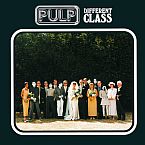
Album: Different Class (1995)
Charted: 2
Play Video

Songfacts®:

  • This one is for the misfits, or as Pulp frontman Jarvis Cocker calls them in the song, "Mis-Shapes." Growing up in Sheffield, England, he was a non-conformist, choosing music instead of steady work as a member of the proletariat, and dressing in hand-me-downs from his dad or thrift store duds (he used to wear lederhosen to school). His milk-bottle glasses also made him a soft target.

    This made him easy to spot among the local blokes (the "townies") who blended together with their white T-shirts and black trousers. Cocker told Q magazine in 1996: "It's based on the feeling of a Saturday night in Sheffield when the beer monsters are out, wanting to smack you because you're wearing funny glasses, a funny haircut and orange trousers – and you have to run away."

    "I don't object to townies really, but the trouble is, they can't just get on with being ignorant in isolation," he added. "They want to take it out on other people."
  • The first time Pulp played this song live was on a major festival stage: the Glastonbury Festival on June 24, 1995, a few months before the song was released. It was a headline slot that they landed because The Stone Roses had to cancel when their guitarist, John Squire, got in a biking accident.
  • "Mis-Shapes" was released in a double A-side single with the controversial "Sorted for E's and Wizz" in 1995, reaching #2 on the UK Charts - the band's second successive #2, after the classic "Common People."

    This was in the thick of the Britpop era, when Pulp finally gained a foothold after toiling throughout the '80s. They did not, however, conquer America, where they never landed a hit.
  • Jarvis Cocker got the idea for the title from the chocolates his mom would buy that were labeled "mis-shapes" because they wouldn't fit in the tray. They were sold at a discount but tasted just as good.
  • The song offers a battle plan for the outcasts who are metaphorically outgunned:

    We'll use the one thing we've got more of...
    That's our minds


    In this way, the song differs from many other individualist anthems because it makes the point that the bullying aggressors are going to be dumber, and thus vulnerable.
  • Somewhat ironically, Pulp gained mass appeal in the UK and some of their fans were the very folks they rail against in this song, so not everyone got the message. "You write a song like 'Mis-shapes' and it should be perfectly clear that it's saying, 'I don't like intolerant people,'" Jarvis Cocker told Melody Maker at the end of 1995. "But it's become clear to me after that last tour that it goes over some people's heads. Townies were coming out to see us."
  • The sleeve notes and the video contain the following inspirational, if cryptic, message:

    We shall fight them in "The Beeches" - and "The Stag" and "The King's Head" if it comes to that. You know the score - ten blokes with 'taches in short-sleeved white shirts telling you that you're the weirdo. Fear not brothers and sisters - we shall prevail. Live on.

    Pulp singles were known for having strange sleeve notes, often referencing back to the lyrics of the song.
  • The video opens in a club where the Pulp song "Sorted for E's and Wizz" is playing. The band take the stage to perform "Mis-Shapes," and everyone stops dancing, but they soon get into the song. Jarvis Cocker also plays two of the club patrons, one a Mis-shape, the other a townie who picks on him. At one point, townie Jarvis spits on the misfit version of himself.

Comments

Be the first to comment...

Editor's Picks

Jon Anderson of Yes

Jon Anderson of YesSongwriter Interviews

From the lake in "Roundabout" to Sister Bluebird in "Starship Trooper," Jon Anderson talks about how nature and spirituality play into his lyrics for Yes.

David Sancious

David SanciousSongwriter Interviews

Keyboard great David Sancious talks about his work with Sting, Seal, Springsteen, Clapton and Aretha, and explains what quantum physics has to do with making music.

Billy Joe Shaver

Billy Joe ShaverSongwriter Interviews

The outlaw country icon talks about the spiritual element of his songwriting and his Bob Dylan mention.

Shaun Morgan of Seether

Shaun Morgan of SeetherSongwriter Interviews

Shaun breaks down the Seether songs, including the one about his brother, the one about Ozzy, and the one that may or may not be about his ex-girlfriend Amy Lee.

Justin Hayward of The Moody Blues

Justin Hayward of The Moody BluesSongwriter Interviews

Justin wrote the classic "Nights In White Satin," but his fondest musical memories are from a different decade.

Michael Glabicki of Rusted Root

Michael Glabicki of Rusted RootSongwriter Interviews

Michael tells the story of "Send Me On My Way," and explains why some of the words in the song don't have a literal meaning.